Aligning with NEP 2026: The Shift to Experiential Learning
Aligning with NEP 2026: The Shift to Experiential Learning
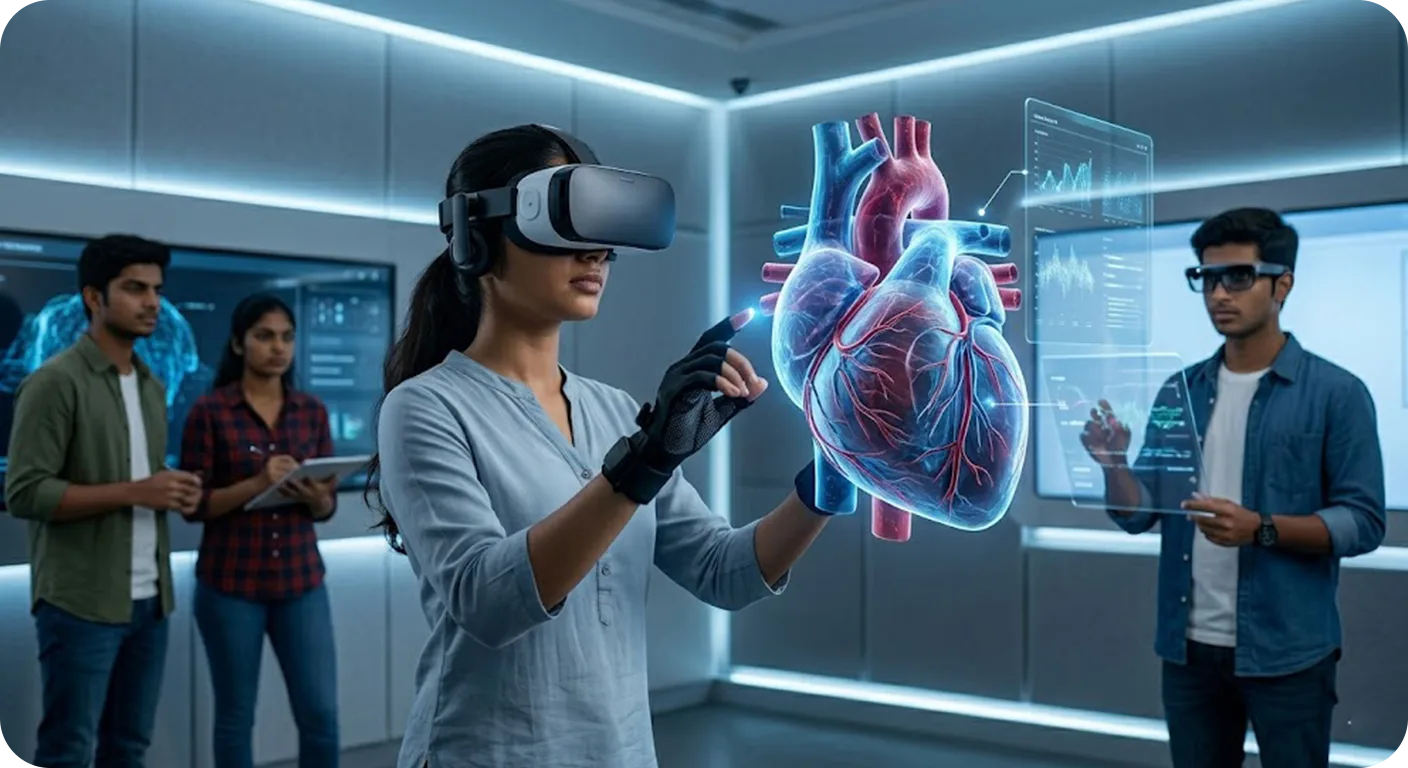
Education is rapidly evolving across the world, and India is no exception. With the implementation of the National Education Policy (NEP) 2026, the focus is moving away from traditional rote memorization toward a more practical, skill-based, and student-centered learning approach.
The goal is simple: students should not just remember information - they should understand, apply, experience, and innovate with it.
Experiential learning is becoming the foundation of modern education because it helps students develop critical thinking, creativity, communication, collaboration, and real-world problem-solving skills. Schools, colleges, educators, and edtech companies are now rethinking how learning should happen in classrooms.
This transformation is creating a major shift in how educational content is designed, delivered, and experienced.
What is Experiential Learning?
Experiential learning is a process where students learn through active participation, practical activities, observation, and real-world experiences instead of passive memorization.
Rather than simply reading concepts from textbooks, students engage directly with the subject matter through:
- Interactive activities
- Simulations
- Projects
- Group collaboration
- Virtual Reality (VR)
- Augmented Reality (AR)
- Case studies
- Hands-on experiments
- Role-playing exercises
- Problem-solving scenarios
The idea is that students learn better when they “experience” concepts rather than only hearing or reading about them.
For example:
- A biology student can explore the human body in 3D using VR.
- A history student can virtually visit ancient civilizations.
- A physics student can perform virtual experiments safely.
- A geography student can interact with climate simulations.
This type of learning creates deeper understanding and long-term retention.
Why NEP 2026 Emphasizes Experiential Learning
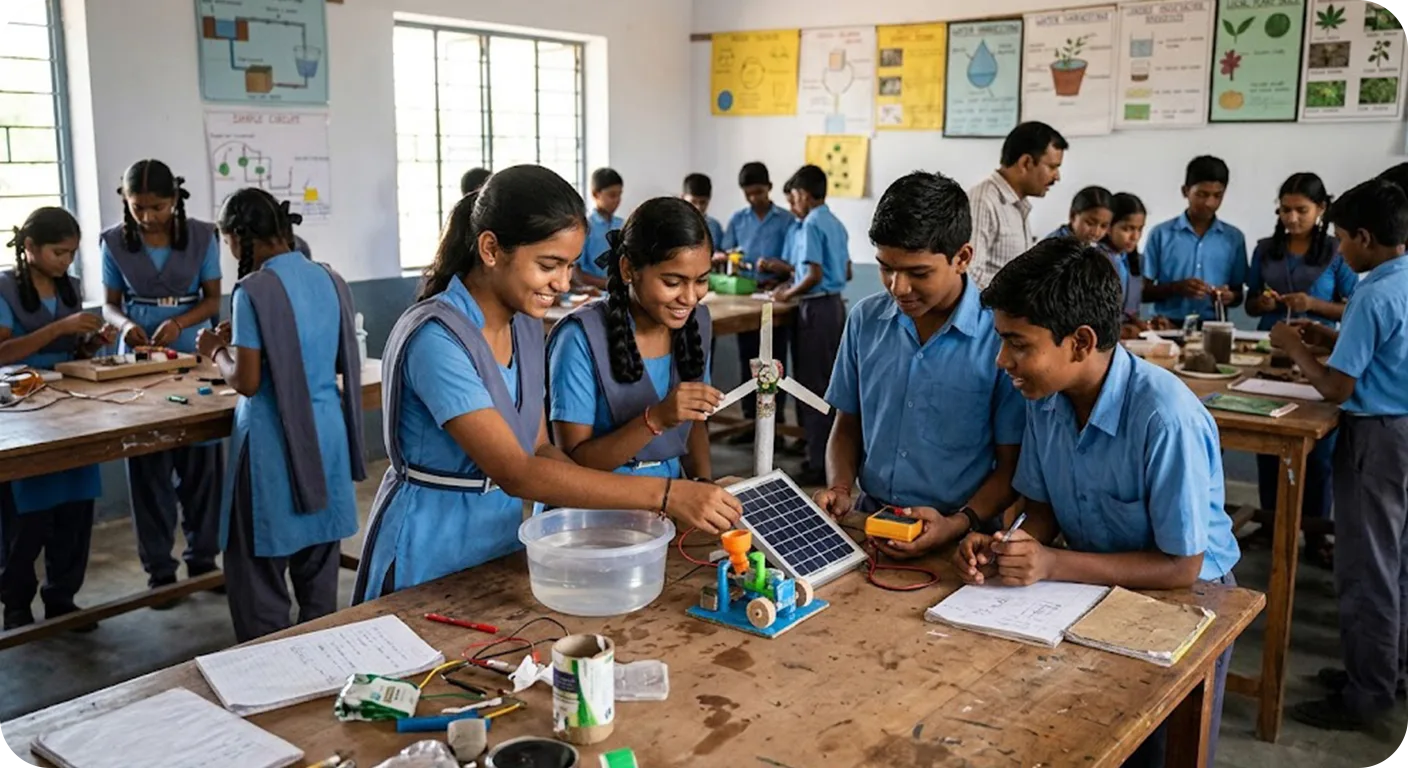
The traditional education system often focused heavily on exams, memorization, and theoretical learning. While this approach helped students score marks, it sometimes failed to prepare them for real-world challenges.
NEP 2026 recognizes that future careers will demand:
- Adaptability
- Creativity
- Digital literacy
- Collaboration
- Analytical thinking
- Innovation
To address this, the policy encourages:
- Skill-based education
- Activity-based learning
- Multidisciplinary education
- Technology integration
- Flexible learning models
- Real-world application of knowledge
The emphasis is no longer only on “what students know” but also on “how effectively students can use what they know.”
Key Features of Experiential Learning in NEP 2026
1. Student-Centered Learning
Traditional classrooms are teacher-driven. Experiential learning shifts the focus toward the learner.
Students actively participate in:
- Discussions
- Projects
- Practical tasks
- Collaborative learning
- Interactive activities
This increases engagement and motivation.
2. Real-World Skill Development
Modern industries require practical skills alongside academic knowledge.
Experiential learning helps students build:
- Communication skills
- Leadership abilities
- Teamwork
- Decision-making
- Creativity
- Technical confidence
- Problem-solving capabilities
These are essential for future careers.
3. Integration of Technology
Technology plays a major role in NEP 2026.
Schools and institutions are increasingly adopting:
- Virtual Reality (VR)
- Augmented Reality (AR)
- 3D simulations
- Interactive learning platforms
- Gamified education
- Smart classrooms
These tools make learning more immersive and engaging.
For example, instead of reading about the solar system, students can explore planets through immersive 3D environments.
4. Better Knowledge Retention
Research consistently shows that students remember concepts better when they actively experience them.
Students often forget theoretical lectures quickly, but practical experiences create stronger memory retention because learners:
- Observe
- Interact
- Experiment
- Apply concepts directly
This leads to deeper conceptual understanding.
5. Encouraging Curiosity and Innovation
Experiential learning promotes curiosity-driven education.
Instead of simply giving answers, educators encourage students to:
- Ask questions
- Explore ideas
- Investigate solutions
- Think independently
This creates an innovation-focused mindset from an early age.
The Role of XR Technologies in Experiential Learning
Extended Reality (XR), which includes Virtual Reality (VR), Augmented Reality (AR), and Mixed Reality (MR), is becoming a powerful tool in education.
XR helps transform abstract concepts into interactive experiences.
Benefits of XR-Based Learning
Immersive Understanding
Students can visualize complex concepts in 3D rather than imagining them from textbooks.
Safe Practical Training
Virtual simulations allow students to perform experiments safely without physical risks.
Increased Engagement
Interactive learning experiences naturally improve student attention and participation.
Accessibility
Students from different locations can access advanced learning experiences digitally.
Personalized Learning
XR platforms can adapt content based on student learning pace and style.
How Schools and Institutions Can Adapt
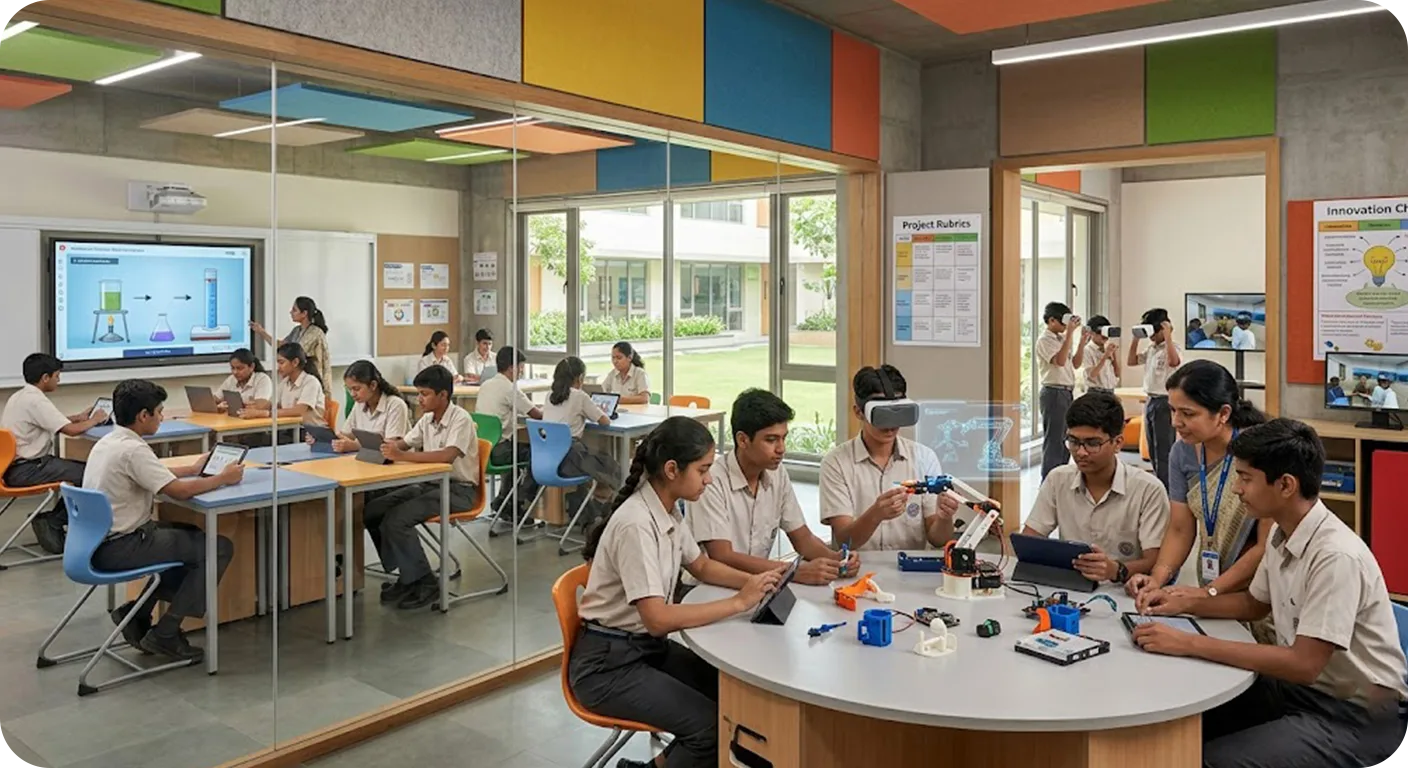
Educational institutions must evolve to successfully align with NEP 2026.
1. Upgrade Teaching Methods
Schools should move beyond lecture-only classrooms and adopt:
- Activity-based teaching
- Interactive lessons
- Collaborative learning
- Digital content integration
2. Invest in Educational Technology
Technology infrastructure is becoming essential for future-ready education.
Institutions should explore:
- Smart classrooms
- VR labs
- Interactive learning platforms
- Digital learning management systems
3. Train Educators
Teachers play a critical role in experiential learning.
Educators need training in:
- Technology integration
- Interactive teaching methods
- Digital classroom management
- Student engagement strategies
4. Focus on Practical Assessments
Assessment models should evaluate:
- Understanding
- Creativity
- Application skills
- Collaboration
- Innovation
Not just memorization.
Challenges in Implementing Experiential Learning
While the shift is exciting, institutions may face several challenges:
Infrastructure Limitations
Some schools may lack advanced digital infrastructure.
Teacher Training Gaps
Educators may require time and support to adapt to new methods.
Budget Constraints
Technology adoption can involve initial investment costs.
Resistance to Change
Traditional systems may take time to transition fully.
However, as educational technology becomes more accessible and affordable, these barriers are gradually reducing.
The Future of Education in India
NEP 2026 is not just an educational reform - it represents a transformation in how learning is perceived.
The future classroom will likely become:
- More interactive
- Technology-enabled
- Skill-oriented
- Collaborative
- Immersive
- Experience-driven
Students will no longer be passive listeners. They will become active participants in their learning journey.
Experiential learning will help create learners who are:
- More confident
- More creative
- Better prepared for future careers
- More capable of solving real-world challenges
Why Experiential Learning Matters More Than Ever
Today’s world is changing rapidly due to:
- Artificial Intelligence
- Automation
- Digital transformation
- Emerging technologies
Future jobs will require adaptability and continuous learning.
Experiential learning prepares students not only for exams but for:
- Careers
- Innovation
- Entrepreneurship
- Real-world decision-making
This is why NEP 2026 strongly supports practical and immersive education models.
Conclusion
The shift toward experiential learning under NEP 2026 marks a major evolution in India’s education system.
Learning is moving beyond textbooks into immersive, interactive, and practical experiences that help students truly understand concepts and develop future-ready skills.
Technology such as VR, AR, and XR will continue playing a critical role in making education more engaging, effective, and accessible.
As schools, educators, and edtech platforms embrace this transformation, experiential learning will become the foundation of modern education - helping students learn not just to pass exams, but to succeed in the real world.
For a closer look at this, see our guides to Learning Science in Hindi and How Teachers Can Use 3D Learning in Indian Classrooms.
For a closer look at this, see our guides to How to Change the Education System in India and What Is a STEM Lab? Setup, Types, and Benefits for Indian Schools.