Beyond the Headset: Why Browser-Based 3D Simulations Are the Real Future of Democratic EdTech
Beyond the Headset: Why Browser-Based 3D Simulations Are the Real Future of Democratic EdTech
For the past decade, the conversation around immersive education has been dominated by a single, flashy image: a student wearing a bulky Virtual Reality (VR) headset, isolated from their classroom, looking around a digital world. Tech evangelists promised that these headsets would soon sit on every school desk in India.
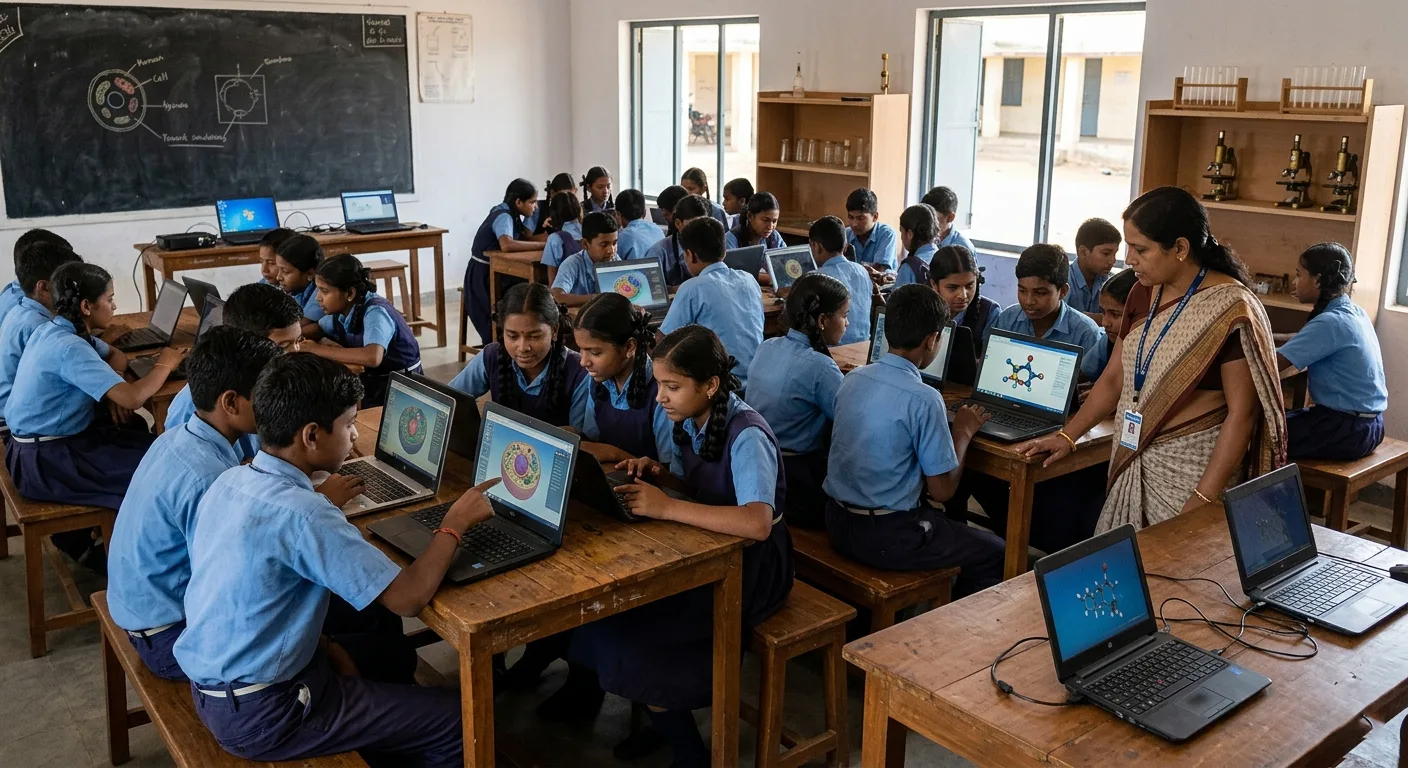
But look inside a real classroom today - whether it’s a bustling city school in Mumbai or a government school in rural Uttar Pradesh - and you will see a completely different reality. The headsets are missing. Instead, teachers are still struggling with oversized classrooms, rote-memorization culture, and underfunded science labs where students can barely touch a microscope, let alone run complex chemistry experiments.
The hard truth is that hardware-heavy VR failed to scale in education. However, immersive learning itself hasn’t failed. It has simply evolved. The future of democratic education isn't locked behind an expensive headset; it is living directly inside the standard web browsers of devices students already own.
The Friction points of Hardware-Heavy VR
To understand why browser-based XR (Extended Reality) platforms are rising, we must first look at why traditional VR deployments stumbled in schools:
- The Infrastructure Bottleneck: High-end VR headsets require robust local hardware, steady power, and expensive maintenance. If a lens scratches or a strap breaks, a school’s tech budget takes a massive hit.
- Classroom Logistics: A teacher with 40 to 50 students cannot spend 20 minutes setting up individual headsets, troubleshooting Wi-Fi connections, and managing motion sickness. It disrupts the limited 45-minute period.
- The Digital Divide: Demanding that every student buy a specialized gadget instantly leaves behind millions of learners from middle- and lower-income backgrounds, widening the educational gap.
Enter Browser-Based 3D: The Zero-Friction Alternative
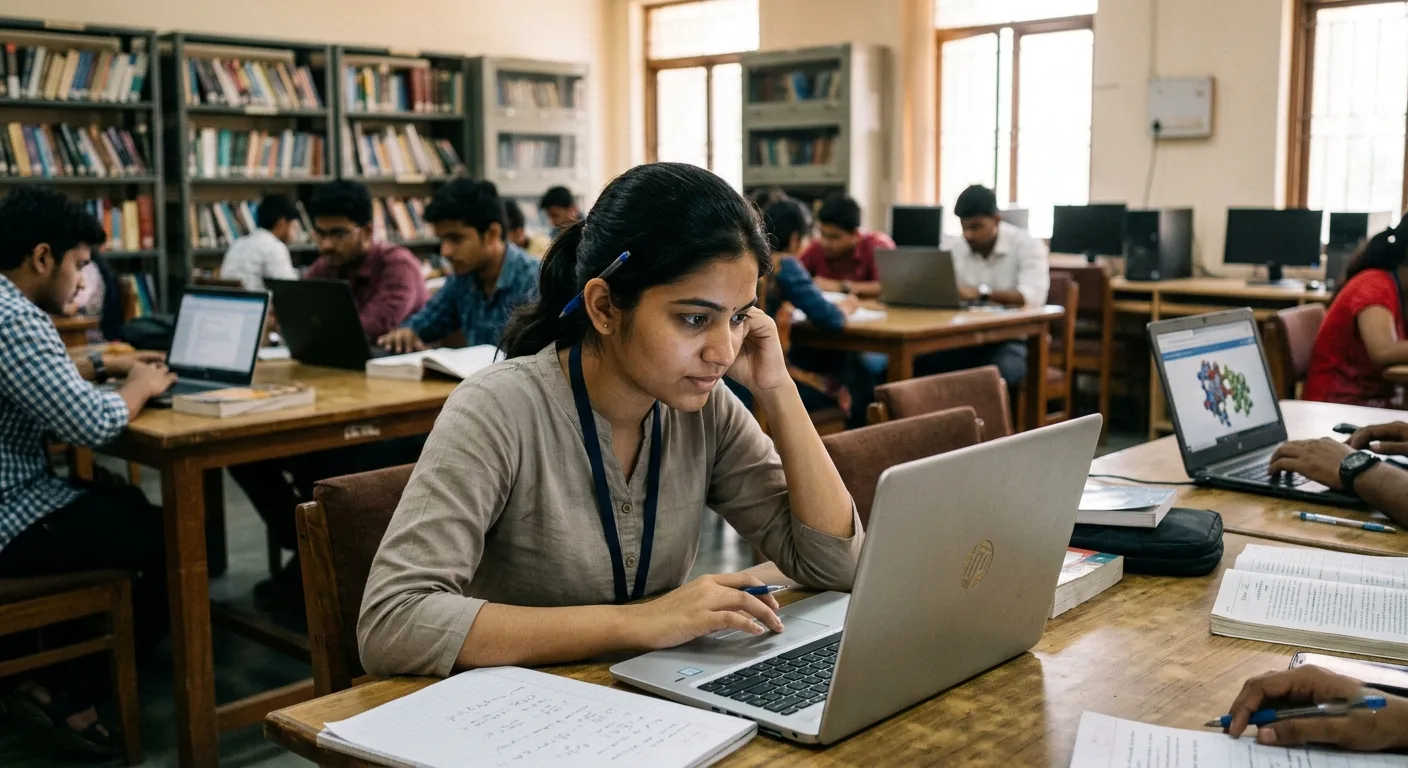
Browser-based 3D learning platforms turn any standard smartphone, tablet, or laptop into a powerful interactive laboratory. By using optimized web rendering engines, complex academic chapters are transformed into interactive 3D simulations that run seamlessly on Google Chrome, Safari, or Microsoft Edge.
No app downloads. No specialized hardware. No barrier to entry.
When you remove the friction of the headset, the real magic of immersive learning finally reaches the student. Here is how it changes the day-to-day learning experience across core STEM subjects:
1. Biology: From Flat Diagrams to Spatial Understanding
In a traditional textbook, the human circulatory system is reduced to a flat, 2D diagram with red and blue arrows. A student is forced to memorize which valve leads where.
In an interactive 3D web module, that same student can rotate a beating human heart, slice through the ventricles, zoom into the bicuspid valve, and track the real-time flow of oxygenated blood from any angle. They aren’t memorizing a diagram; they are developing spatial awareness of an organ.
2. Chemistry: Risk-Free, Infinite Virtual Experimentation
Physical school labs face tight budgets. Chemical reagents run out, glassware breaks, and certain reactions are simply too volatile or dangerous for school students to conduct by hand.
A web-based virtual lab acts as an infinite sandbox. Students can mix compounds, witness exothermic reactions, and visualize molecular structures at an atomic level. If they make a mistake, they can reset the simulation with a single click - promoting an environment of curiosity and learning through trial and error, without the fear of accidents or wasted resources.
3. Physics & Space Science: Making the Invisible, Visible
How do you explain the concept of projectile motion or magnetic field lines on a static chalkboard? How do you give a student a sense of scale when teaching the solar system?
Web-based simulations allow students to manipulate variables - like gravity, mass, or velocity - and watch the laws of physics play out dynamically right in front of them. They can travel to Mars or look at the rings of Saturn in a 360-degree digital environment, turning abstract equations into visual realities.
Overcoming the "Low Data" Reality
One of the biggest challenges for EdTech platforms operating in countries like India is inconsistent internet connectivity. A brilliant 3D simulation is useless if it spends ten minutes buffering on a weak 3G or 4G connection.
This is where the next generation of web architecture is proving its worth. By utilizing intelligent caching and optimized asset delivery, modern platforms can introduce "Low-Data Modes." A student can download a 3D module once when they have access to a network, and then interact with the full, rich 3D simulation completely offline. This approach bridges the gap between urban infrastructure and rural access, ensuring that a child in a remote village receives the same premium visual education as a student in a tier-1 private school.
Conclusion: Complementing, Not Replacing, the Teacher
Technology in education should never aim to replace textbooks, and it should certainly never aim to replace teachers. The goal of browser-accessible 3D learning is to act as the ultimate companion. It provides teachers with a powerful visual tool to resolve student doubts instantly, and it gives students a playground to explore topics at their own personal pace.
By democratizing access to immersive content - making it free of hardware restrictions and aligned straight to local school curricula - we are moving away from an era of passive rote learning. We are entering an era where students don't just read about science; they experience it.
For a closer look at this, see our guides to VR Learning Without Headsets and Digital Learning in Rural India.
For a closer look at this, see our guides to The Rise of WebXR in Education and Why Device-Based XR Learning Is Becoming the Future of Education.