Breaking Rote Memorization in Science Education
Breaking Rote Memorization in Science Education
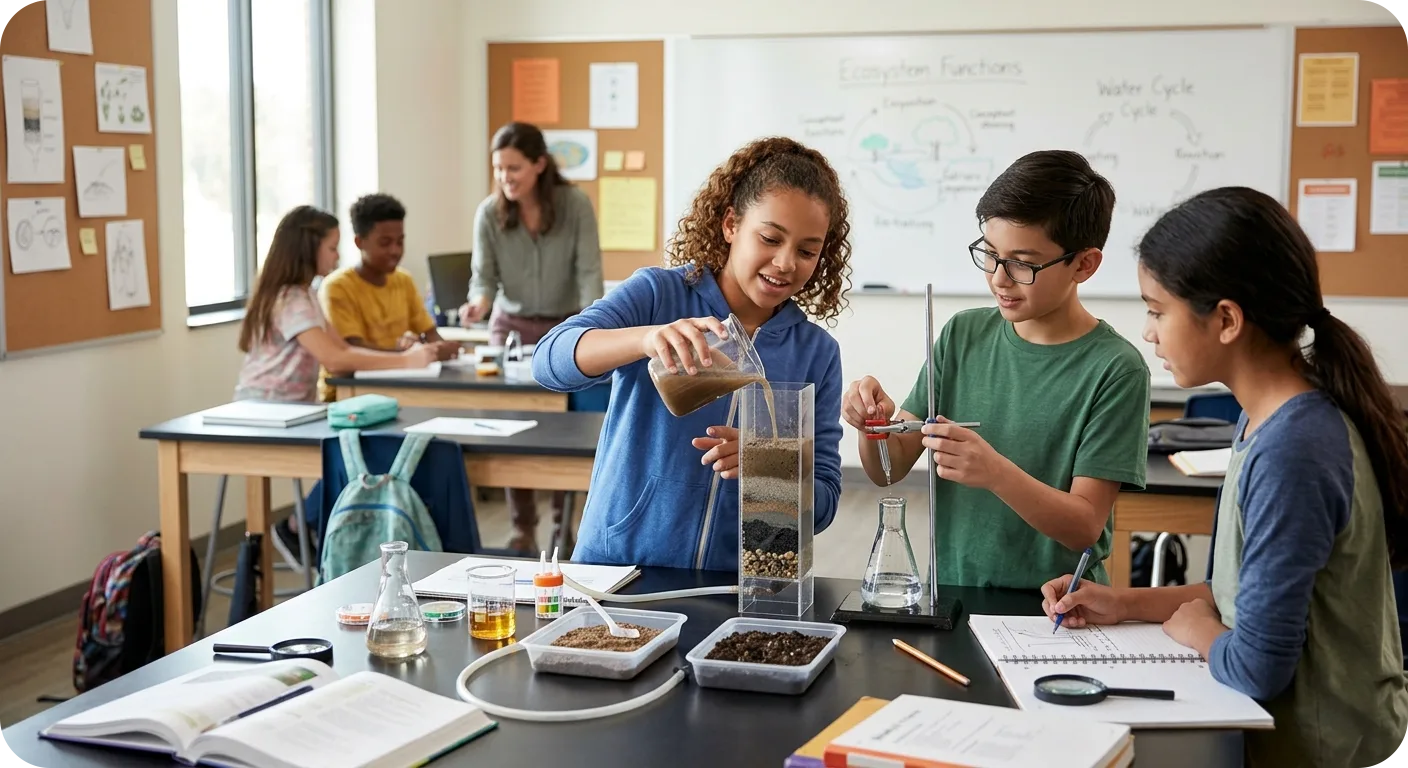
For decades, science education has focused heavily on memorization. Students are often expected to remember formulas, definitions, diagrams, and textbook explanations purely for examinations. While this method may help achieve short-term scores, it rarely creates deep understanding. After exams, much of the information fades because students were taught what to remember instead of how concepts actually work.
Science was never meant to be a subject of passive learning. It is a subject built on curiosity, experimentation, observation, and discovery. Real learning happens when students interact with concepts, ask questions, test ideas, and visually experience outcomes.
Today’s learners grow up in a digital world filled with interactivity, instant feedback, and immersive experiences. Traditional one-way teaching methods often fail to maintain attention and engagement. This creates a major gap between how students naturally learn and how science is commonly taught in classrooms.
Why Memorization Fails
Rote learning creates several long-term challenges for students:
- Students remember formulas without understanding their real-world meaning.
- Concepts become difficult to apply in problem-solving situations.
- Learning feels stressful and mechanical rather than exciting.
- Curiosity gradually disappears.
- Students lose confidence in science subjects.
For example, many students memorize electromagnetic formulas without ever visualizing how magnetic fields actually behave. They may solve textbook equations but struggle to explain the phenomenon conceptually.
This is one of the biggest reasons students often say:
“I studied it for the exam, but I forgot everything later.”
True education should not end after examinations. It should build understanding that lasts for years.
Active Inquiry vs Passive Memorization
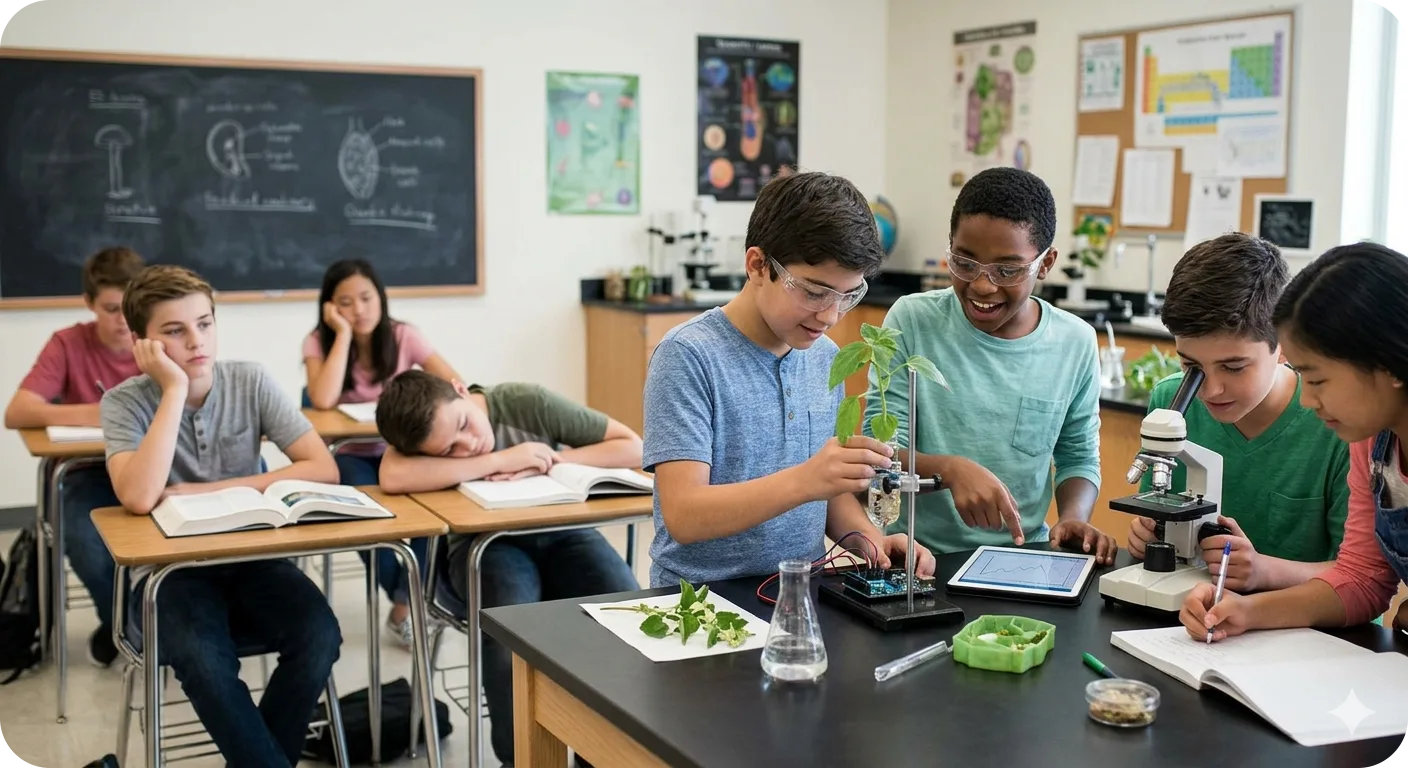
Modern experiential learning changes the role of students from passive listeners to active explorers.
Instead of simply reading about scientific concepts, students interact with simulations, experiments, animations, and visual models that allow them to observe science in action.
When students actively participate in learning, their brains create stronger mental connections. They begin to understand why something happens instead of merely remembering that it happens.
For example, in an interactive 3D Physics simulation on electromagnetism, students can:
- Increase or decrease the turns of a coil.
- Change voltage values.
- Swap core materials.
- Observe magnetic field intensity in real time.
- Experiment safely without laboratory limitations.
- Instantly visualize how each variable affects the outcome.
This transforms learning into an exploration process.
Instead of memorizing:
“More coil turns produce stronger magnetism”
students visually observe the field becoming denser and stronger. The concept becomes intuitive and memorable because they experienced it directly.
The Power of Visual Learning
Human brains process visuals far faster than plain text. Scientific concepts that appear complicated in books become much easier when represented visually.
Interactive visual learning helps students:
- Understand abstract concepts faster
- Retain information longer
- Improve analytical thinking
- Develop curiosity-driven learning habits
- Build confidence in STEM subjects
Complex topics such as:
- Electromagnetic fields
- Atomic structures
- Chemical bonding
- Human anatomy
- Wave mechanics
- Planetary motion
become engaging and understandable when students can interact with them dynamically.
Rather than imagining invisible scientific processes, students can actually see them unfold.
Learning Through Experimentation
One of the most important aspects of science is experimentation. Unfortunately, traditional classrooms often face limitations such as:
- Lack of laboratory equipment
- Time constraints
- Safety concerns
- Large classroom sizes
- Limited hands-on opportunities
Interactive digital learning environments solve many of these challenges.
Students can perform virtual experiments repeatedly without fear of mistakes. They gain freedom to test ideas independently, which encourages creativity and scientific thinking.
This process develops:
- Logical reasoning
- Observation skills
- Problem-solving ability
- Independent thinking
- Conceptual clarity
Most importantly, students stop fearing science and begin enjoying it.
How Interactive Learning Improves Retention
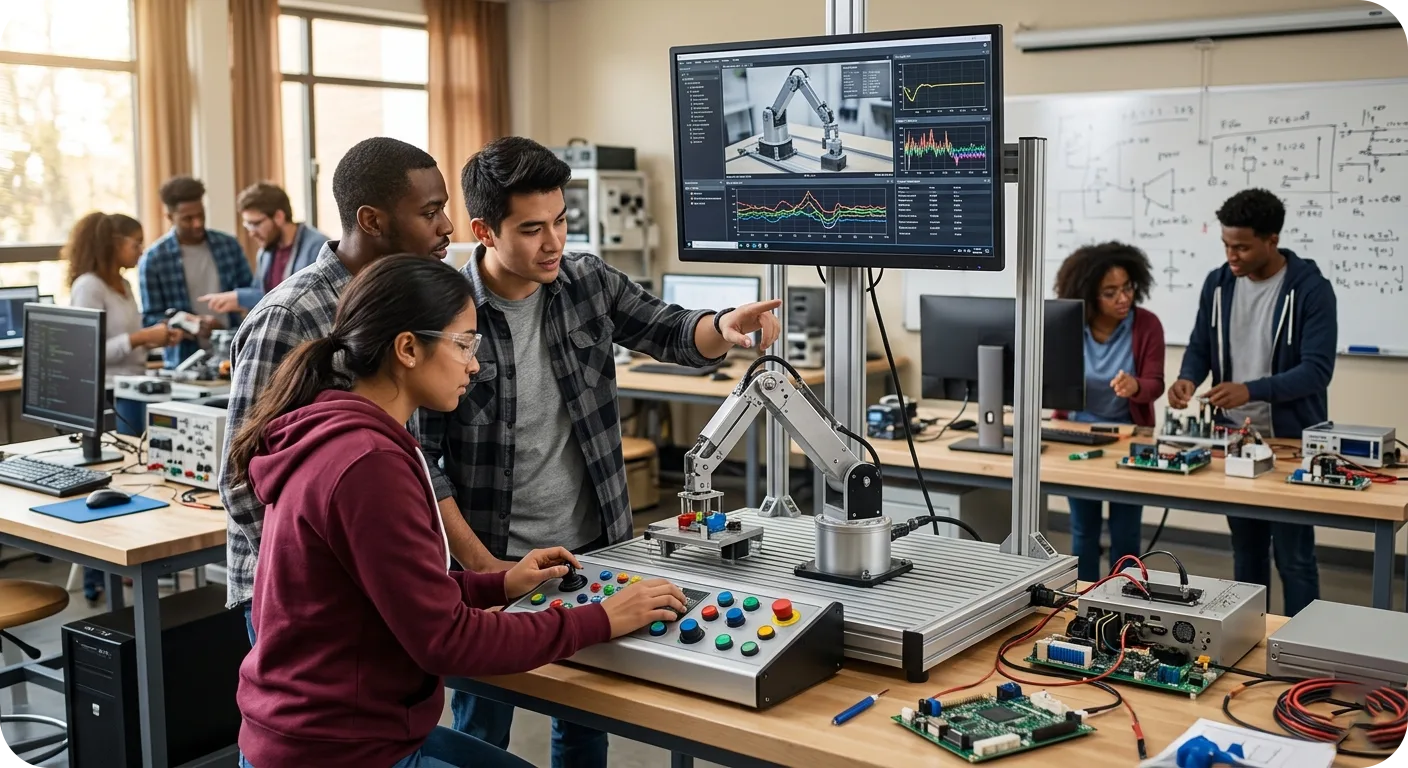
Research consistently shows that students retain information more effectively when they actively engage with learning material.
Traditional reading and memorization often create short-term memory retention. However, interactive learning activates multiple cognitive processes simultaneously:
- Visual learning
- Decision-making
- Experimentation
- Observation
- Immediate feedback
This combination significantly improves long-term understanding.
When students manipulate variables themselves and observe results instantly, the brain forms stronger associations with the concept. Learning becomes meaningful rather than mechanical.
Preparing Students for the Future
The future will increasingly demand skills such as:
- Critical thinking
- Innovation
- Creativity
- Adaptability
- Problem-solving
- Technological literacy
Memorization alone cannot prepare students for modern careers and scientific advancement.
Experiential learning helps students develop a mindset of exploration and innovation. It encourages them to think like scientists rather than exam writers.
Students become more willing to ask questions such as:
- “What happens if I change this variable?”
- “Why does this reaction occur?”
- “Can I improve this system?”
- “How does this apply in real life?”
This mindset is the foundation of real education.
Curriculum Alignment with Modern Learning
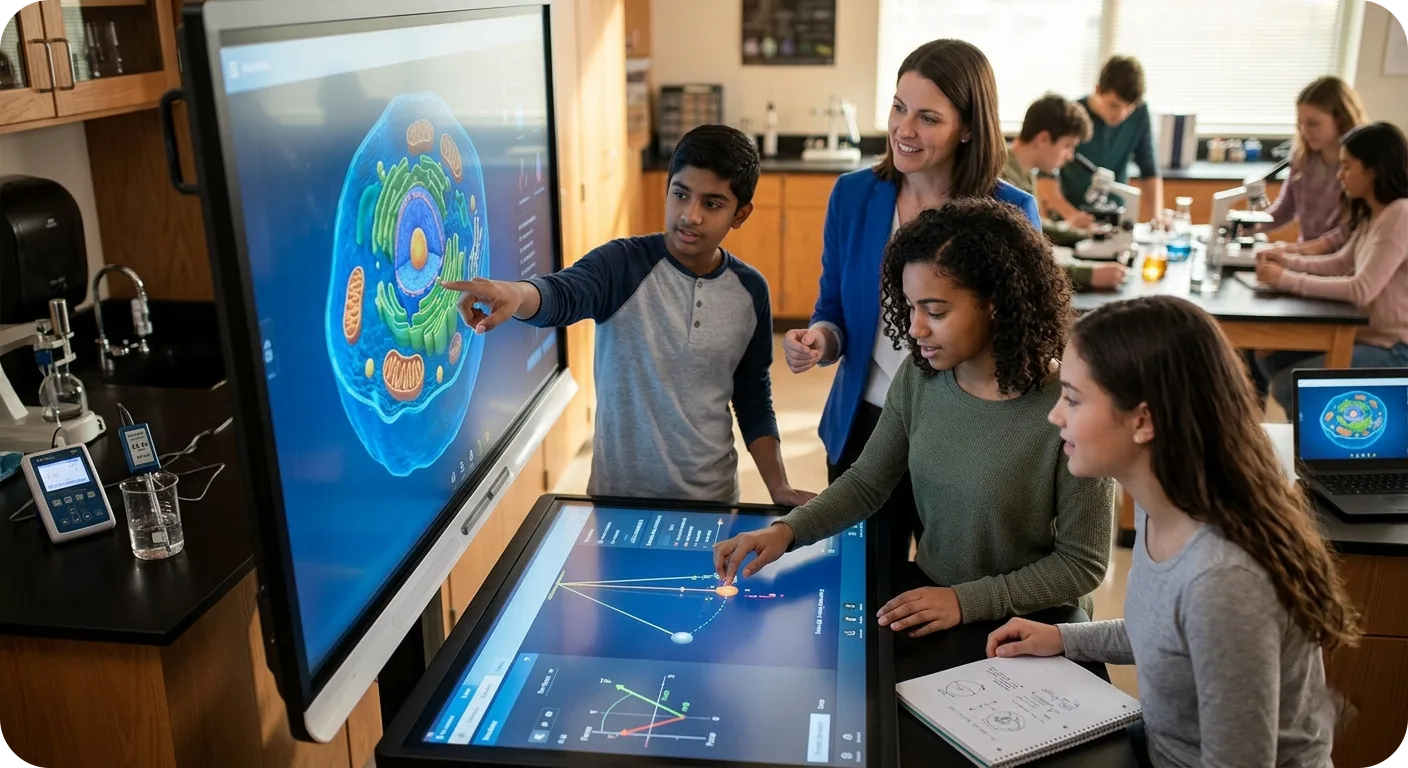
At VidyaXR, we believe science education should inspire curiosity instead of fear.
Our interactive learning modules are designed to align directly with CBSE chapters, making it easier for schools and teachers to integrate immersive learning into existing lesson plans.
By combining:
- 3D visualizations
- Interactive simulations
- Real-time experimentation
- Concept-based exploration
- Engaging digital experiences
we aim to transform classrooms into environments of discovery.
Students no longer remain passive receivers of information. They become explorers, thinkers, and innovators.
The Future of Science Education
Education is evolving rapidly. The next generation of classrooms will move beyond static textbooks and passive lectures toward immersive, interactive experiences.
The goal is not simply to help students score higher marks.
The real goal is to help students:
- Understand deeply
- Think independently
- Stay curious
- Apply knowledge confidently
- Build lifelong learning habits
Breaking rote memorization is the first step toward creating a stronger, smarter, and more innovative generation.
Science should not feel like remembering answers.
Science should feel like discovering the world.
Curriculum Alignment
At VidyaXR, we map our interactive modules directly to CBSE chapters so teachers can easily incorporate this experiential model into their daily lesson plans, transforming classroom lectures into discovery sessions.
We believe that when science is taught as a journey of discovery rather than a list of facts, students develop a lifelong curiosity. Breaking rote learning is the first step toward building a nation of innovators.
For a closer look at this, see our guides to Why Students Forget and Exam Stress in Indian Students.
For a closer look at this, see our guide to Board Exam Science Revision.
For a closer look at this, see our guides to Why Students Lose Interest in Studies and How to Change the Education System in India.