Exploring Space Science in 360° VR
Exploring Space Science in 360° VR
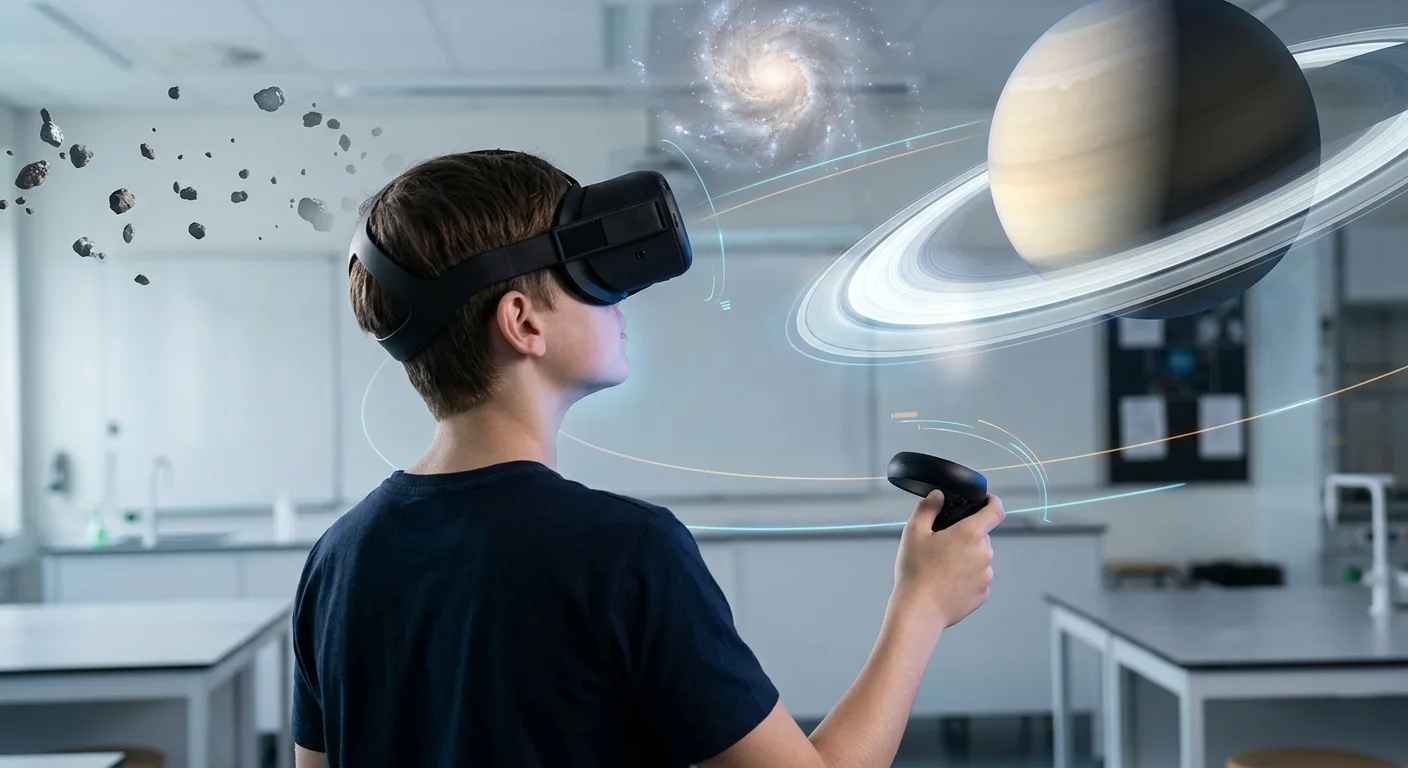
Space has always inspired curiosity. From the glowing rings of Saturn to the mysteries hidden inside distant galaxies, astronomy captures the imagination of students in ways few subjects can. Yet for many learners, understanding space through traditional textbooks and static classroom diagrams can feel distant and abstract. Reading about planets is very different from experiencing the scale of the solar system firsthand.
Today’s students grow up in a digital world where interaction and immersion play a major role in learning. This is where Virtual Reality (VR) is transforming science education. With immersive 360° experiences, students are no longer passive readers - they become explorers traveling through space, observing celestial bodies up close, and understanding complex scientific concepts through direct interaction.
At VidyaXR, we believe learning should feel alive, engaging, and unforgettable. Through browser-based VR experiences, students can step into the universe from any classroom without needing expensive hardware or specialized labs.
Turning Space Lessons Into Real Experiences
Traditional teaching methods often struggle to explain the enormous scale of space. Concepts like planetary distances, orbital motion, asteroid belts, and galaxy formations are difficult to visualize using flat images alone.
360° VR changes this completely by creating immersive environments where students can interact with space in a realistic and intuitive way.
Imagine students:
- Walking across the rocky surface of Mars
- Flying through Saturn’s rings
- Observing Earth from orbit
- Exploring the Moon’s craters in 3D
- Witnessing asteroid movement across the solar system
- Understanding planetary sizes through direct comparison
Instead of memorizing facts for exams, students experience astronomy visually and emotionally, making learning more meaningful and easier to retain.
Bringing Astronomy to Life
Through immersive VR modules, astronomy becomes an active learning journey rather than a one-way lecture.
Virtual Space Tours
Students can explore the solar system through guided 360° educational experiences. They can move through planetary systems, observe rotating planets, and understand how celestial bodies interact in space.
Understanding Scale and Distance
One of the biggest challenges in astronomy education is understanding scale. VR allows learners to visually compare the size of planets, moons, and stars while experiencing the vast distances between them in an intuitive way.
Interactive Learning
Instead of simply reading about orbit paths or asteroid belts, students can trace movements in real time and interact with scientific models directly within the virtual environment.
Better Engagement
Immersive learning naturally captures attention. Students become more curious, focused, and excited when they feel like participants inside the lesson instead of observers outside it.
Accessible for Schools
Many schools cannot afford expensive science laboratories or advanced astronomy equipment. Browser-based VR experiences make immersive education accessible using standard mobile devices, tablets, or laptops.
This creates equal learning opportunities for students in both urban and rural classrooms.
Why VR Improves Learning
Research consistently shows that students learn better when education combines visual interaction, exploration, and emotional engagement. VR supports all three.
Improved Concept Clarity
Complex scientific concepts become easier to understand when students can visualize them in three dimensions.
Higher Memory Retention
Students remember experiences more effectively than static information. Exploring a virtual galaxy leaves a stronger impression than reading paragraphs from a textbook.
Encourages Curiosity
Interactive learning encourages students to ask questions, investigate independently, and develop scientific thinking skills.
Reduces Classroom Boredom
Modern learners often struggle with long lectures and passive learning. VR creates dynamic classroom experiences that maintain student attention and participation.
The Future of Space Education
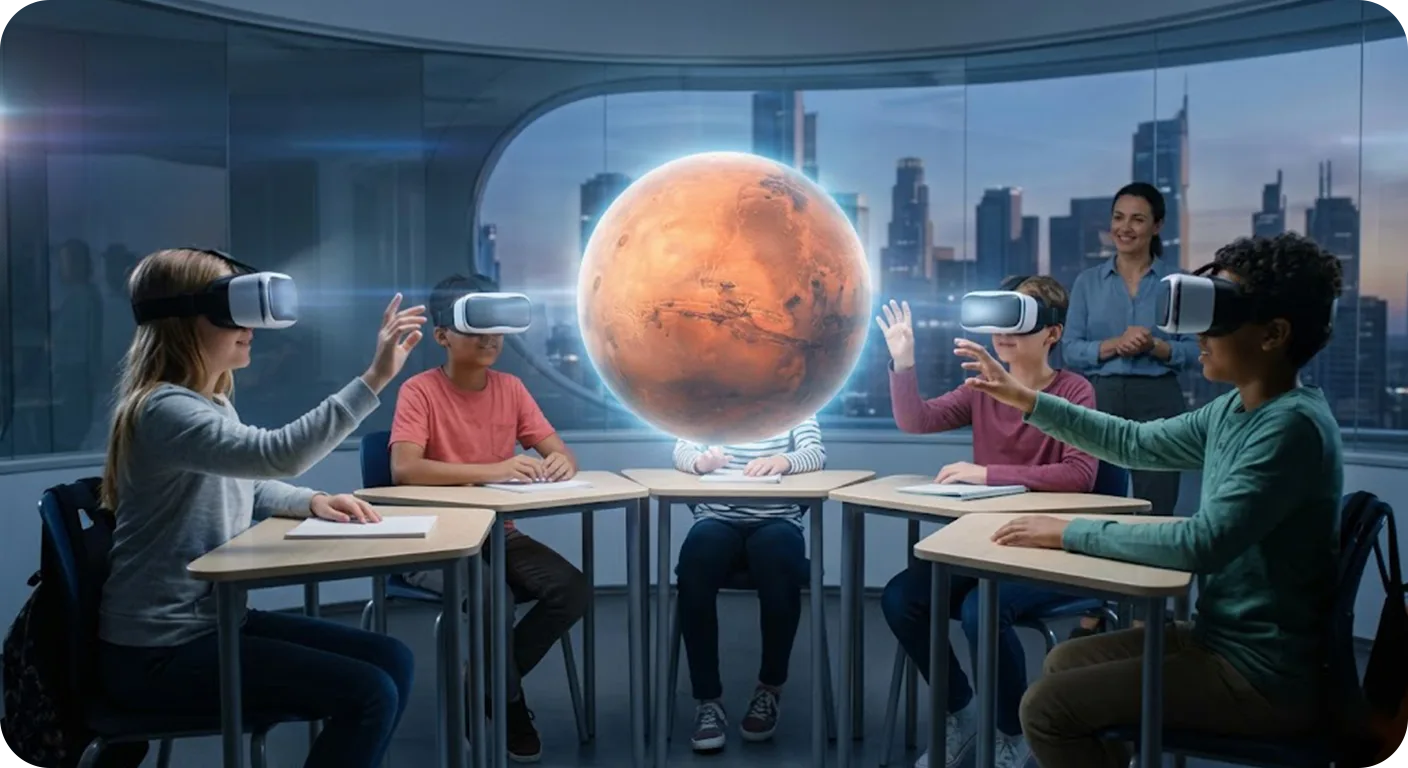
The future of education is moving toward immersive, experience-based learning. As VR technology becomes more accessible, classrooms around the world will shift from traditional memorization methods to interactive exploration.
In the coming years, students may:
- Attend virtual science labs
- Participate in simulated space missions
- Explore historical moon landings in VR
- Collaborate inside virtual classrooms
- Experience AI-powered astronomy guides
This evolution will help students develop deeper understanding, stronger creativity, and greater enthusiasm for STEM education.
Encouraging the Next Generation of Innovators
Space science is more than a school subject - it inspires imagination, innovation, and discovery. By making astronomy interactive and accessible, VR helps students dream bigger and think beyond classroom walls.
At VidyaXR, our mission is to make learning immersive, engaging, and accessible for every student. Through 360° VR experiences, we aim to transform science education into an exciting journey where students do not just study the universe - they experience it.
The universe is vast, fascinating, and full of possibilities. With immersive technology, the next generation of explorers can begin their journey today.
For a closer look at this, see our guide to VR Learning Without Headsets.