The Future of EdTech: How 3D & VR are Transforming Classrooms
The Future of EdTech: How 3D & VR Are Transforming Modern Classrooms
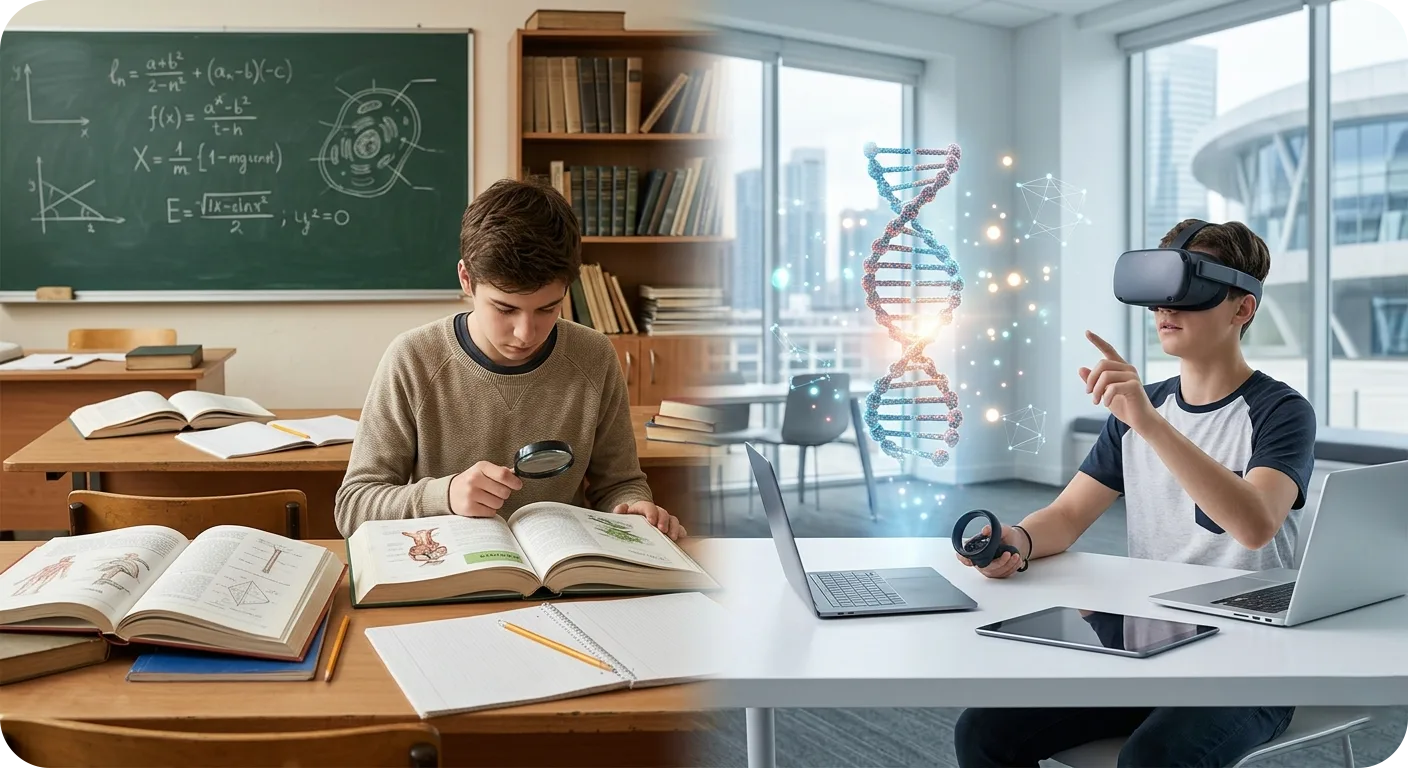
Traditional classrooms have relied on textbooks, whiteboards, and recorded video lectures for decades. While these methods still play an important role in education, they often struggle to explain complex concepts that require spatial understanding, visualization, and real-world interaction.
Today’s students grow up in a digital-first world where information is fast, visual, and interactive. As a result, modern education must evolve beyond passive learning. This is where 3D visualization and Virtual Reality (VR) are transforming the future of EdTech.
Instead of simply reading about a concept, students can now experience it.
Imagine exploring the human heart in 3D, walking through the solar system, interacting with molecular structures, or understanding historical civilizations through immersive simulations. These experiences make learning more engaging, memorable, and easier to understand.
Why Traditional Learning Methods Are Limited
Many academic subjects - especially STEM (Science, Technology, Engineering, and Mathematics) - involve concepts that are difficult to understand through flat images or long explanations alone.
For example:
- Understanding blood circulation from a textbook diagram
- Visualizing chemical bonding structures
- Learning astronomy through static images
- Understanding geometric transformations in mathematics
- Exploring biological systems without laboratory access
Students often memorize information without truly understanding it. This leads to reduced engagement, lower retention, and lack of curiosity.
Traditional learning methods are mostly passive:
- Watch
- Read
- Memorize
- Repeat
But immersive learning changes the process into:
- Explore
- Interact
- Experience
- Understand
The Rise of Experiential Learning
Experiential learning focuses on “learning by doing.” Research consistently shows that students retain information better when they actively participate in the learning process.
3D and VR technologies create immersive environments where students can:
- Rotate objects in real time
- Zoom into microscopic structures
- Interact with simulations
- Practice concepts visually
- Learn through exploration instead of memorization
For example, a student studying biology can examine a beating human heart in 3D, observe blood flow, and identify each chamber interactively. This creates a much deeper understanding than static diagrams.
Similarly, students learning astronomy can explore planets, orbit systems, and space simulations as if they were inside a virtual observatory.
The result is improved:
- Learning retention
- Focus and attention
- Concept clarity
- Student participation
- Academic confidence
Some studies suggest immersive learning experiences can improve retention rates significantly compared to traditional reading-based methods.
How 3D Visualization Improves Education
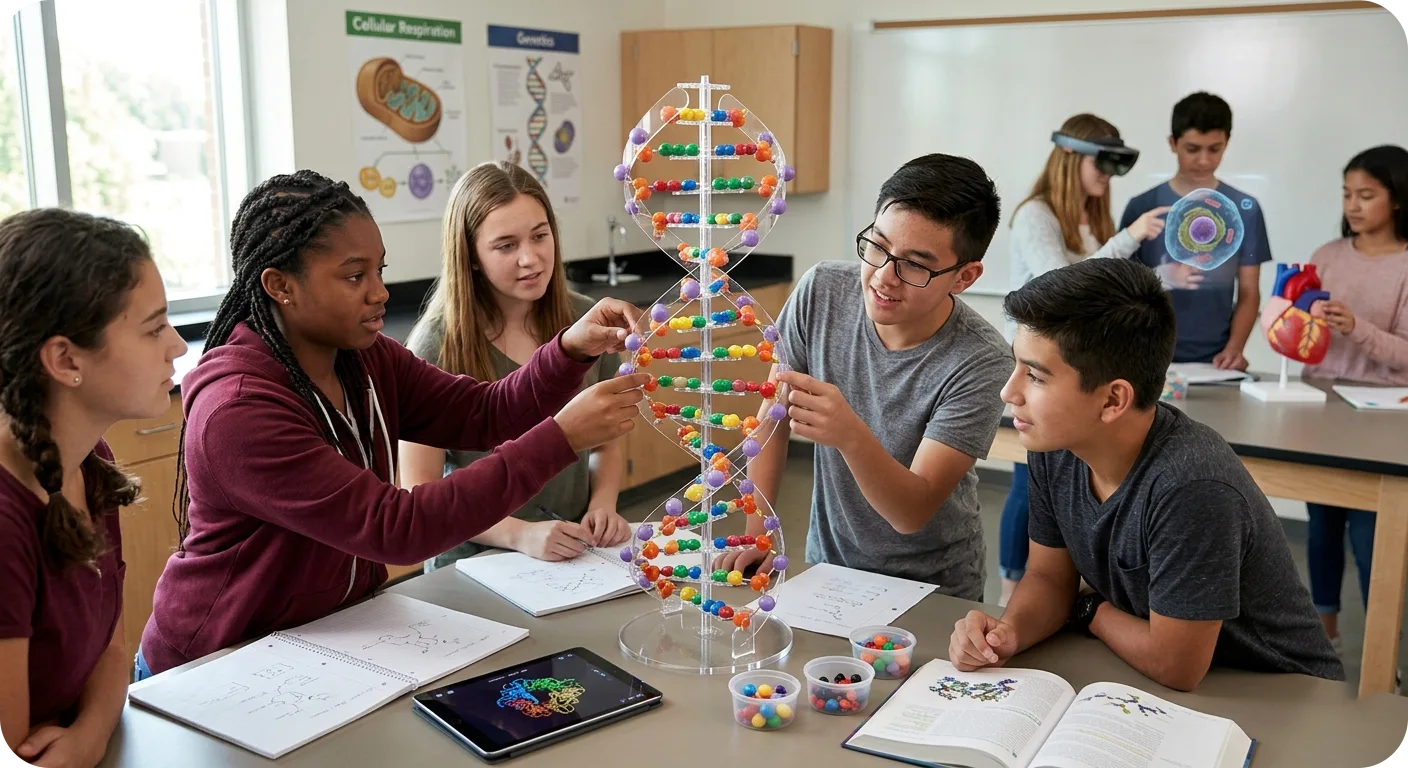
1. Better Concept Clarity
Complex topics become easier to understand when students can visualize them in three dimensions.
Instead of imagining structures mentally, learners can directly interact with them. This reduces confusion and accelerates comprehension.
Examples include:
- Human anatomy
- Molecular chemistry
- Mechanical engineering systems
- Physics simulations
- Mathematical geometry
2. Increased Student Engagement
Long lectures and static presentations often reduce student attention spans. Interactive environments naturally capture curiosity and encourage participation.
Gamified learning environments and immersive simulations make students feel involved rather than forced to study.
When learning becomes enjoyable, students stay motivated longer.
3. Accessibility and Remote Learning
Modern immersive education no longer requires expensive VR labs alone.
Today, browser-based 3D learning platforms allow students to access interactive lessons from:
- Smartphones
- Tablets
- Laptops
- Desktop computers
This makes advanced learning experiences accessible even for remote or under-resourced students.
4. Personalized Learning Experiences
Every student learns differently.
Some students learn visually, while others understand concepts better through interaction or audio guidance. Immersive learning platforms support multiple learning styles simultaneously.
Visual Learners
Understand diagrams, structures, and animations quickly.
Kinesthetic Learners
Learn effectively through interaction and manipulation.
Auditory Learners
Benefit from guided narration and voice-assisted learning.
This flexibility helps students learn at their own pace.
The Role of VR in Future Classrooms
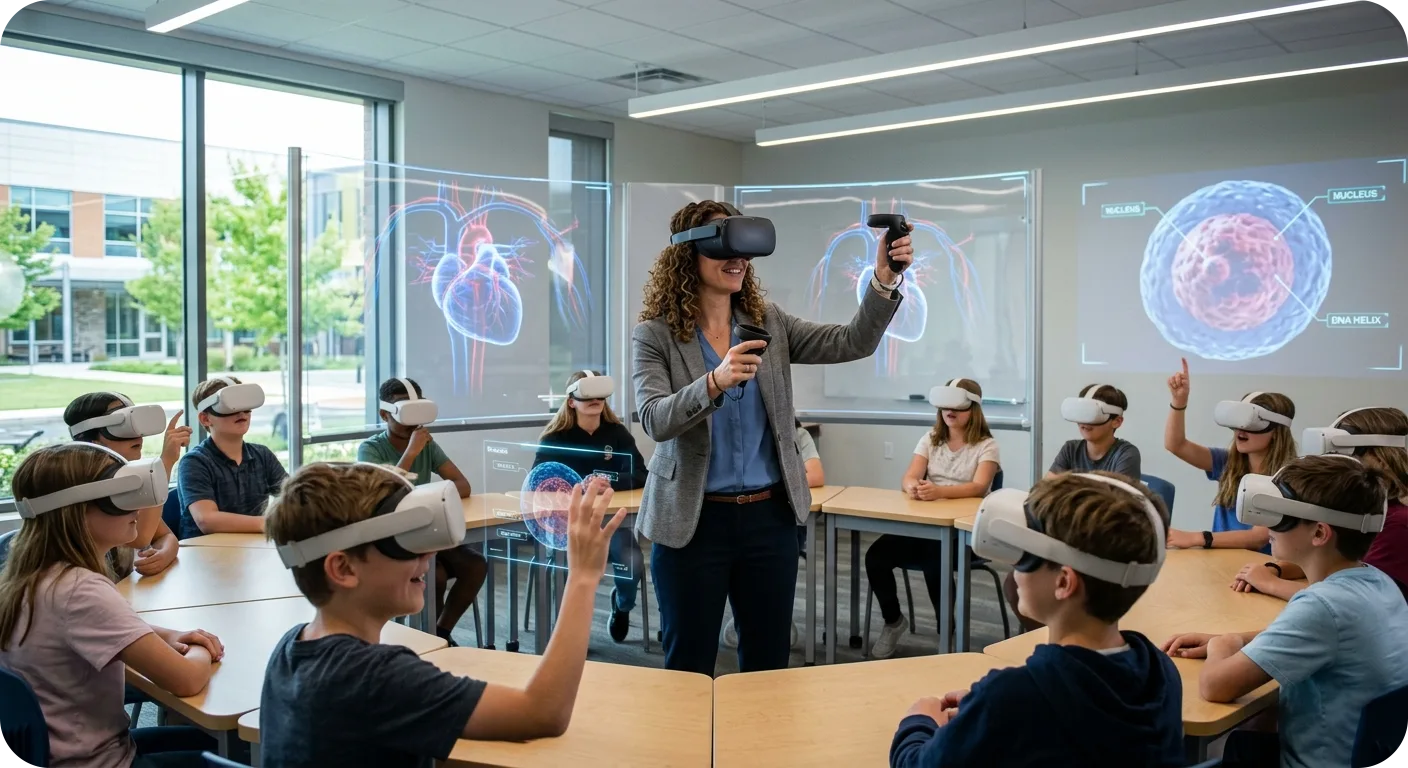
Virtual Reality is not meant to replace teachers. Instead, it enhances teaching by giving educators powerful tools to explain difficult subjects more effectively.
Future classrooms may include:
- Virtual science laboratories
- Interactive historical simulations
- AI-powered tutoring systems
- Collaborative 3D classrooms
- Immersive language learning environments
Students could perform chemistry experiments safely in virtual labs or walk through ancient civilizations without leaving the classroom.
This creates opportunities for deeper understanding while reducing infrastructure limitations.
The Future of EdTech is Interactive
Education is rapidly shifting from passive content consumption to immersive interaction.
Modern students expect:
- Faster understanding
- Interactive experiences
- Personalized learning
- Visual explanations
- Mobile accessibility
3D and VR technologies are helping educational platforms meet these expectations while improving learning outcomes.
As internet access, cloud computing, and browser-based graphics continue to improve, immersive learning will become more affordable and widely available across schools and institutions.
At VidyaXR, the mission is to make immersive education accessible to every student through interactive 3D learning experiences aligned with modern educational needs.
By combining:
- Interactive visualization
- Browser-based accessibility
- Engaging educational design
- CBSE-aligned modules
- Modern UI/UX experiences
VidyaXR aims to transform how students learn difficult subjects and improve academic understanding through exploration-based learning.
The goal is simple:
Make education more engaging, understandable, and accessible for every learner.
Conclusion
The future of education is not about replacing traditional teaching methods - it is about enhancing them with immersive technology.
3D visualization and Virtual Reality are redefining how students interact with knowledge. Instead of memorizing concepts passively, learners can now experience them in ways that improve understanding, engagement, and retention.
For a closer look at this, see our guides to VR in Smart Classrooms and Best VR Apps for Education in India.
For a closer look at this, see our guide to VR Learning, XR Classrooms and AI Education Solutions Explained.