Personalized EdTech: The Rise of AI Science Tutors
Personalized EdTech: The Rise of AI Science Tutors
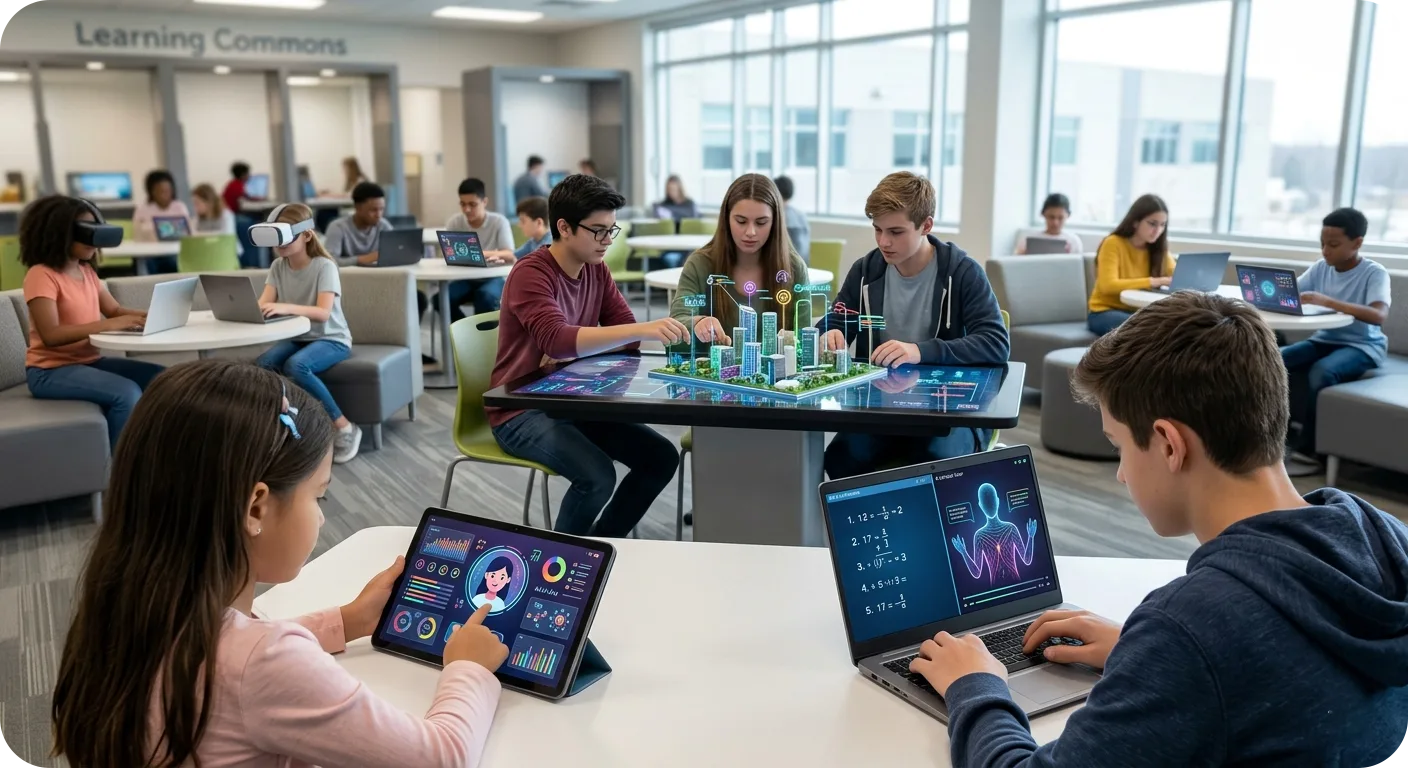
Education is entering a new era where learning is no longer limited by classroom pace, language barriers, or one-size-fits-all teaching methods. Students today expect learning experiences that are interactive, visual, flexible, and personalized. This shift is driving the rapid growth of AI-powered EdTech platforms that can adapt to every learner individually.
Traditional classrooms often struggle to address the needs of every student equally. Some learners grasp concepts quickly, while others require repeated explanations, visual demonstrations, or localized language support. In subjects like physics, chemistry, biology, and mathematics, a single missed concept can affect a student’s understanding of an entire chapter.
This is where AI science tutors are transforming modern education.
Instead of relying only on static videos or textbooks, AI-powered tutoring systems combine intelligent assistance, interactive 3D visualization, voice support, and adaptive learning to create a more engaging educational experience.
Why Traditional Learning Models Face Limitations
Every classroom consists of students with different learning speeds, attention spans, and comprehension levels. A teacher explaining a scientific concept to a large class cannot pause continuously to solve every individual doubt without affecting the lesson flow.
As a result, many students:
- Hesitate to ask questions
- Fall behind in difficult subjects
- Memorize concepts without understanding them
- Lose interest in STEM education
- Depend heavily on private tuition
Modern EdTech solutions are solving these challenges by introducing AI tutors that provide personalized support anytime, anywhere.
What Are AI Science Tutors?
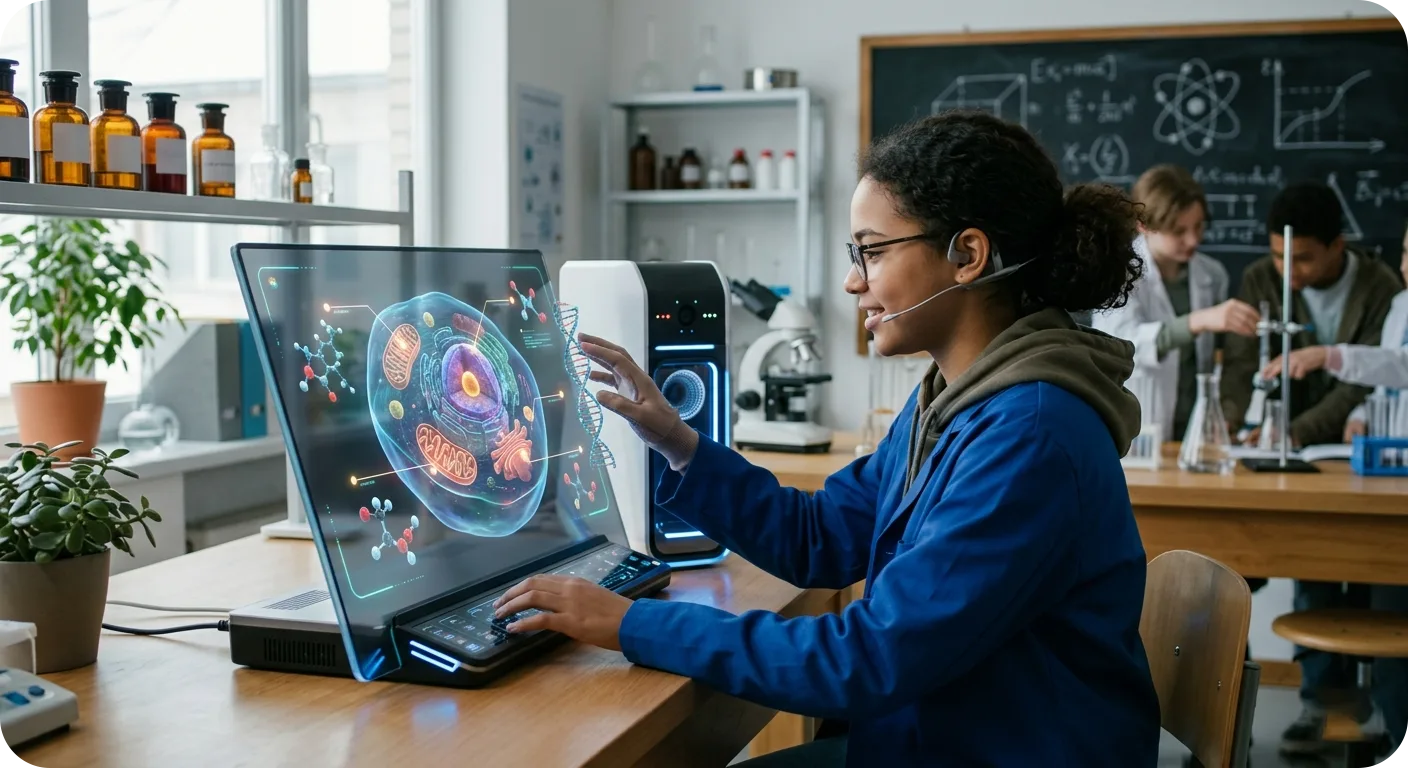
AI science tutors are intelligent educational systems designed to help students understand scientific concepts interactively. These tutors use technologies such as:
- Artificial Intelligence (AI)
- Natural Language Processing (NLP)
- 3D visualization
- Voice interaction
- Adaptive learning systems
- Real-time analytics
Unlike traditional educational software, AI tutors can:
- Understand student questions
- Explain concepts step-by-step
- Adjust explanations based on student performance
- Provide multilingual assistance
- Offer personalized learning paths
The goal is not to replace teachers, but to enhance learning accessibility and improve conceptual understanding.
Custom Learning Paths at Scale
One of the biggest advantages of AI-powered education is personalization.
With an AI doubt-solving assistant integrated alongside interactive 3D science modules, students can ask questions in real-time while exploring complex concepts visually.
For example:
- A biology student can interact with a 3D human heart model and ask how blood circulation works.
- A physics learner can replay projectile motion simulations at their own speed.
- A chemistry student can visualize molecular structures from multiple angles.
Key Benefits of Personalized AI Learning
Instant Clarification
Students receive immediate explanations instead of waiting for classroom doubt sessions or tuition classes.
Multilingual Support
AI tutors can translate scientific terminology into regional languages, helping students learn more comfortably.
Personalized Pace
Every student learns differently. AI systems allow learners to pause, repeat, replay, and explore concepts at their own speed.
Interactive Visualization
Complex theories become easier to understand through immersive 3D content and simulations.
Better Retention
Students remember concepts more effectively when they actively interact with learning materials instead of passively reading textbooks.
The Power of 3D + AI in Science Education
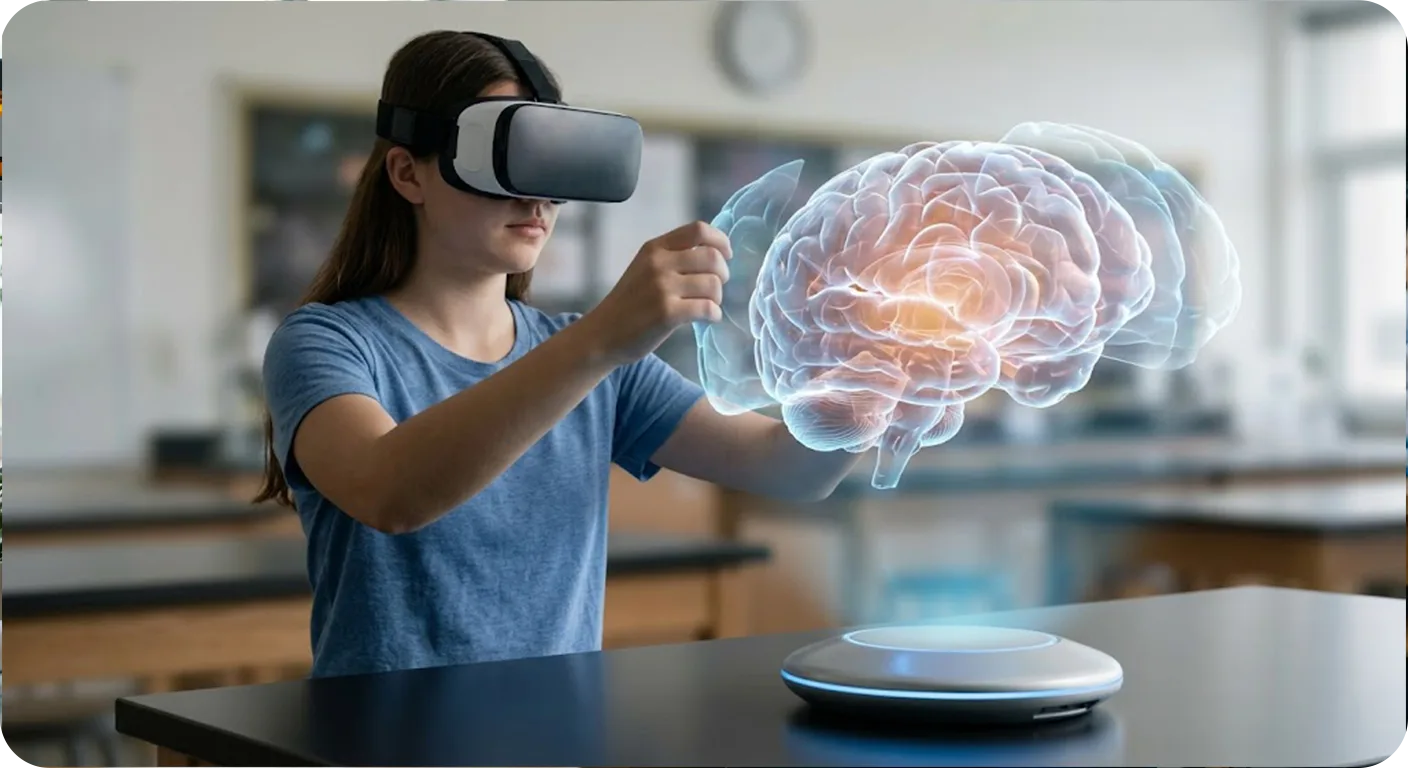
Science subjects often become difficult because students cannot visualize abstract concepts.
Topics like:
- Human anatomy
- DNA structures
- Atomic models
- Electromagnetic fields
- Planetary systems
- Chemical reactions
are much easier to understand when students can interact with them in 3D environments.
When AI guidance is added to these experiences, learning becomes significantly more engaging and effective.
Imagine a student studying genetics:
- They can rotate a DNA model in 3D
- Ask the AI tutor questions instantly
- Listen to explanations in their preferred language
- Receive simplified answers based on their understanding level
This creates an immersive learning ecosystem that improves both curiosity and confidence.
AI Tutors Improve Accessibility
One of the most powerful impacts of AI-driven EdTech is educational accessibility.
Many students across the world lack access to:
- High-quality tutoring
- Advanced science labs
- Personalized mentoring
- Local-language educational resources
AI tutoring platforms help bridge this gap by making quality education scalable and affordable.
Students from different socio-economic backgrounds can access:
- Personalized learning
- Visual science simulations
- Interactive educational content
- 24/7 academic support
This democratizes education and creates more equal learning opportunities.
The Role of AI Tutors in Future Classrooms
Future classrooms are expected to become hybrid learning environments where:
- Teachers guide and mentor
- AI systems provide personalized assistance
- 3D content enhances conceptual learning
- Analytics track student progress
- Learning adapts dynamically to student needs
Teachers will continue to play a critical role in motivation, emotional intelligence, creativity, and mentorship. AI tutors act as supportive assistants that reduce repetitive explanations and improve individual learning outcomes.
Challenges and Ethical Considerations
Although AI-powered education offers major advantages, responsible implementation remains important.
Educational platforms must ensure:
- Student data privacy
- Ethical AI usage
- Accurate educational information
- Inclusive content design
- Reduced overdependence on automation
The ideal future of education combines human teaching expertise with intelligent technological support.
Why AI-Powered Personalized Learning Matters
The future of education is not simply digital - it is intelligent, interactive, immersive, and adaptive.
Students no longer want passive learning experiences. They want:
- Real-time interaction
- Personalized guidance
- Visual understanding
- Flexible learning methods
- Faster doubt resolution
AI science tutors are helping make this future possible by transforming how students understand and experience education.
As technologies like AI, XR, and 3D learning continue evolving, personalized EdTech platforms will play a major role in shaping smarter, more accessible education systems worldwide.
For a closer look at this, see our guide to AI Tutors for Indian Students.
Final Thoughts
The rise of AI science tutors represents one of the most important transformations in modern education. By combining artificial intelligence with immersive 3D learning experiences, educational platforms can create highly engaging and personalized environments that improve understanding, retention, and accessibility.
The future classroom will not replace teachers with AI. Instead, it will empower both teachers and students with smarter tools that make learning more effective, inclusive, and interactive.
Personalized learning is no longer a future concept - it is already becoming the foundation of next-generation education.