The Rise of Micro-Learning in XR Education: Why Short Interactive Experiences Are Winning in 2026
The Rise of Micro-Learning in XR Education: Why Short Interactive Experiences Are Winning in 2026
The Rise of Micro-Learning in XR Education: Why Short Interactive Experiences Are Winning in 2026
Introduction
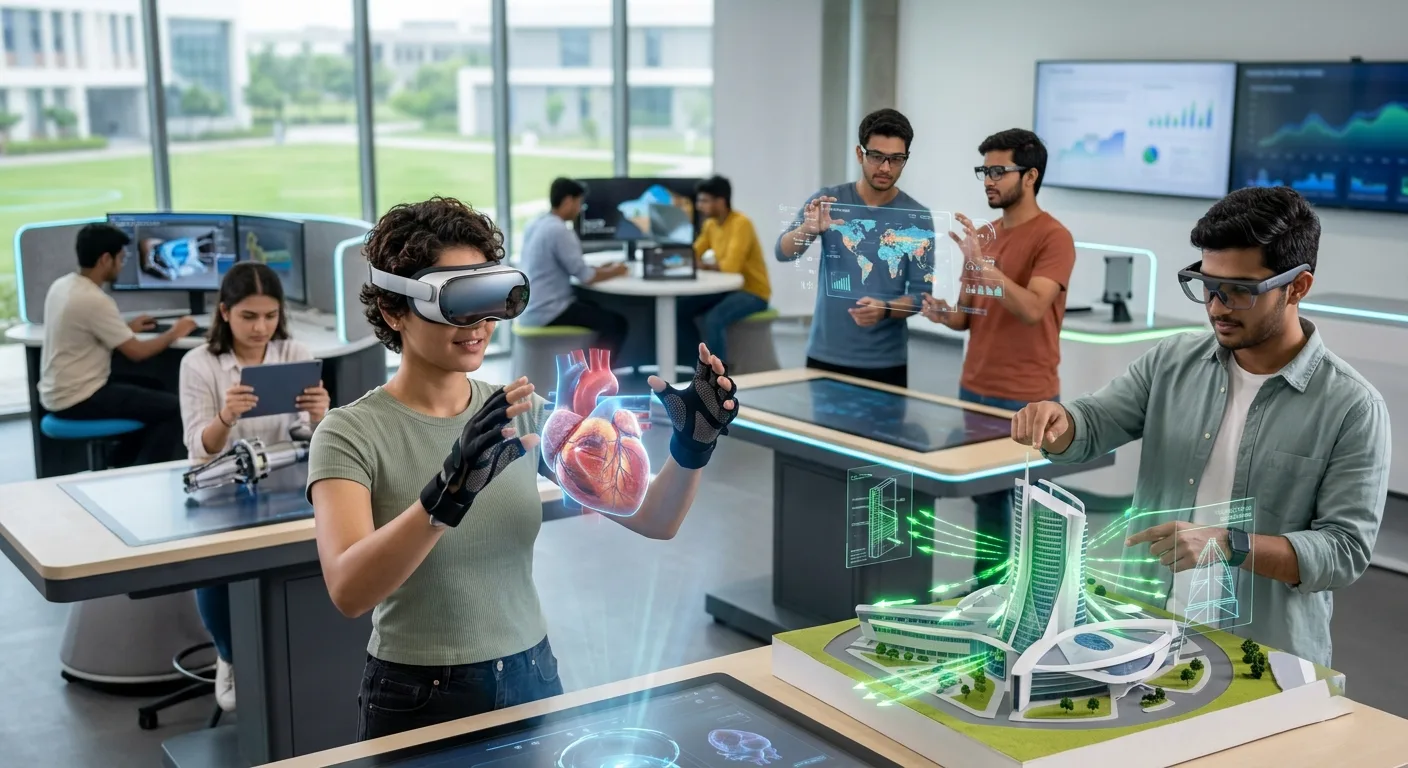
The education industry is undergoing a major transformation in 2026. Traditional learning methods are gradually being replaced by more engaging, interactive, and experience-driven approaches. Students today consume information differently than previous generations. Their attention spans are shorter, their expectations are higher, and they prefer learning experiences that are quick, visual, and practical.
This shift has given rise to Micro-Learning, one of the fastest-growing educational trends worldwide. When combined with Extended Reality (XR) technologies such as Virtual Reality (VR), Augmented Reality (AR), and Mixed Reality (MR), micro-learning is creating a new era of education that is more effective, engaging, and accessible than ever before. Experts increasingly highlight immersive and experiential learning as a major trend shaping education and workforce development in 2026.
At platforms like VidyaXR, the focus is shifting from passive content consumption toward interactive learning experiences where students actively explore concepts instead of simply reading about them.
What is Micro-Learning?
Micro-learning is a learning approach that delivers educational content in small, focused, and easily digestible modules.
Instead of attending a 60-minute lecture, students learn through:
- 3–5 minute learning experiences
- Interactive simulations
- Short concept-based activities
- Quick assessments
- Visual demonstrations
- Real-time experiments
The goal is simple:
Learn one concept at a time, understand it clearly, and apply it immediately.
This method aligns perfectly with modern student behavior, where learners prefer quick access to information rather than long, uninterrupted study sessions.
Why Traditional Learning Often Fails to Maintain Attention
Many students struggle with:
- Long lectures
- Information overload
- Passive learning environments
- Memorization-based education
- Lack of practical application
Research across immersive learning and learning design trends shows that engagement increases significantly when learners actively participate rather than simply consume information. XR environments help bridge the gap between theory and real-world application.
For example, reading about the human heart in a textbook may help students memorize facts.
But entering a 3D interactive heart model, exploring blood flow, and observing the pumping process creates a much deeper understanding.
Why XR and Micro-Learning Work Perfectly Together
XR technology transforms learning into an experience.
When combined with micro-learning, students can:
Learn Faster
Instead of studying an entire chapter, learners can focus on one concept at a time.
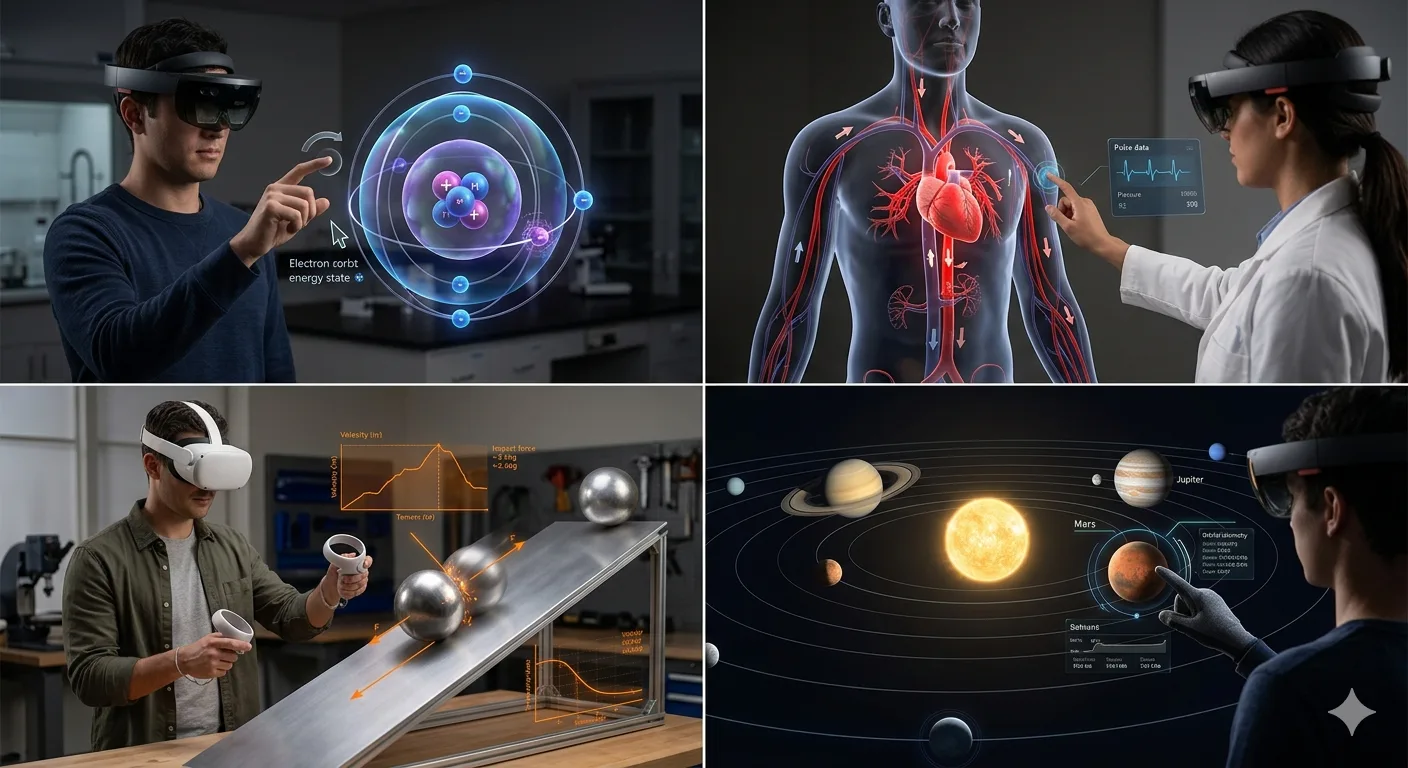
Example:
- Structure of an atom
- Blood circulation
- Newton's laws
- Solar system motion
Each topic can become a short interactive XR session.
Improve Knowledge Retention
Students remember experiences more effectively than information.
Interactive exploration allows learners to:
- Observe
- Interact
- Experiment
- Discover outcomes
This active participation improves long-term retention compared to passive reading.
Learn Anytime, Anywhere
Modern XR platforms are becoming increasingly accessible through browsers, smartphones, and lightweight immersive devices. Industry trends show XR moving beyond experimental adoption into mainstream education and training environments.
Students no longer need expensive laboratories or physical equipment to explore complex concepts.
A simple device can provide access to:
- Virtual science labs
- 3D educational models
- Interactive experiments
- Immersive simulations
Real Examples of XR Micro-Learning
Science Education
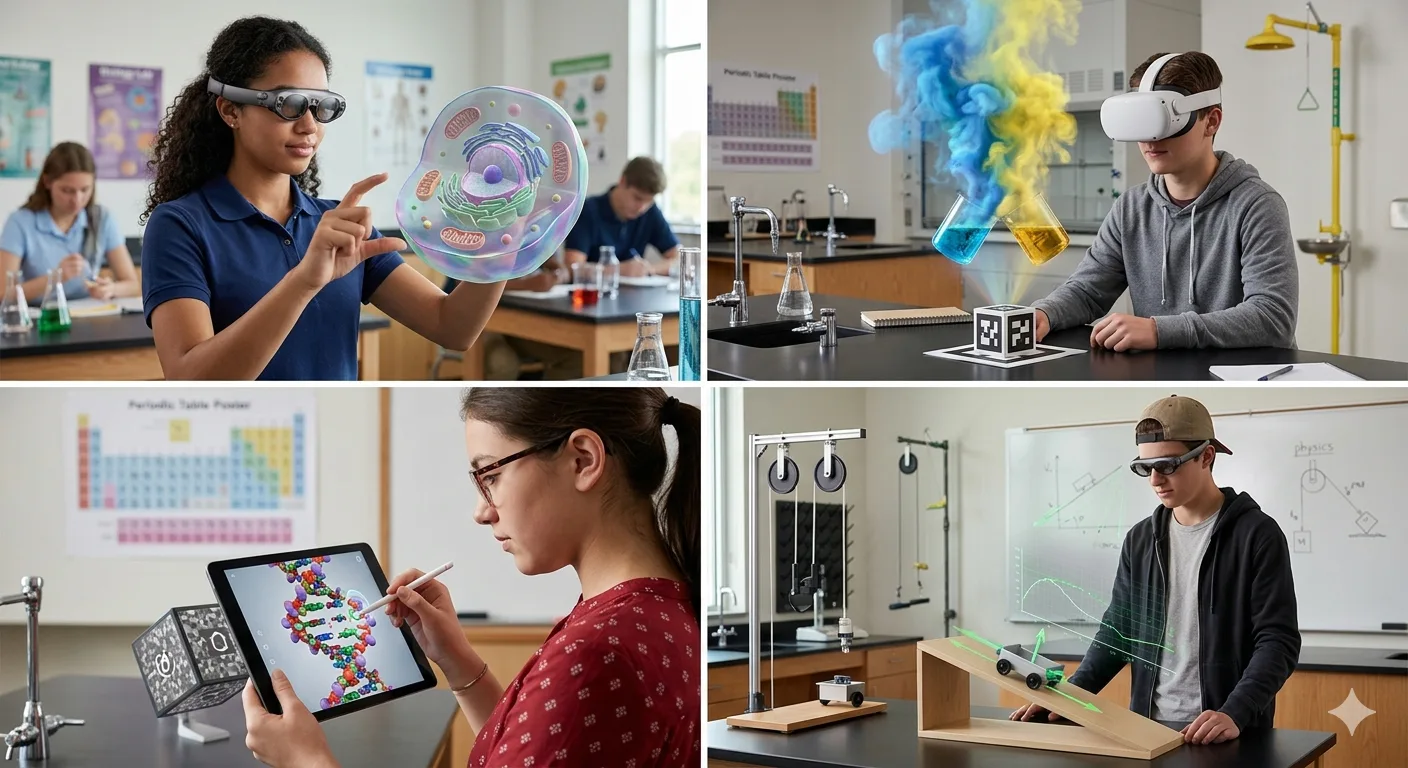
Students can:
- Explore cell structures in 3D
- Observe chemical reactions safely
- Interact with molecular models
- Understand physics concepts visually
Medical Training
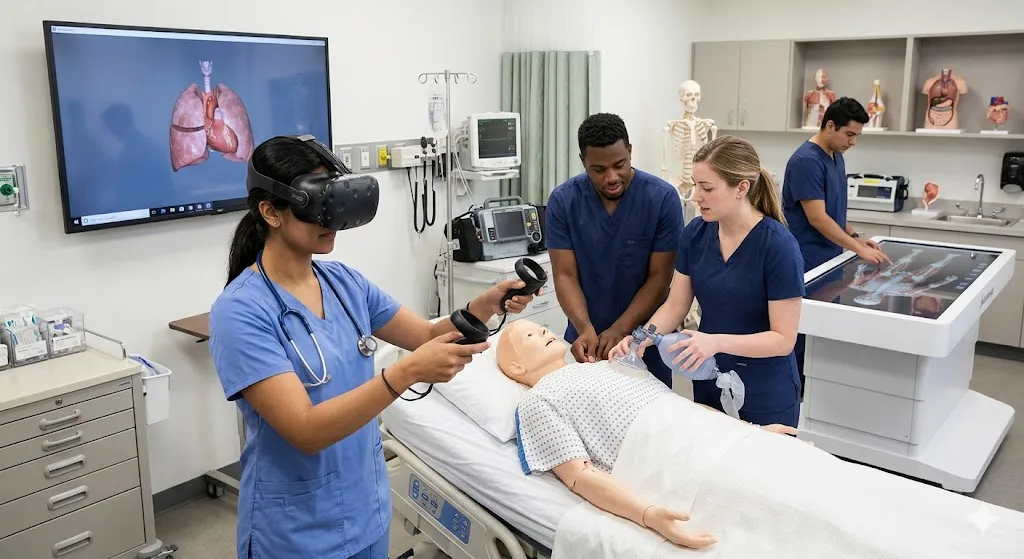
Medical students can:
- Practice procedures virtually
- Explore anatomy interactively
- Simulate clinical scenarios
- Repeat learning exercises without risk
Healthcare is one of the fastest-growing sectors adopting immersive learning and simulation-based training.
Engineering Education
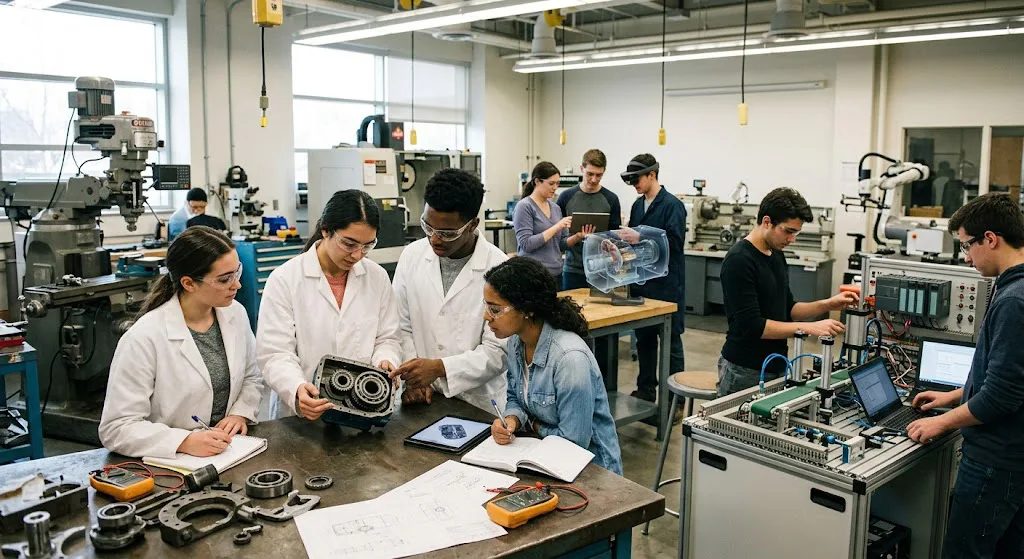
Students can:
- Examine machine components
- Explore industrial systems
- Understand mechanisms through interaction
- Visualize complex structures
School Learning
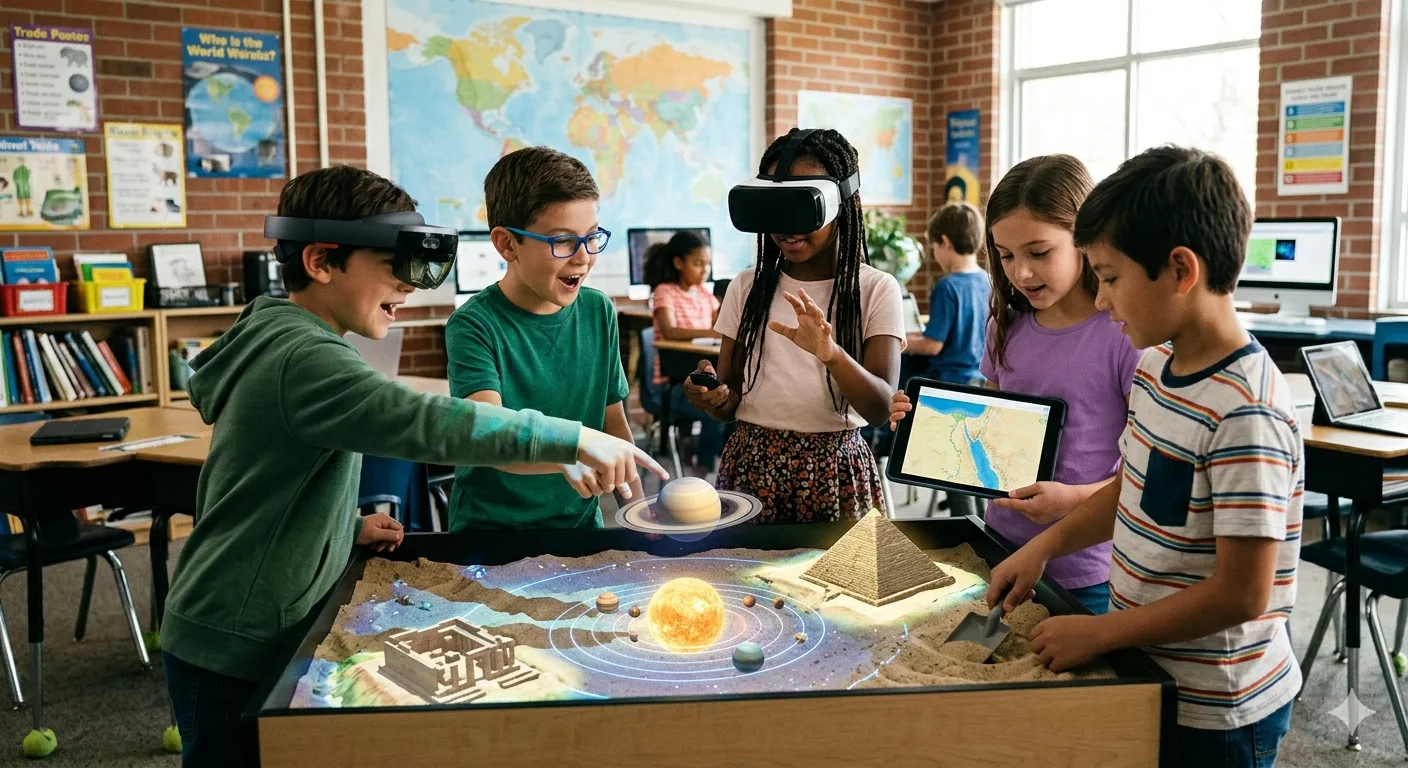
Young learners can:
- Walk through the solar system
- Explore ancient civilizations
- Learn geography through immersive environments
- Experience storytelling in 3D
The Shift from Watching to Doing
One of the biggest educational changes happening in 2026 is the movement from passive learning to active learning.
Traditional model:
Watch → Memorize → Forget
XR Micro-Learning model:
Explore → Interact → Understand → Remember
This shift aligns with the growing demand for experiential learning environments where students actively participate in the learning process rather than simply consume information.
Challenges and Opportunities
While XR education offers enormous potential, successful implementation requires:
- Accessible technology
- Optimized performance
- Student-friendly interfaces
- Responsible data practices
- Inclusive learning experiences
Researchers continue to emphasize the importance of accessibility, privacy, and learner-centered design as XR becomes more widely adopted in education.
Organizations that focus on usability and real educational value will lead the next generation of learning platforms.
How Platforms Like VidyaXR Are Contributing
The future of education is not about replacing teachers.
It is about enhancing learning experiences.
Platforms such as VidyaXR are exploring ways to make learning more interactive through:
- 3D educational content
- Virtual experiments
- WebXR accessibility
- Concept-based navigation
- Immersive learning experiences
The goal is to help students move beyond passive video consumption and engage directly with concepts through exploration and interaction. Community discussions around immersive learning platforms increasingly emphasize hands-on learning, interactive concepts, and WebXR accessibility.
Conclusion
Micro-learning and XR are rapidly becoming a powerful combination in modern education. As students demand faster, more engaging, and more practical learning experiences, traditional content formats are evolving toward interactive, concept-focused learning.
In 2026, success in education is no longer defined by how much information students consume. It is defined by how effectively they understand, experience, and apply what they learn.
The future classroom is not limited to textbooks and lectures.
It is immersive, interactive, and experiential.
And micro-learning powered by XR is helping build that future today
For a closer look at this, see our guide to Why Students Forget.