The Rise of WebXR in Education: Why Browser-Based Learning Is the Future in 2026
The Rise of WebXR in Education: Why Browser-Based Learning Is the Future in 2026
Education technology is entering a new phase.
For years, immersive learning experiences required expensive VR headsets, powerful computers, app installations, and complex setups. While Virtual Reality (VR) and Augmented Reality (AR) transformed how students interact with content, accessibility remained one of the biggest challenges.
In 2026, a new approach is changing everything:
WebXR
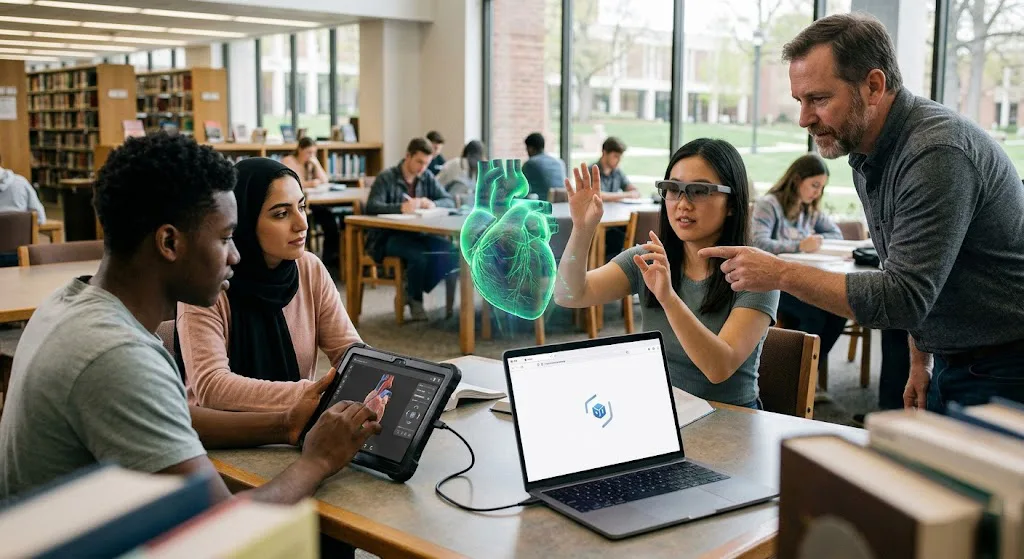
WebXR allows immersive 3D, AR, and VR experiences directly through a web browser without requiring large downloads or dedicated applications.
This shift is making immersive education faster, more accessible, and scalable than ever before.
Platforms similar to VidyaXR are exploring how browser-based XR experiences can remove traditional barriers and make interactive learning available on almost any device.
What Is WebXR?
WebXR is a modern web technology that enables virtual and augmented reality experiences directly inside browsers.
Instead of downloading large applications, students can simply:
- Open a link
- Access a lesson instantly
- Interact with 3D content
- Explore virtual environments
- Conduct simulations and experiments
All through a browser.
This dramatically reduces friction for both students and educators.
Why Traditional E-Learning Is Losing Student Attention
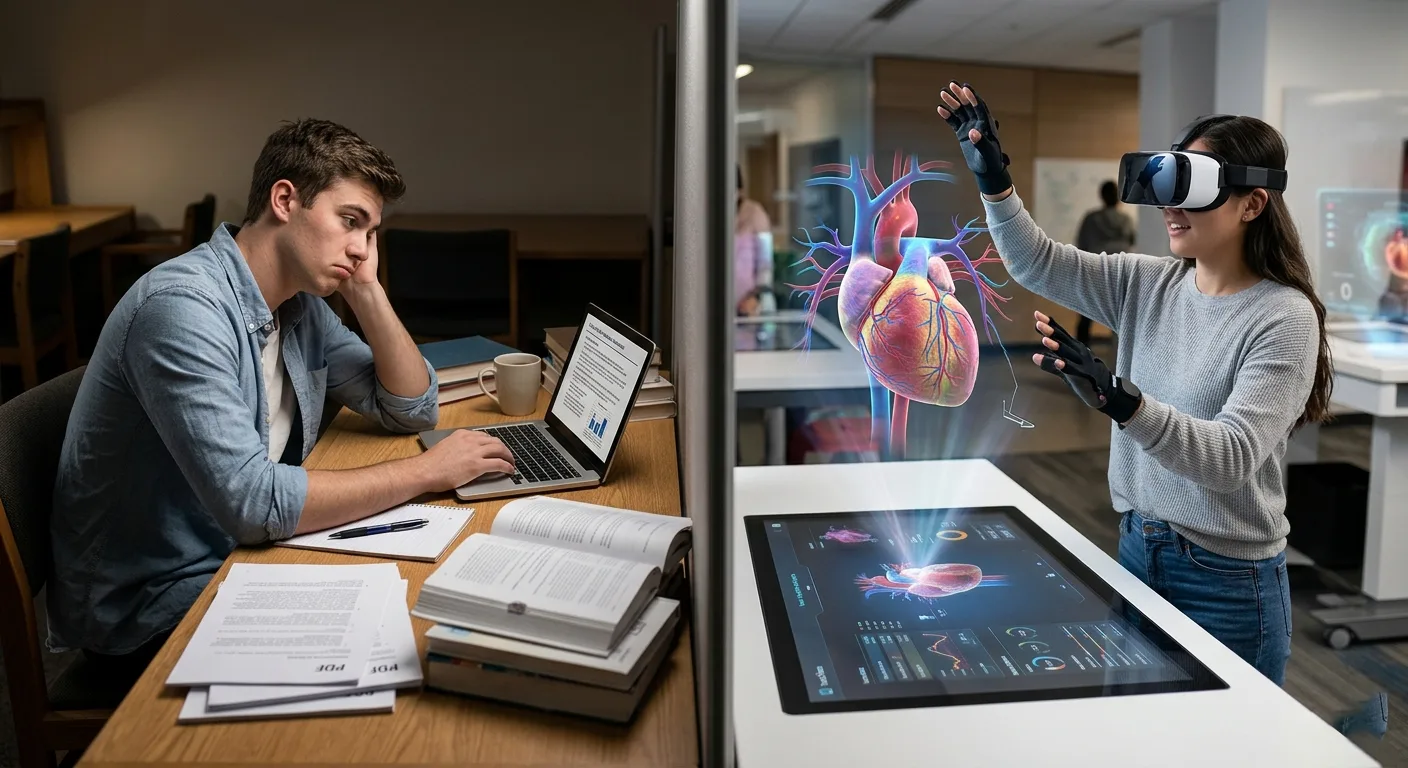
Most online education platforms still rely on:
- Long video lectures
- Static PDFs
- Slide presentations
- Passive content consumption
The problem is simple:
Students watch.
But they don't always experience.
Research around XR learning consistently shows that interactive and immersive environments improve engagement, concept visualization, and experiential understanding.
Modern learners want to:
- Explore
- Interact
- Experiment
- Visualize concepts
rather than simply memorize information.
How WebXR Makes Learning More Effective
1. Interactive Learning Instead of Passive Watching
Imagine learning:
- Human anatomy by exploring organs in 3D
- Physics through real-time simulations
- Chemistry with virtual experiments
- Astronomy by traveling through the solar system
Instead of reading about concepts, students interact with them.
This creates a deeper understanding and better retention.
2. No App Downloads Required
One of the biggest reasons students abandon learning platforms is friction.
Traditional XR platforms often require:
Large downloads
- Device setup
- Software installation
- Updates
WebXR removes these obstacles.
Students can access experiences instantly through a browser link.
This makes onboarding significantly easier.
3. Learning Anywhere
WebXR works across:
- Smartphones
- Tablets
- Laptops
- Desktop computers
- VR Headsets
This flexibility makes immersive education available to a much larger audience.
Schools don't need expensive infrastructure to begin implementing XR learning.
4. Better Concept Visualization
Many educational topics are difficult because students cannot visualize them.
Examples include:
- Molecular structures
- Internal body systems
- Mechanical processes
- Geometric transformations
- Scientific experiments
3D visualization helps students understand these concepts much faster.
Platforms such as vidyaxr.in focus heavily on turning textbook diagrams into interactive 3D learning experiences.
Why Schools Are Moving Toward Experiential Learning
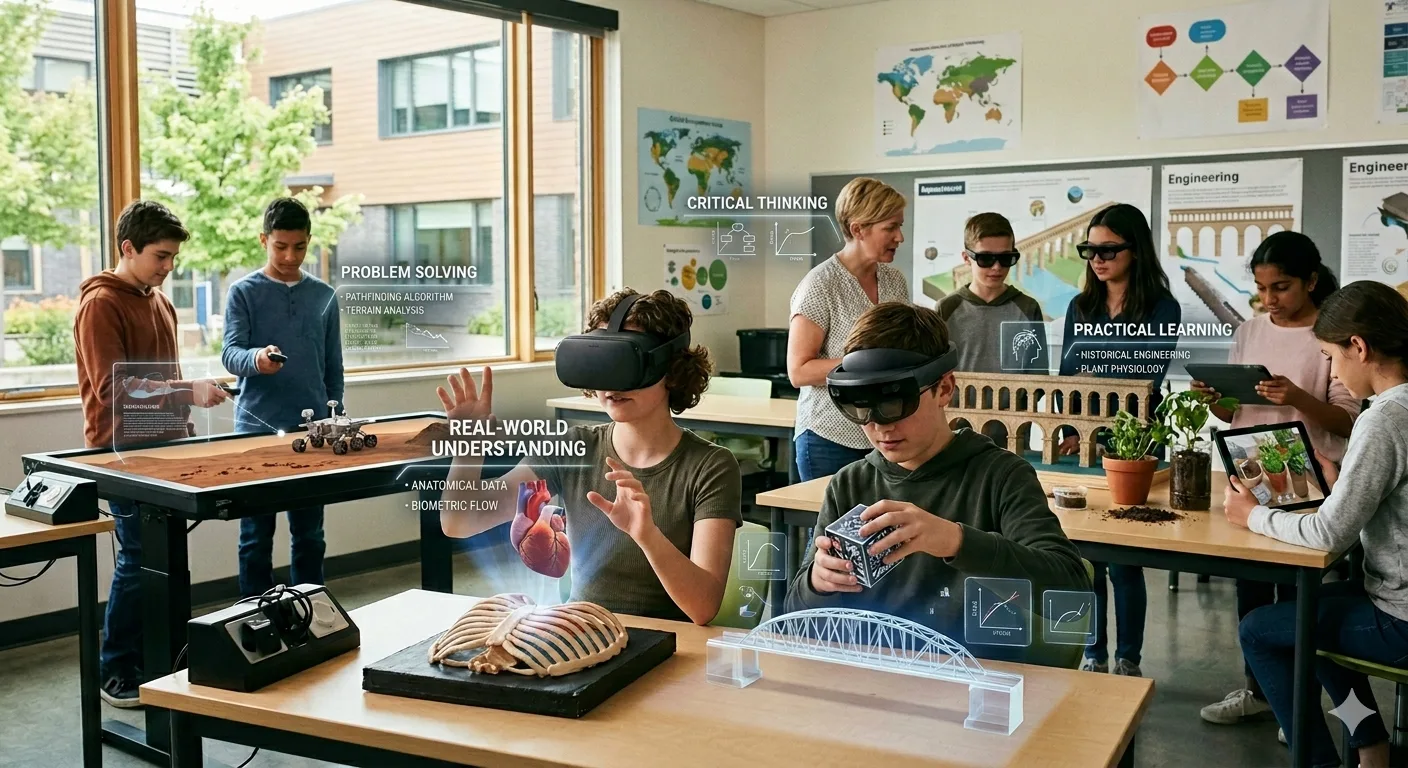
Education systems worldwide are increasingly focusing on:
- Skill development
- Critical thinking
- Problem solving
- Practical learning
- Real-world understanding
Experiential learning is becoming a major priority because students learn more effectively when they actively participate.
XR technologies support this shift by allowing learners to practice, explore, and experience concepts firsthand.
The Biggest Advantages of WebXR for Educational Institutions
Cost Efficiency
Schools can reduce spending on:
- Physical lab equipment
- Training setups
- Hardware infrastructure
while still providing interactive experiences.
Scalability
A single WebXR experience can be accessed by thousands of students simultaneously.
This is especially useful for:
- Online learning platforms
- Universities
- Coaching institutes
- Corporate training programs
Faster Deployment
New lessons can be updated and distributed instantly through the web.
No software installation is required.
Accessibility
Students in remote locations can access the same immersive learning experiences as students in urban centers.
This helps reduce educational inequality and improve learning opportunities.
Challenges WebXR Still Needs to Solve
Despite its advantages, WebXR is still evolving.
Some current challenges include:
- Internet speed limitations
- Device compatibility issues
- Performance optimization
- Large 3D asset loading times
Many WebXR developers are actively working on solving these issues through better optimization and content delivery systems.
As browser technologies improve, these limitations are expected to decrease significantly.
The Future of Education Is Browser-Based and Immersive
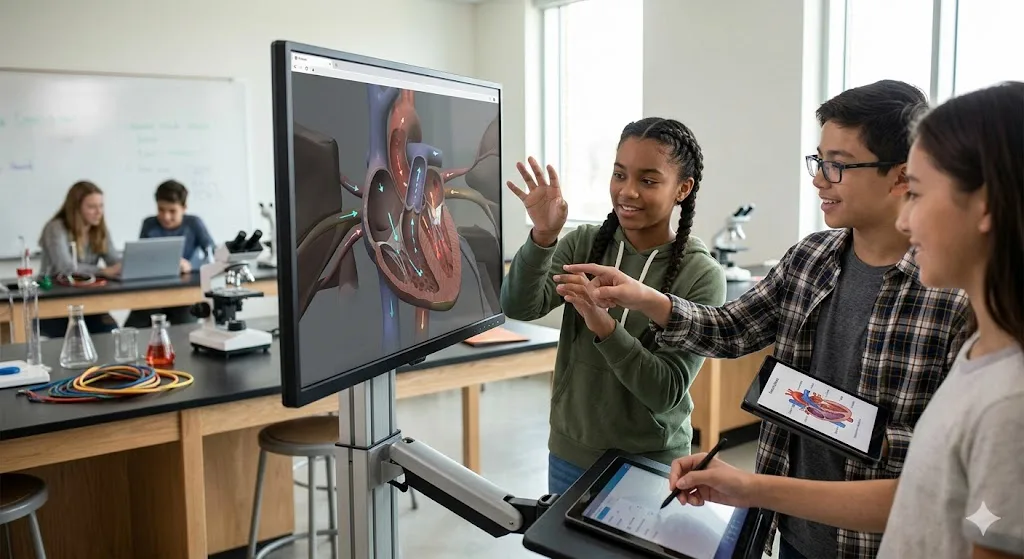
The next generation of students expects learning to feel interactive, visual, and engaging.
WebXR combines the accessibility of the web with the power of immersive technology.
Instead of requiring expensive hardware and complicated installations, students can simply open a browser and start learning through experience.
As immersive learning continues to grow, WebXR is positioned to become one of the most important technologies shaping education in the coming decade.
Conclusion
The future classroom is no longer limited to textbooks, videos, and slides.
With WebXR, students can interact with concepts, conduct virtual experiments, explore 3D environments, and learn through experience - all directly from a browser.
The combination of accessibility, affordability, and immersive engagement makes WebXR one of the most promising innovations in modern education.
For platforms building the next generation of learning experiences, browser-based XR may become the bridge between traditional education and truly experiential learning.
For a closer look at this, see our guide to VR Learning Without Headsets.