The School Lab Crisis in India: Why Smart Classrooms Need 3D Simulations, Not Just Smart Boards
The School Lab Crisis in India: Why Smart Classrooms Need 3D Simulations, Not Just Smart Boards
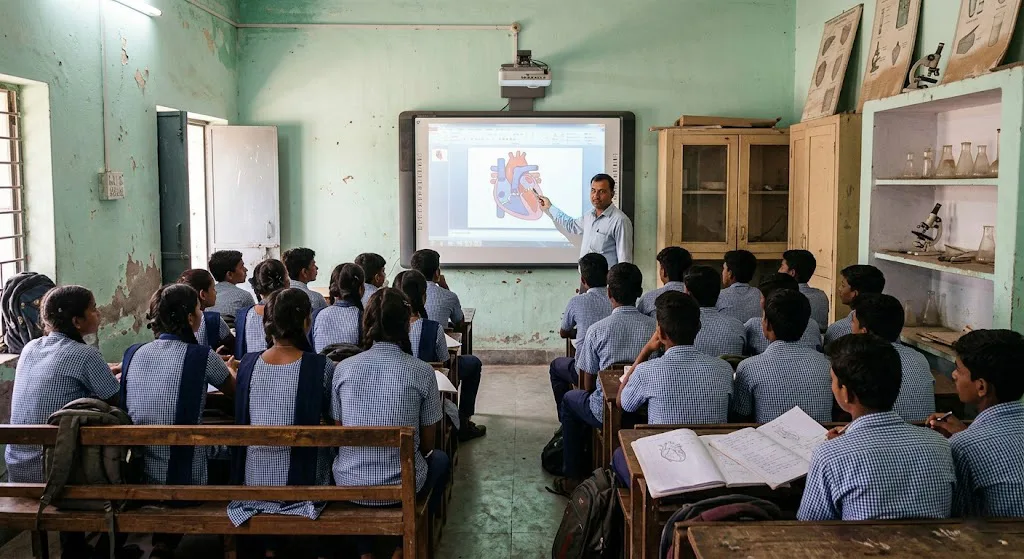
Walk into almost any school in a Tier-2 or Tier-3 Indian city, and you will notice a concerning reality. Students are often memorizing the exact steps of a chemistry titration, a physics optics experiment, or a biology practical directly from textbooks rather than performing them themselves.
The reason is simple: while board examinations require practical knowledge, many schools lack the infrastructure, resources, and operational capacity to provide hands-on laboratory experiences for every student.
As a result, science education in many institutions has become largely theoretical, creating a significant gap between conceptual understanding and real-world application.
The Growing Challenge of Physical Science Laboratories
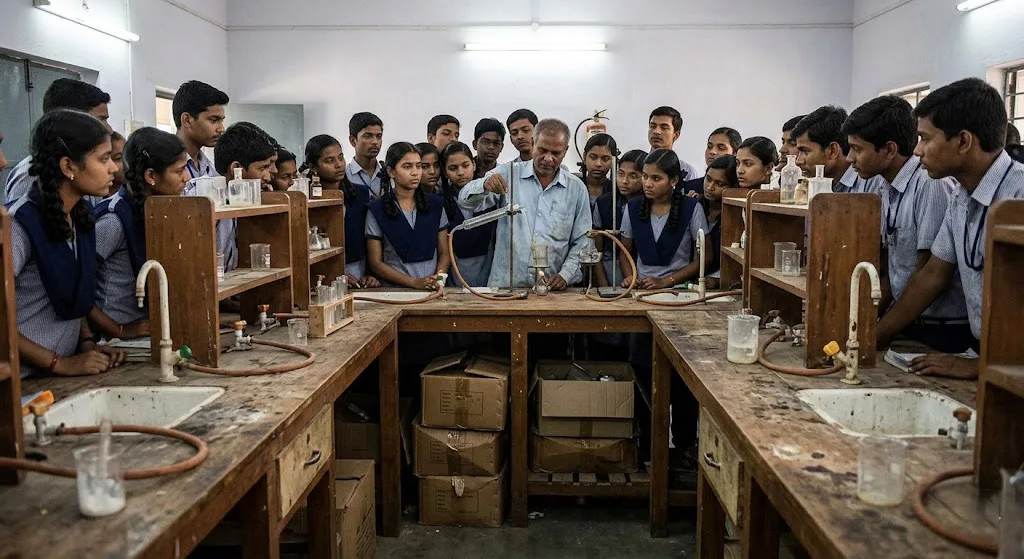
Running a fully functional science laboratory is becoming increasingly difficult for schools across India.
School administrators must manage:
- Rising costs of chemicals and consumable materials
- Frequent breakage of glassware and laboratory equipment
- Safety concerns involving large groups of students
- Limited laboratory periods within packed academic schedules
- Maintenance and replacement expenses
For many schools, especially those operating under budget constraints, providing individual practical experiences to every student is nearly impossible.
Consequently, practical science often becomes a demonstration activity where students observe rather than participate.
NEP 2020 and the Demand for Experiential Learning
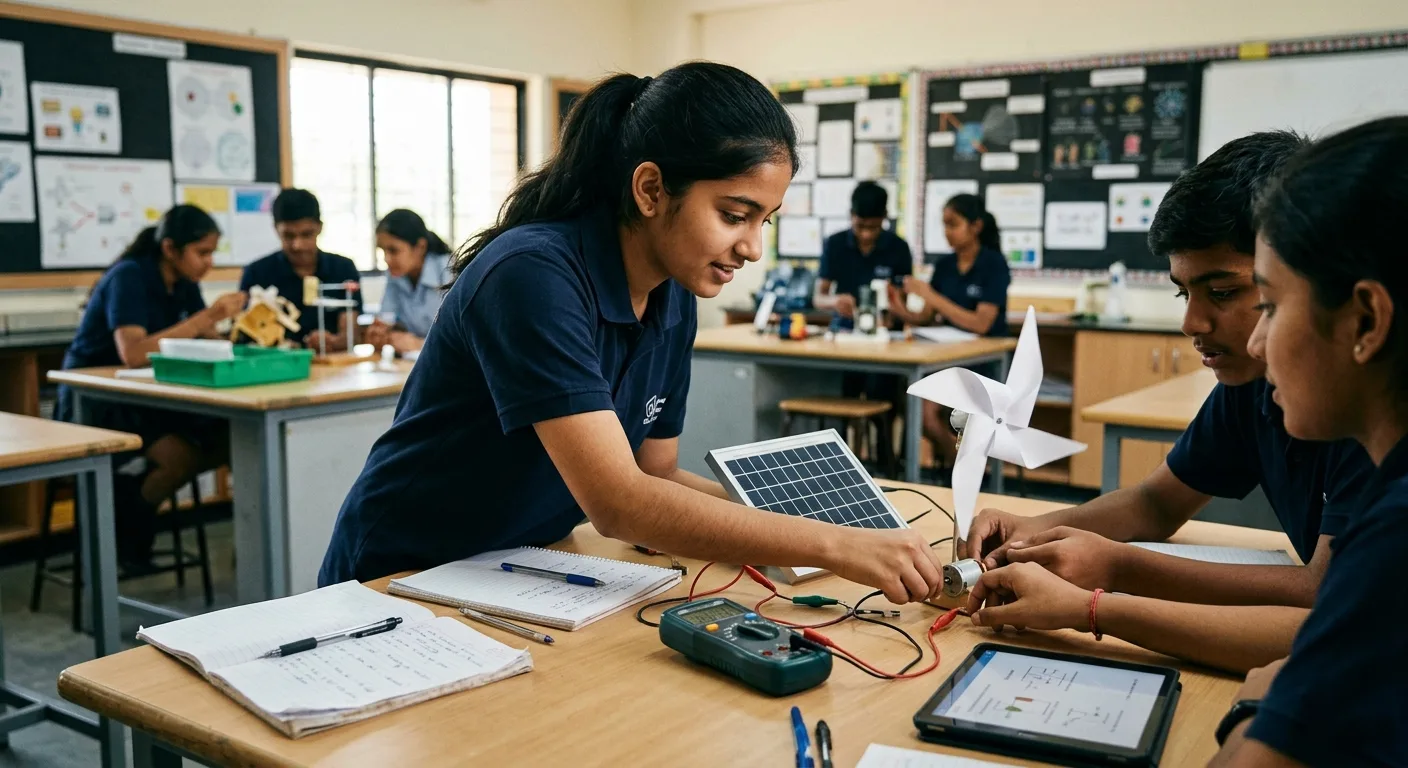
The implementation of India's National Education Policy (NEP 2020) has accelerated the need for experiential learning.
The policy emphasizes:
- Concept-based education
- Inquiry-driven learning
- Skill development
- Hands-on experiences
- Critical thinking
However, achieving these goals through traditional physical laboratories alone presents a major financial challenge.
Constructing and maintaining advanced science labs for every school is simply not a scalable solution for India's vast education ecosystem.
Schools require a more accessible and sustainable alternative.
The Smart Classroom Revolution Solved the Wrong Problem
Over the past decade, thousands of schools invested heavily in smart boards, projectors, and digital classroom technologies.
While these tools successfully digitized content delivery, they did not fundamentally transform learning.
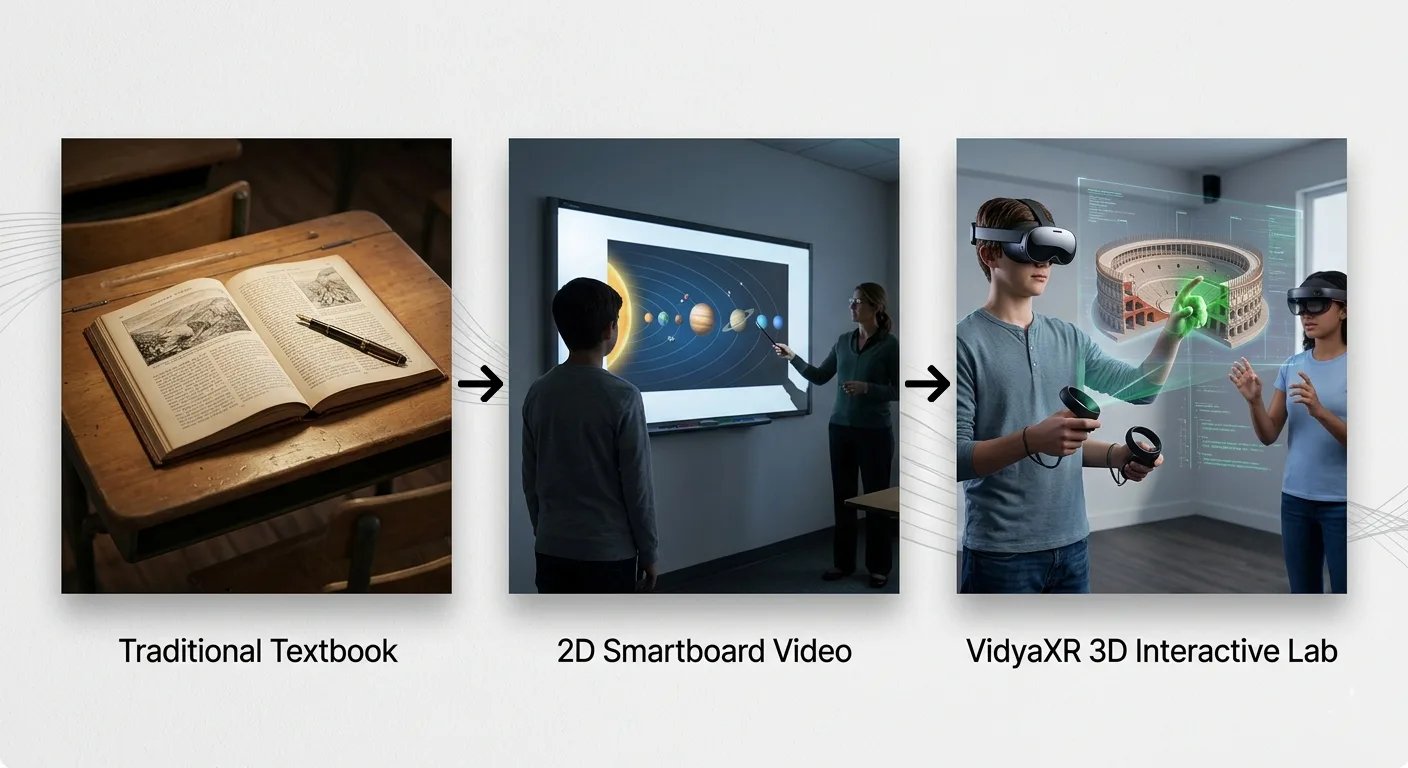
A student watching a two-dimensional animation of a chemical reaction is still a passive observer.
Similarly, viewing a video about planetary motion or cell division does not provide the same learning impact as interacting with those concepts directly.
The difference is significant:
Learning MethodStudent RoleTextbook LearningMemorizationVideo-Based LearningObservationInteractive SimulationExploration and Experimentation
True experiential learning occurs when students actively manipulate variables, make decisions, observe outcomes, and learn from mistakes.
Why Traditional Immersive Technologies Struggle in Indian Schools
Immersive learning technologies such as Virtual Reality (VR) and Augmented Reality (AR) have enormous educational potential.
However, most international solutions fail to address the realities of Indian classrooms.
1. Expensive Hardware Requirements
Many platforms assume schools can purchase dedicated VR headsets costing ₹30,000 or more per student.
For most institutions, this is not financially practical.
2. Heavy Software and Long Loading Times
Large application downloads and high-bandwidth requirements create serious challenges in schools with average internet connectivity.
Slow loading experiences disrupt classroom flow and reduce student engagement.
3. Curriculum Misalignment
Many global content libraries are designed for international educational standards and often do not align with NCERT, CBSE, or State Board syllabi.
As a result, students spend time exploring content that may not directly support their examinations.
4. Language Accessibility Issues
Complex scientific concepts become significantly harder to understand when content is available only in English.
Students studying in regional-medium schools often face additional learning barriers.
Reimagining School Laboratories with VidyaXR
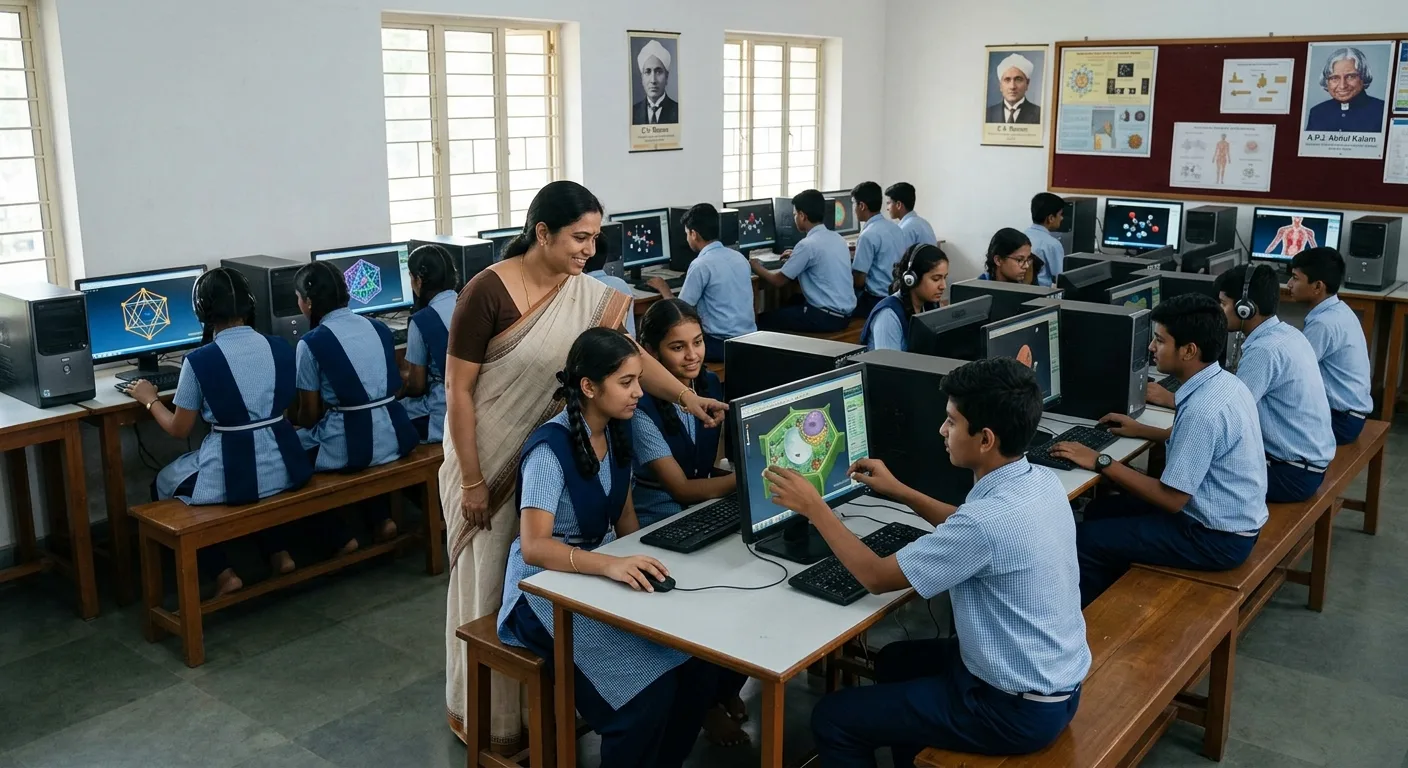
To truly scale experiential learning across India, educational technology must be designed around Indian classroom realities.
Developed by MEPROTECH SOLUTIONS, VidyaXR aims to bridge the gap between educational policy objectives and practical school infrastructure constraints.
Rather than requiring schools to purchase expensive new hardware, VidyaXR transforms existing devices into interactive 3D learning environments.
The Learning Evolution
How VidyaXR Solves Real School Challenges
Device-Agnostic Learning
VidyaXR operates directly through standard web browsers and can run on:
- Smartphones
- Tablets
- Desktop computers
- Laptops
- Android Smart TVs
Schools can leverage existing infrastructure without investing in expensive VR equipment.
Optimized for Indian Connectivity
The platform has been engineered to deliver lightweight, optimized 3D experiences that function efficiently on standard school internet connections.
This minimizes classroom disruptions caused by lengthy loading times.
Curriculum-Aligned Simulations
Every simulation is mapped to NCERT, CBSE, and relevant State Board learning objectives.
Students can explore practical concepts directly linked to examination requirements in:
- Physics
- Chemistry
- Biology
- Space Science
Multilingual Learning Support
VidyaXR offers content in multiple languages, including Hindi and regional language options alongside English.
This enables students from diverse educational backgrounds to understand scientific concepts more effectively.
The Future of Science Education in India
India's next generation of educational leaders will not necessarily be the schools with the largest campuses or the most expensive infrastructure.
Instead, they will be the institutions capable of delivering deeper conceptual understanding through scalable and accessible learning experiences.
Interactive 3D simulations offer a practical solution to many challenges associated with traditional laboratory education.
They provide:
- Safe experimentation environments
- Unlimited practice opportunities
- Consistent learning experiences
- Lower operational costs
- Greater accessibility for all students
By replacing inaccessible or resource-intensive practicals with immersive digital experiences, schools can bring high-quality science education to every learner, regardless of location or infrastructure limitations.
For a closer look at this, see our guides to VR Lab vs Physical Lab and VR in Smart Classrooms.
For a closer look at this, see our guides to What Is a STEM Lab? Setup, Types, and Benefits for Indian Schools and Smart Classroom Meaning.
Conclusion
The future of education lies beyond digital screens and smart boards. While these technologies helped modernize classrooms, the next phase of educational transformation requires active student participation.
Interactive 3D simulations represent a powerful step toward fulfilling the vision of NEP 2020 by making experiential learning accessible, affordable, and scalable.
VidyaXR is helping schools move from passive content consumption to active exploration, ensuring that every student can experience science rather than simply memorize it.
Educators, institutions, and students can explore the platform and experience curriculum-aligned 3D learning at vidyaxr.in.