How Virtual Science Labs Bridge the Infrastructure Gap
How Virtual Science Labs Bridge the Infrastructure Gap
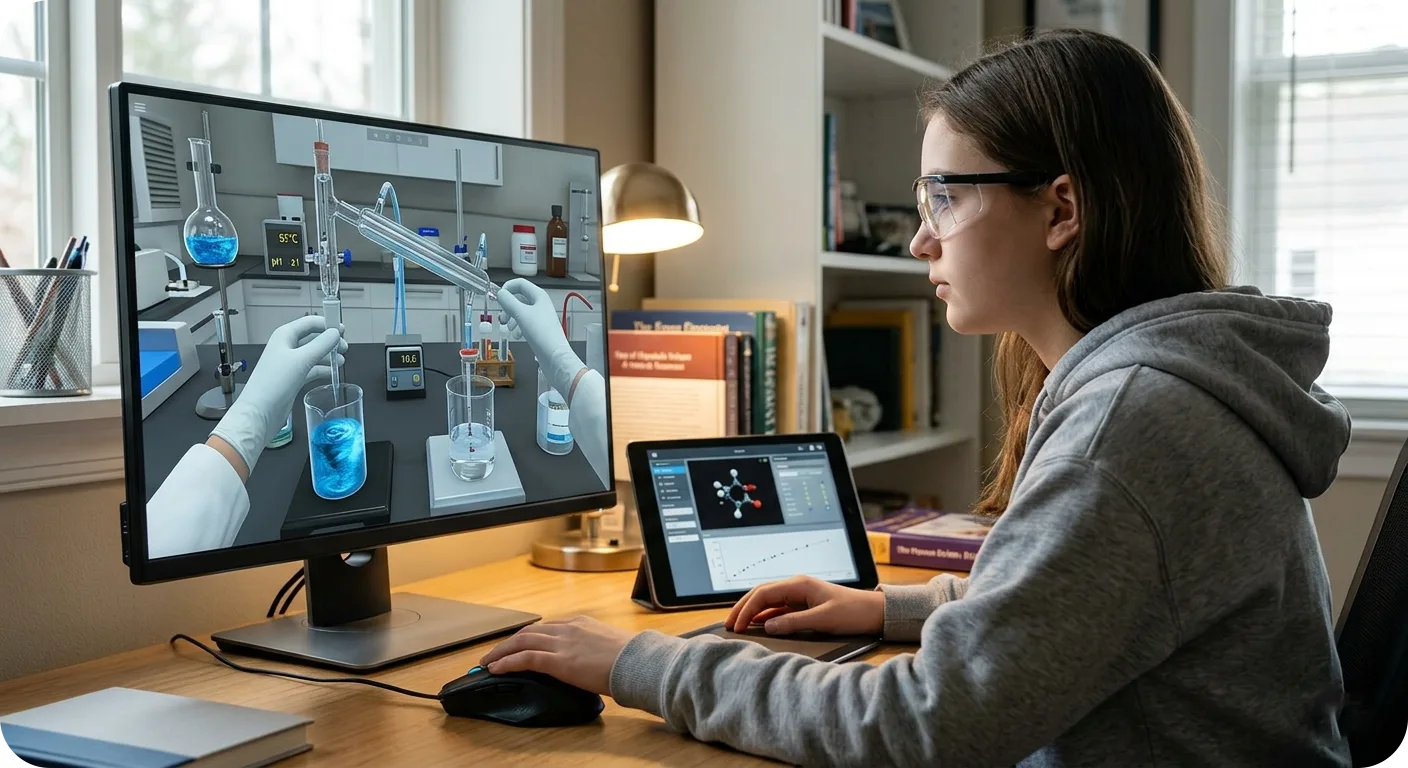
Physical science laboratories play a crucial role in helping students understand chemistry, physics, and biology through practical learning. However, for many schools and institutions, building and maintaining fully equipped laboratories is a major challenge. Scientific equipment is expensive, laboratory chemicals require continuous replenishment, and safety regulations often make experimentation difficult to manage - especially in schools with limited budgets.
As a result, many students experience science only through textbooks or teacher demonstrations rather than active experimentation. This creates a gap between theoretical knowledge and real-world understanding. Students may memorize formulas and definitions, but without hands-on practice, concepts often remain abstract and difficult to fully grasp.
Virtual science laboratories are emerging as a powerful solution to this growing infrastructure problem. By combining 3D simulations, interactive experiments, and real-time feedback, virtual labs provide students with immersive scientific experiences without the limitations of traditional physical labs.
The Challenges of Traditional Science Laboratories
Setting up a physical laboratory requires significant investment. Schools need laboratory rooms, glassware, chemicals, electrical systems, safety equipment, maintenance staff, and trained instructors. For institutions in rural or underfunded areas, these requirements can become nearly impossible to fulfill.
Some common challenges include:
- High costs of equipment and laboratory setup
- Recurring expenses for chemicals and consumables
- Safety risks during experiments
- Limited access for large numbers of students
- Difficulty replacing damaged apparatus
- Restricted experiment time due to resource limitations
- Lack of laboratory infrastructure in remote regions
In many schools, students are allowed to observe experiments rather than perform them personally because resources are limited. This reduces engagement and weakens practical understanding.
The Virtual Lab Solution
Virtual 3D science laboratories address these issues by creating a safe, interactive digital environment where students can perform experiments anytime and anywhere.
Instead of relying entirely on physical infrastructure, students can use computers, tablets, or smartphones to access simulations that replicate real laboratory environments. These platforms allow learners to interact with laboratory instruments, mix chemicals, observe reactions, record data, and repeat experiments without any physical risk.
Key Benefits of Virtual Science Labs
1. Absolute Safety
One of the biggest advantages of virtual labs is safety. Students can perform experiments involving acids, electrical circuits, heat, or hazardous substances without the danger of burns, explosions, or toxic exposure.
They can confidently explore scientific concepts and learn through mistakes without fear of damaging equipment or causing accidents.
2. Cost Reduction
Traditional labs require continuous spending on chemicals, apparatus, maintenance, and repairs. Virtual labs dramatically reduce these recurring costs.
There is:
- No broken glassware
- No chemical wastage
- No expensive apparatus replacement
- No storage or disposal concerns
This makes high-quality science education more affordable for schools with limited budgets.
3. Infinite Repeatability
In physical laboratories, students often get only one opportunity to perform an experiment before materials run out. Virtual labs remove this limitation entirely.
Students can:
- Reset experiments instantly
- Change variables and conditions
- Repeat procedures multiple times
- Learn from trial and error
- Analyze outcomes at their own pace
This repeatability strengthens conceptual understanding and encourages curiosity-driven learning.
4. Accessibility for Every Student
Virtual labs make science education accessible beyond the classroom. Students in rural areas, remote regions, or institutions without proper infrastructure can still access high-quality laboratory experiences through the internet.
This helps reduce educational inequality and ensures that learning opportunities are not limited by geography or funding.
Enhancing Student Engagement
Modern students learn best through interaction and visual experiences. Virtual laboratories transform passive learning into active participation.
Instead of simply reading about titration, motion, electricity, or chemical reactions, students can visualize processes in real time. Interactive simulations improve concentration, increase curiosity, and make learning more enjoyable.
Gamified learning elements, progress tracking, and instant feedback also motivate students to explore deeper and practice more frequently.
Building a Scientific Mindset
Science is not just about memorizing information - it is about experimentation, observation, analysis, and problem-solving.
Virtual labs encourage students to:
- Form hypotheses
- Test different scenarios
- Observe outcomes
- Analyze mistakes
- Improve critical thinking skills
Because experiments can be repeated endlessly, students develop confidence and become more willing to explore complex scientific concepts independently.
This cultivates a true scientific mindset built on curiosity and discovery.
Supporting Teachers and Institutions
Virtual laboratories also benefit educators. Teachers can demonstrate experiments more efficiently, assign practical activities remotely, and monitor student progress through digital analytics.
Institutions gain:
- Scalable science education systems
- Reduced infrastructure burden
- Easier classroom management
- Standardized practical learning experiences
Virtual labs can complement traditional laboratories rather than replace them entirely. Together, they create a blended learning model that combines real-world experimentation with the flexibility of digital education.
The Future of Science Education
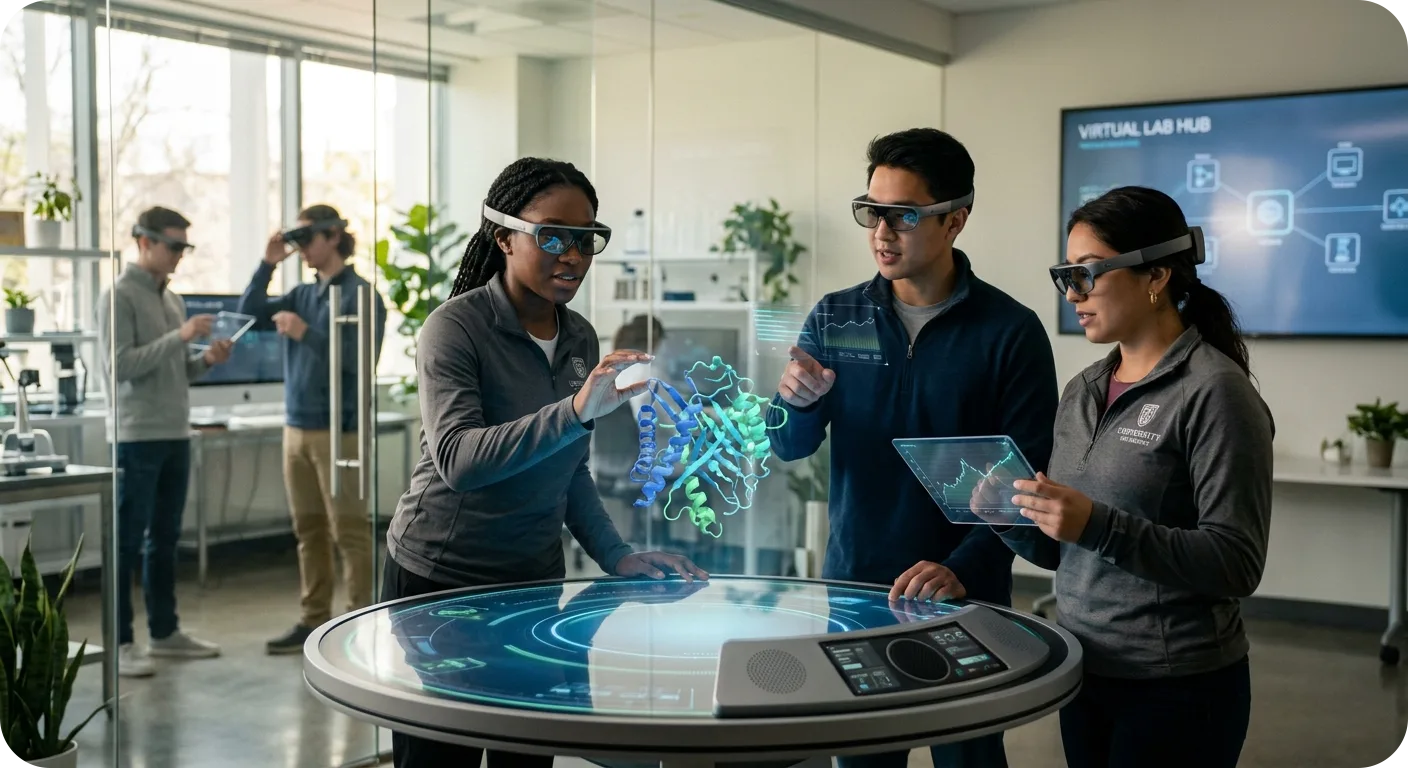
As educational technology continues to evolve, virtual science labs are becoming an essential part of modern learning ecosystems. With advancements in 3D graphics, augmented reality (AR), and artificial intelligence (AI), digital laboratories are becoming increasingly realistic and immersive.
In the future, students may collaborate in shared virtual lab spaces, conduct AI-assisted experiments, and experience advanced simulations that were previously impossible in traditional classrooms.
Virtual science labs are not simply a temporary alternative - they are shaping the future of accessible, practical, and inclusive science education.
For a closer look at this, see our guides to VR Lab vs Physical Lab and VR Education Platform Cost in India.
For a closer look at this, see our guides to Benefits of Science Laboratories for Students and What Is a STEM Lab? Setup, Types, and Benefits for Indian Schools.
Conclusion
The infrastructure gap in science education has limited practical learning opportunities for millions of students worldwide. Virtual science laboratories provide a scalable and innovative solution by making experiments safer, more affordable, repeatable, and accessible.
By combining technology with interactive learning, virtual labs empower students to explore science through experience rather than memorization. They help schools overcome infrastructure limitations while cultivating curiosity, creativity, and analytical thinking.
As education moves toward more digital and student-centered models, virtual laboratories will play a critical role in ensuring that every learner - regardless of location or resources - has access to meaningful scientific exploration.