Why Online Classes Fail Students (And How 3D Learning Fixes It)
Let’s be honest about digital education: most online learning is incredibly boring. Moving a textbook onto a laptop screen, recording a long video lecture, or turning a classroom test into a flat, multiple-choice quiz isn't innovative. It’s just digital paperwork.
Students today are completely burnt out on screens. They aren’t actually engaging with the material. Instead, they just stare at the progress bar, waiting for the video to hit 100% so they can mark it as "complete" and close the tab.
When it comes to tough, abstract subjects like science, math, or engineering, traditional online learning simply fails. Flat screens kill curiosity. To actually understand complex topics, students need to stop watching from the sidelines and start interacting.
The Screen Fatigue Problem: Moving Past Video Lectures
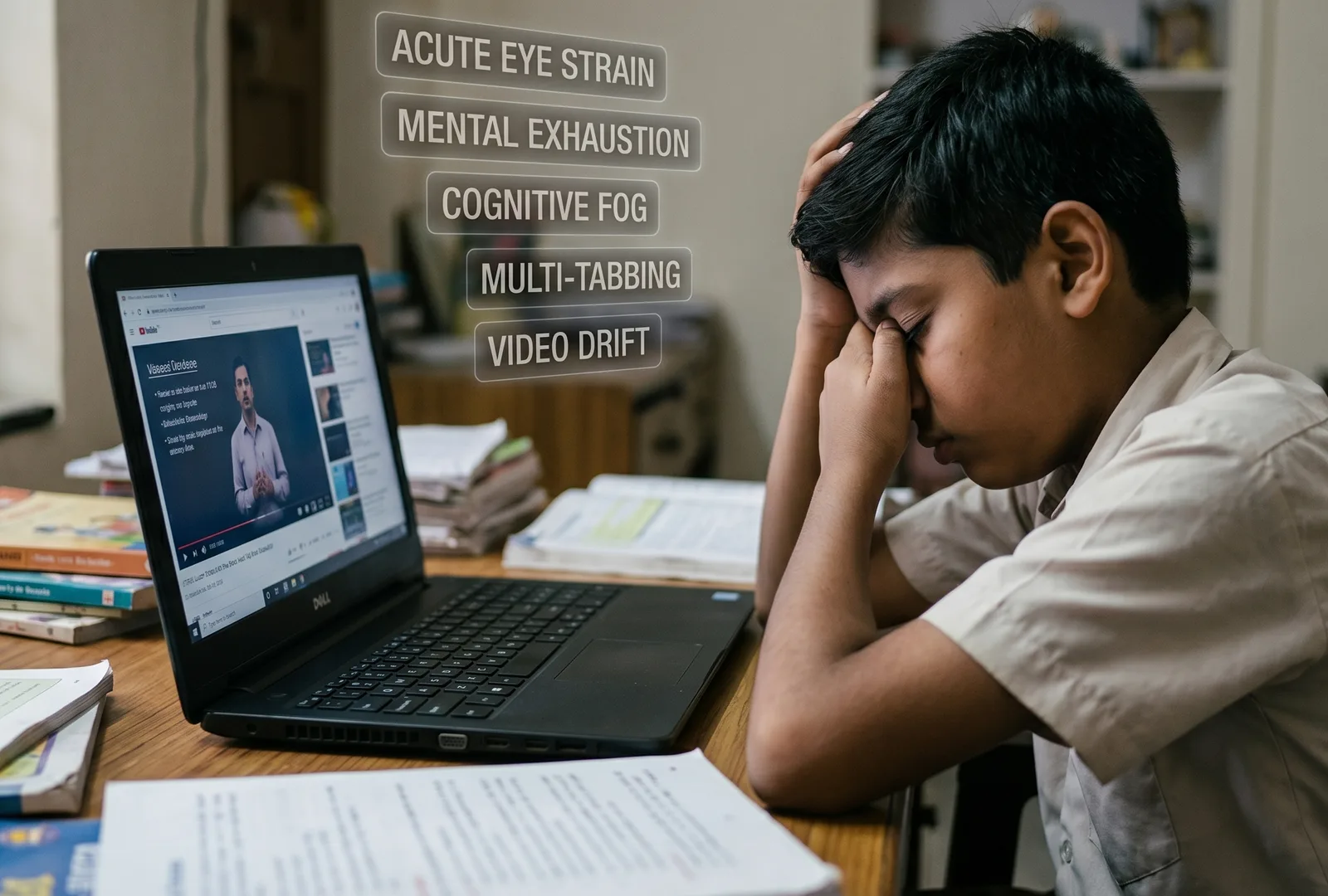
The real flaw with modern e-learning is that it relies entirely on passive watching. A student sitting in front of a computer watching a pre-recorded lecture uses the exact same parts of the brain as someone binge-watching a TV show.
Our brains are not built to understand complex, three-dimensional concepts through a flat rectangle. Within less than ten minutes of a video lecture, a student's focus drops. They open another browser tab, check their phone, and memorize just enough random facts to pass a quick digital quiz.
But memorization isn't the same as understanding. It’s just temporary data storage. To truly grip a concept, students need student engagement strategies that make them an active participant in the lesson.
Why 3D Works Better Than 2D Diagrams
Subjects like physics, chemistry, biology, and geometry exist in three dimensions. When a textbook or a slideshow tries to explain a DNA strand, a chemical reaction, or a geometric shape using a flat 2D picture, the student has to do all the heavy lifting to imagine how it works in real life. This creates mental exhaustion.
By switching to 3D interactive learning models, the entire experience changes. Instead of staring at an image, students use their spatial memory - the natural, real-world way humans learn about objects by handling them.
Real-World Practice: Turning Theory into Experience
When you turn tough theories into scalable, digital objects that students can actually interact with, the learning curve flattens instantly.
- Virtual Science Labs: Instead of just reading chemical equations on a page, students can step into a digital lab. They can mix compounds, see reactions happen safely, and look at molecular structures from any angle without any real-world mess or danger.
- Math and Physics Made Visual: Instead of forcing students to look at flat equations, experiential learning tools let them rotate, slice open, and manipulate 3D shapes or physical forces in real time.
- Exploring the Invisible: Students can dive deep inside a biological cell or walk through ancient historical structures, experiencing these worlds at a scale that a textbook page simply cannot offer.
No Expensive Headsets Required
Whenever schools or parents hear about "immersive technology" or "virtual learning," they immediately worry about the price tag. They picture buying heavy, expensive VR headsets that need constant charging, IT updates, and storage space.
Thankfully, modern web technology completely removes this barrier. High-quality immersive technology in education no longer requires specialized hardware. Using standard web browsers, these interactive 3D tools run smoothly on the everyday smartphones, tablets, or laptops that students already use at home or in class. Immersive education isn't a hardware luxury anymore; it’s a smart software shift.
For a closer look at this, see our guide to Why Students Forget.