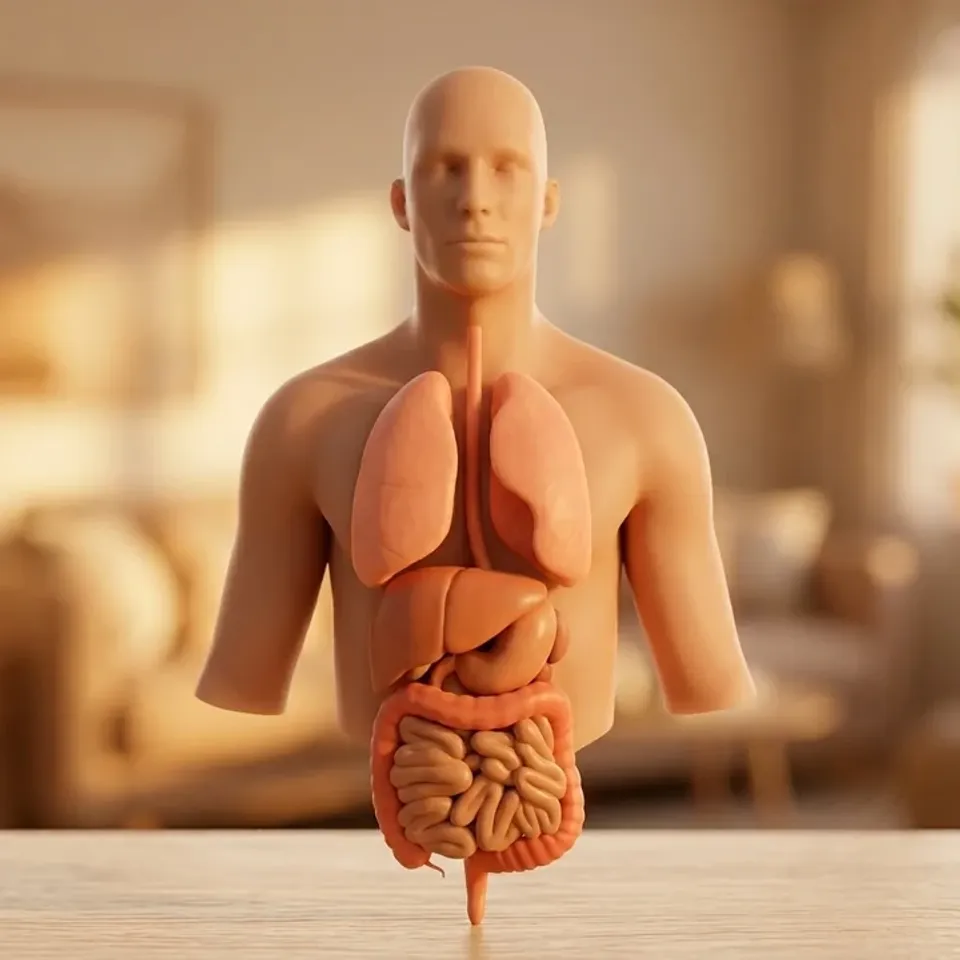
Life Processes
Science · Chapter · 4 min 5 sec · English, Hindi, Gujarati, Marathi
Explore the processes that keep living things alive: nutrition, respiration, transport and excretion, including aerobic and anaerobic respiration and how the body removes waste.
NCERT and CBSE · Class 10 Science · Chapter 5: Life Processes
What you will learn
- Identify the basic life processes of living things
- Explain nutrition, respiration, transport and excretion
- Compare aerobic and anaerobic respiration
- Understand how the body removes waste
Key terms
- Nutrition
- Obtaining and using food for energy
- Respiration
- Releasing energy from food in cells
- Excretion
- Removal of metabolic waste from the body
- Transportation
- Movement of substances within the body
Inside this chapter
- 0:00 Four life processes The main life processes are nutrition, respiration, transportation and excretion. Plants make their own food by photosynthesis from sunlight, water and carbon dioxide.
- 0:36 Heterotrophic nutrition Animals depend on other organisms for food. Humans eat and digest it (holozoic), fungi and bacteria feed on dead matter (saprophytic), and tapeworms and lice live on a host (parasitic).
- 0:50 Digestion in humans Digestion starts in the mouth with chewing and saliva, and acid and enzymes in the stomach break food down further. The small intestine absorbs nutrients and the large intestine absorbs water.
- 1:15 Respiration and breathing Respiration breaks down food to release energy for cells. Oxygen we breathe in passes from the lungs into the blood, and carbon dioxide leaves when we breathe out.
- 2:01 Transport in humans and plants The heart keeps pumping blood to carry oxygen and nutrients to every organ. In plants, xylem carries water from the roots to the leaves and phloem carries food from the leaves.
- 2:35 Removing waste The kidneys filter waste from the blood and remove it as urine. The lungs get rid of carbon dioxide, and the skin gives out extra salts and water in sweat.
- 3:05 How plants remove waste Stomata on leaves release oxygen and water vapour, and lenticels in stems help in gas exchange. Some plants store waste in old leaves, which fall off and take it away.
Read more on the blog
- 3D Model of Excretory System and Nephron for Class 10: Kidneys, Filtration and the Diagrams You Must Draw
- CBSE Class 10 Biology: Exploring Human Heart Anatomy and Blood Circulation in 3D
- 3D Model of Digestive System Class 10: Life Processes Explained Organ by Organ
More chapters
- Human Heart: See how the heart pumps blood around the body: its four chambers, the valves that keep blood flowing one way, and the double circulation through the lungs and the body.
- Transportation in Plants: See how plants move water, minerals and food: roots and root hairs absorb water, xylem carries it up, transpiration pulls it through the plant, and phloem carries food from the leaves.
- Human Intestine: Explore a 3D human intestine: the parts of the small and large intestine, the villi that absorb digested food, and the muscle movements that push food along.
- Human Kidneys: Explore 3D human kidneys: the cortex and medulla, the nephrons that filter blood, and the ureters that carry urine to the bladder.