Chemical Reactions and Equations
Science · Chapter · 3 min 6 sec · English, Hindi, Gujarati, Marathi
Learn to recognise a chemical reaction, write and balance chemical equations, and tell combination, decomposition and displacement reactions apart, with oxidation and reduction.
NCERT and CBSE · Class 10 Science · Chapter 1: Chemical Reactions and Equations
What you will learn
- Recognise the signs that a chemical reaction has taken place
- Write and balance simple chemical equations
- Classify combination, decomposition and displacement reactions
- Relate oxidation and reduction to everyday changes
Key terms
- Reactant
- A substance used up during a reaction
- Product
- A new substance formed by a reaction
- Oxidation
- Gain of oxygen or loss of electrons
- Catalyst
- Speeds up a reaction without being consumed
Inside this chapter
- 0:00 Spotting a chemical reaction Burning magnesium turns into a new substance. Signs of a reaction include a change in colour, gas bubbles, heat given out or a change of state.
- 0:32 Equations and combination reactions A balanced equation has the same number of atoms of each element on both sides. In a combination reaction two substances form one, like quicklime and water giving slaked lime.
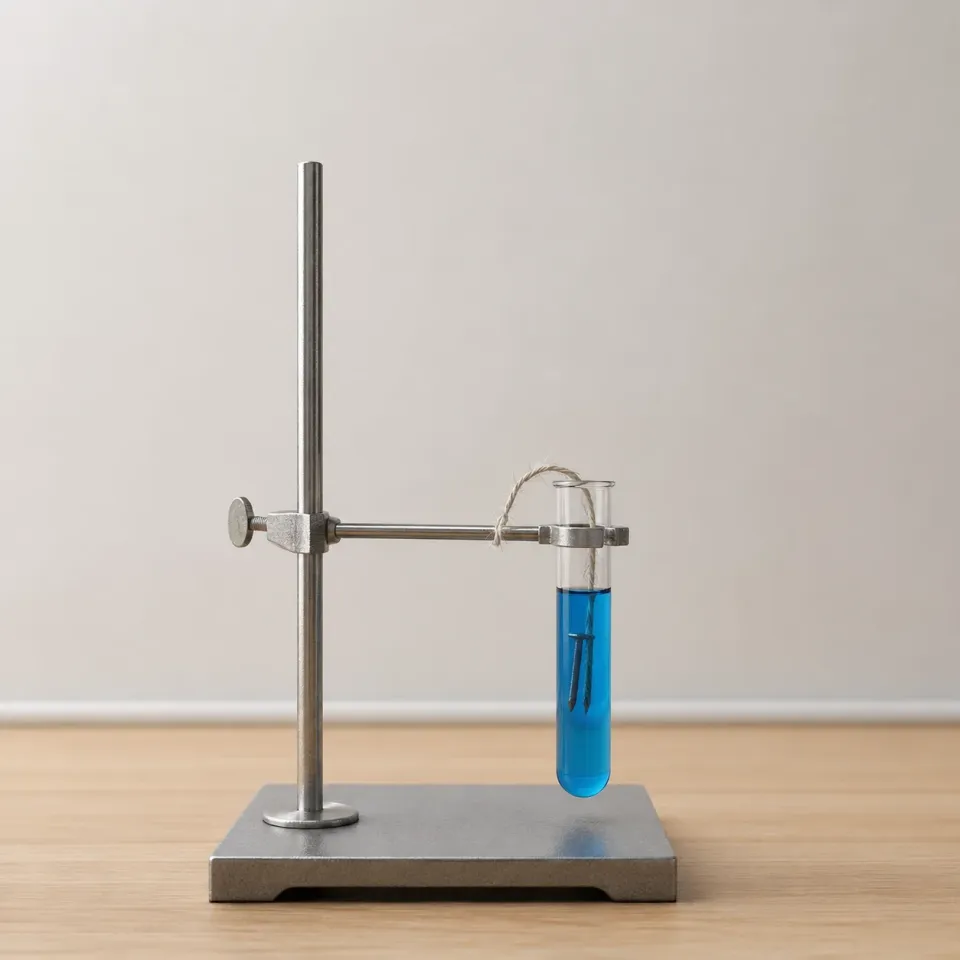
- 1:06 Decomposition and displacement In decomposition, one substance breaks down, often using heat, light or electricity. In displacement, a more reactive metal such as iron pushes copper out of its compound.
- 1:42 Double displacement and redox Two compounds swap ions, like sodium sulphate and barium chloride making white barium sulphate. In a redox reaction, oxidation and reduction happen together.
- 2:14 Corrosion and rancidity Iron rusts, silver turns black and copper turns green in air and water. Oily food goes rancid when it is oxidised, which is why chips are packed with nitrogen.
Read more on the blog
- CBSE Class 10 Chemistry in 3D: Chemical Reactions and the 3D Periodic Table
- 3D Chemistry Experiments for Students: Learn Reactions by Doing
More chapters
- Combination Reaction: Magnesium: Light a burner and hold a magnesium ribbon in the flame. Watch it burn with a dazzling white light and turn into white magnesium oxide in a combination reaction.
- Exothermic Reaction: Quicklime: Add quicklime to a beaker and pour water on it. Watch it hiss, steam and crumble into slaked lime as the temperature shoots up, then whitewash a wall with it.
- Human Heart: See how the heart pumps blood around the body: its four chambers, the valves that keep blood flowing one way, and the double circulation through the lungs and the body.
- Transportation in Plants: See how plants move water, minerals and food: roots and root hairs absorb water, xylem carries it up, transpiration pulls it through the plant, and phloem carries food from the leaves.