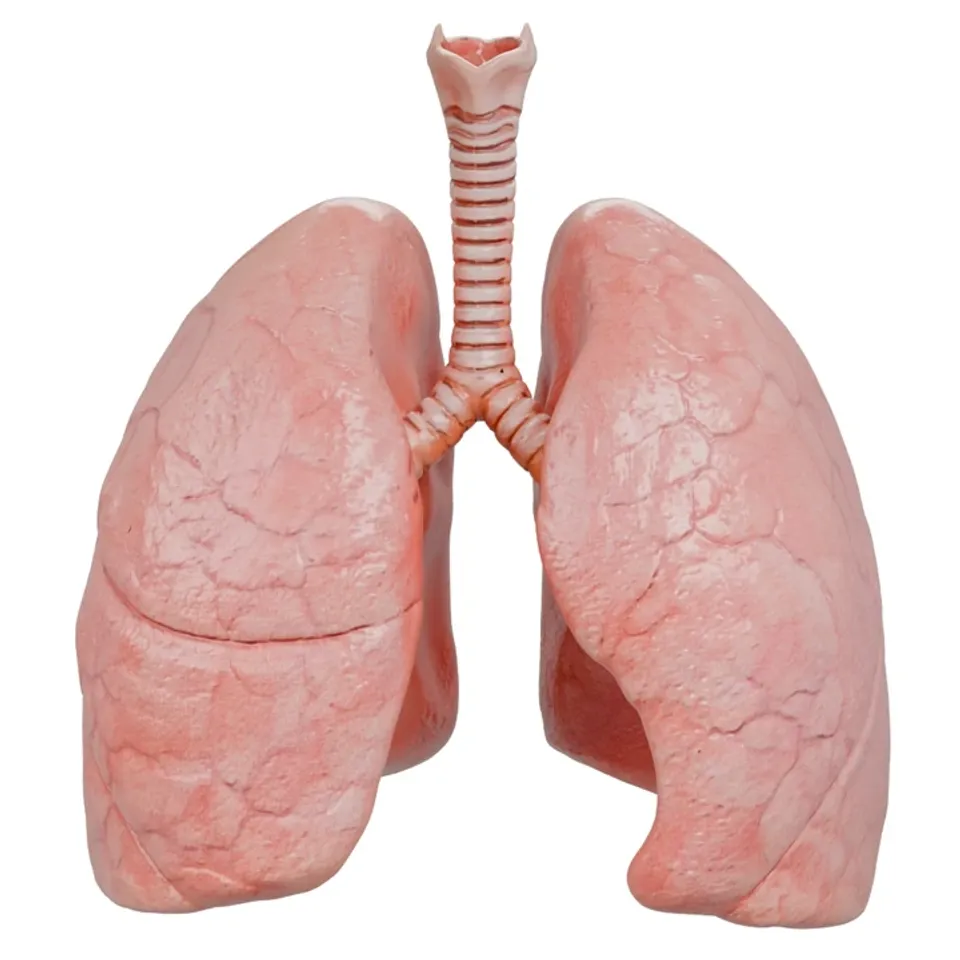
Human Lungs
Science · Lab · At your own pace · English
Explore 3D human lungs: follow air down the trachea and bronchi to the tiny alveoli where oxygen enters the blood, and see how the diaphragm helps you breathe.
NCERT and CBSE · Class 10 Science · Chapter 5: Life Processes
What you will learn
- Follow the path of air from the trachea through the bronchi and bronchioles to the alveoli
- Compare the right lung, which has three lobes, with the left lung, which has two
- See how the diaphragm and the muscles between the ribs move air in and out
Key terms
- Alveoli
- Tiny balloon-like sacs with thin walls, surrounded by blood vessels, where gases are exchanged
- Trachea
- The windpipe, held open by rings of cartilage, that carries air to the lungs
- Diaphragm
- The dome-shaped muscle below the lungs that helps us breathe in and out
Read more on the blog
More chapters
- Human Heart: See how the heart pumps blood around the body: its four chambers, the valves that keep blood flowing one way, and the double circulation through the lungs and the body.
- Transportation in Plants: See how plants move water, minerals and food: roots and root hairs absorb water, xylem carries it up, transpiration pulls it through the plant, and phloem carries food from the leaves.
- Life Processes: Explore the processes that keep living things alive: nutrition, respiration, transport and excretion, including aerobic and anaerobic respiration and how the body removes waste.
- Human Intestine: Explore a 3D human intestine: the parts of the small and large intestine, the villi that absorb digested food, and the muscle movements that push food along.