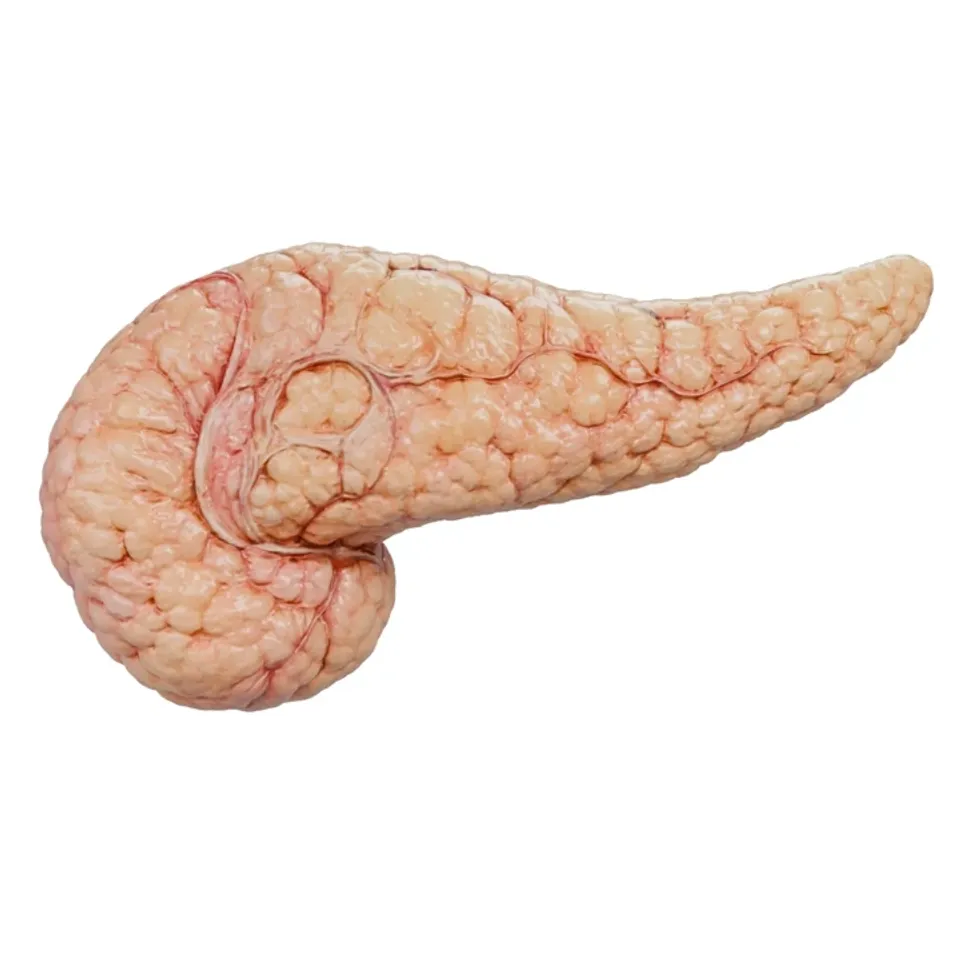
Human Pancreas
Science · Lab · At your own pace · English
Explore a 3D human pancreas: the gland beside the duodenum that makes digestive juice and the hormones insulin and glucagon, which control blood sugar.
NCERT and CBSE · Class 10 Science · Chapter 5: Life Processes
What you will learn
- Locate the head, body and tail of the pancreas and its duct, beside the duodenum
- Compare the pancreatic juice it pours into the intestine with the hormones it releases into the blood
- Understand how insulin and glucagon keep blood sugar at the right level
Key terms
- Islets of Langerhans
- Small groups of cells in the pancreas that make insulin and glucagon
- Insulin
- A hormone that lowers blood sugar by helping cells take in glucose
- Glucagon
- A hormone that raises blood sugar by making the liver release stored glucose
- Trypsin
- An enzyme in pancreatic juice that digests proteins
Read more on the blog
More chapters
- Human Heart: See how the heart pumps blood around the body: its four chambers, the valves that keep blood flowing one way, and the double circulation through the lungs and the body.
- Transportation in Plants: See how plants move water, minerals and food: roots and root hairs absorb water, xylem carries it up, transpiration pulls it through the plant, and phloem carries food from the leaves.
- Life Processes: Explore the processes that keep living things alive: nutrition, respiration, transport and excretion, including aerobic and anaerobic respiration and how the body removes waste.
- Human Intestine: Explore a 3D human intestine: the parts of the small and large intestine, the villi that absorb digested food, and the muscle movements that push food along.