Why Interactive Learning Will Replace Video-Based Education in 2026
Why Interactive Learning Will Replace Video-Based Education in 2026
For more than a decade, online education has been dominated by video content.
Students spend hours watching recorded lectures, tutorial videos, and educational content across various platforms. While video learning made education more accessible, a major problem still exists:
Watching does not always mean understanding.
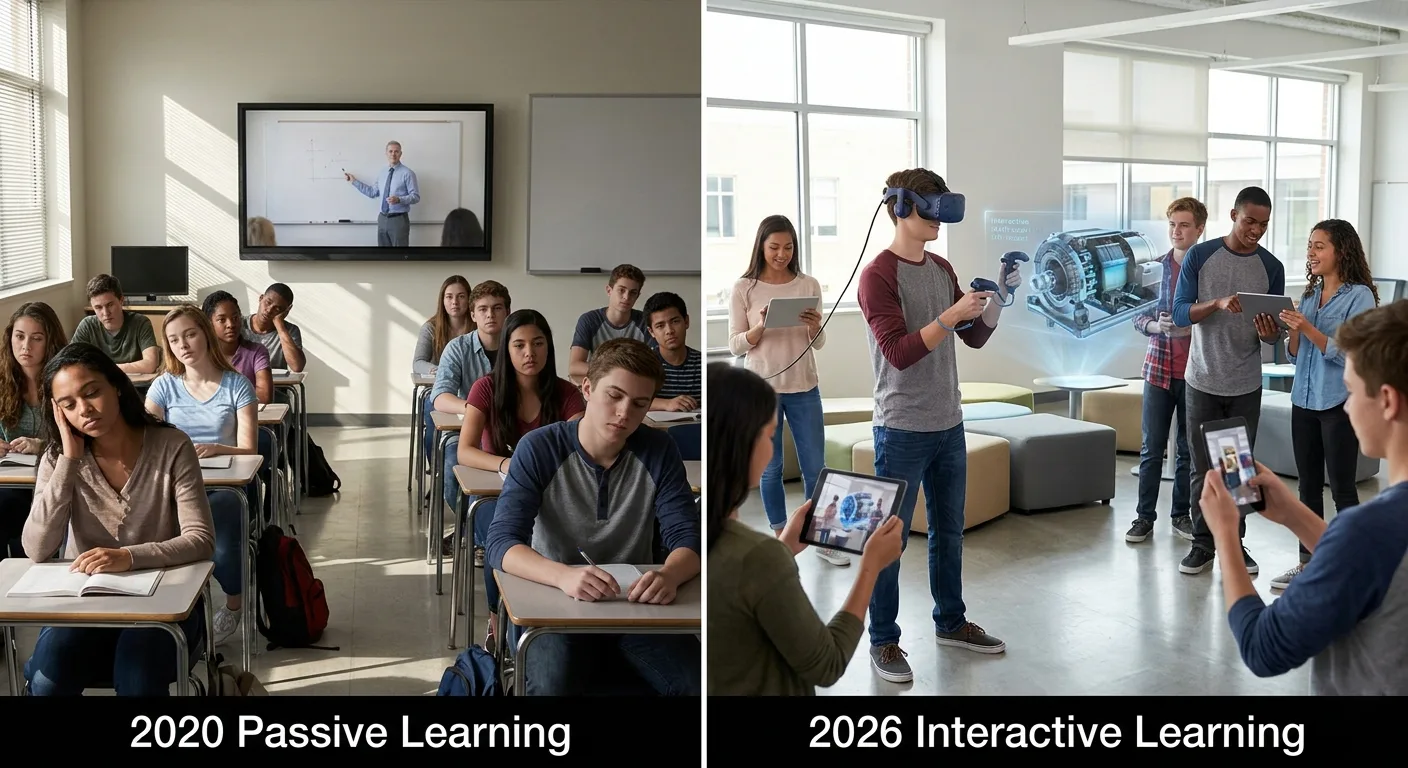
Many students complete entire video lessons without truly grasping the concepts. They memorize information for exams but struggle to apply that knowledge in real-world situations.
In 2026, a new shift is happening across the education industry.
The focus is moving from passive learning to interactive learning.
Instead of simply watching a teacher explain a concept, students now want to explore, experiment, and experience concepts themselves.
This is where technologies like WebXR, Virtual Reality (VR), Augmented Reality (AR), and interactive 3D learning are transforming education.
The Problem with Traditional Video Learning
Video content solved many accessibility issues, but it also created new challenges.
Students often experience:
- Reduced attention spans
- Passive consumption habits
- Limited practical understanding
- Difficulty retaining information
- Lack of engagement during long lessons
A student may watch a 40-minute physics lecture about electricity but still struggle to understand how circuits actually work.
The gap between theory and experience remains one of the biggest challenges in modern education.
Learning by Doing Creates Better Understanding
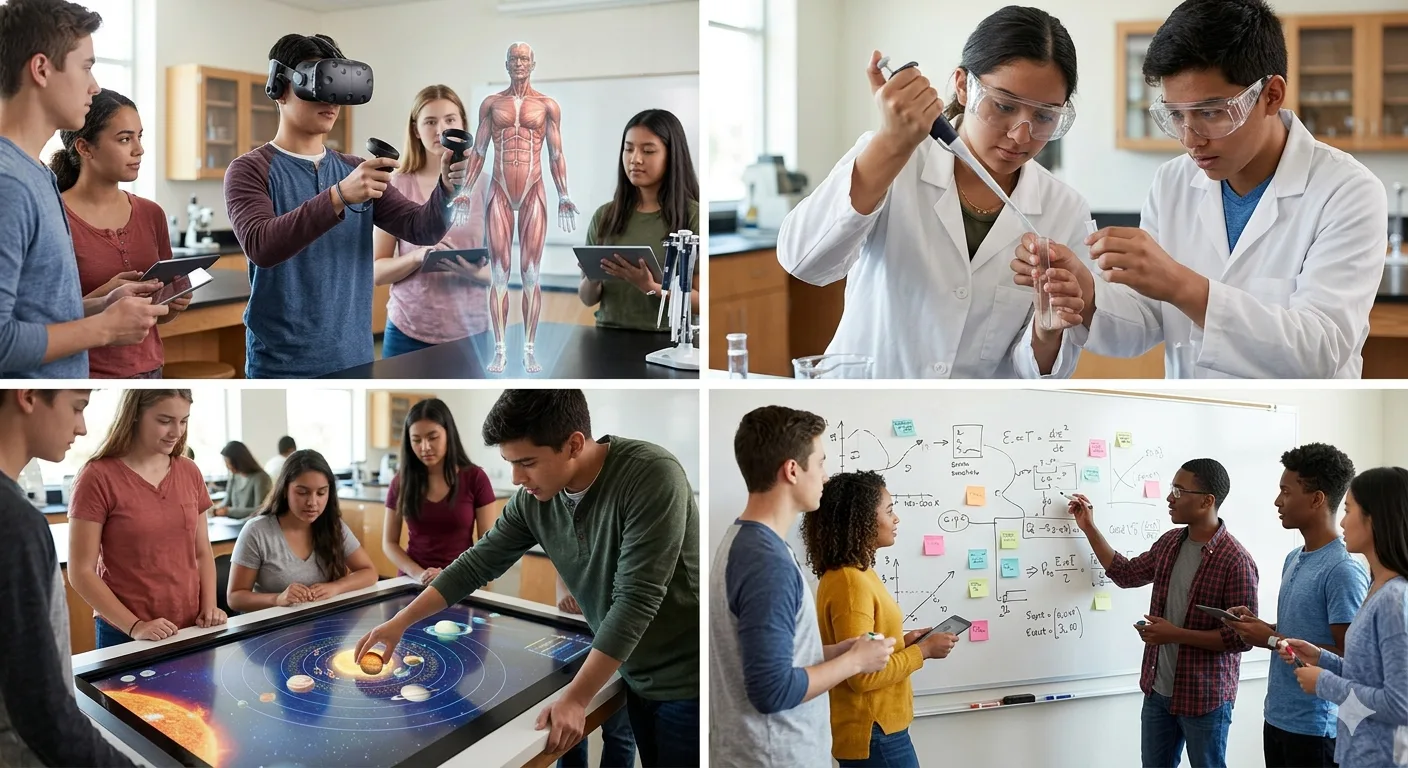
Educational psychology has consistently shown that people learn faster when they actively participate.
Instead of only hearing information, students learn better when they:
- Interact with concepts
- Make decisions
- Experiment with variables
- Observe outcomes
- Solve problems themselves
For example:
Instead of watching a video about the solar system, students can explore planets in a 3D environment.
Instead of reading about chemical reactions, they can perform virtual experiments.
Instead of memorizing biology diagrams, they can interact with 3D human anatomy models.
This approach transforms learning from information consumption into knowledge creation.
Why Interactive Learning Is Growing in 2026
Several factors are accelerating this shift.
1. Shorter Attention Spans
Modern learners prefer active participation over passive observation.
Interactive content naturally keeps students engaged because they are constantly involved in the learning process.
2. Better Technology Access
Most students now have access to smartphones, laptops, and internet-connected devices capable of running advanced web-based experiences.
This makes immersive learning more accessible than ever.
3. Growth of WebXR
WebXR removes the need for heavy downloads and expensive software installations.
Students can launch immersive learning experiences directly through their browsers.
This significantly reduces barriers to adoption. Platforms focused on browser-based XR learning highlight accessibility and quick onboarding as major advantages.
4. Demand for Practical Skills
Employers increasingly value practical understanding and problem-solving abilities over rote memorization.
Interactive learning helps students develop real-world skills more effectively.
How WebXR Is Changing Education
WebXR is one of the most exciting technologies driving educational innovation.
Unlike traditional VR applications that require large downloads, WebXR experiences run directly in modern web browsers.
Benefits include:
- No app installation
- Faster accessibility
- Cross-device compatibility
- Lower hardware requirements
- Easier classroom implementation
Students can switch from reading a concept to experiencing it within seconds.
This creates a seamless learning journey that traditional educational platforms often struggle to provide.
Real Examples of Interactive Learning
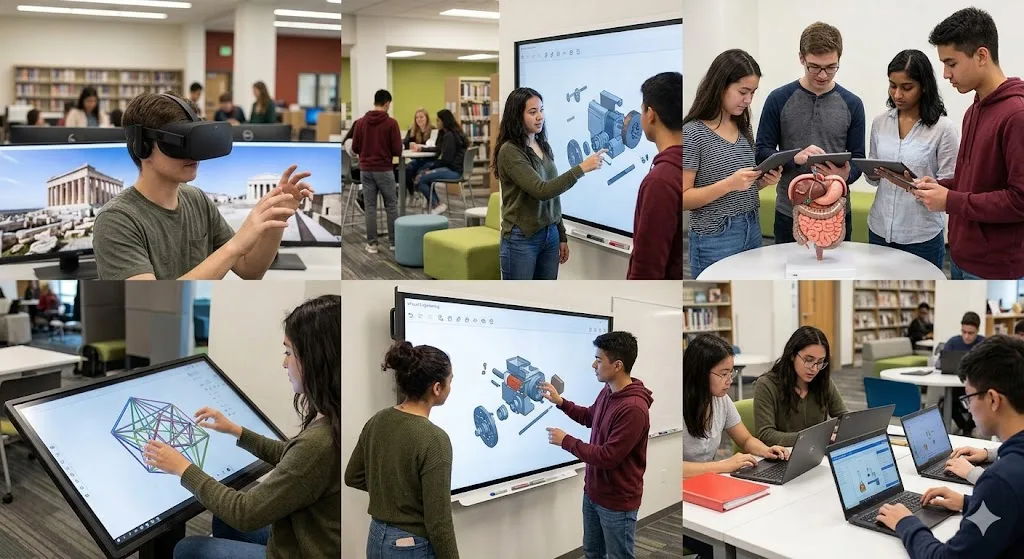
Interactive learning can be applied across multiple subjects.
Science
Students can perform virtual laboratory experiments safely and repeatedly.
Mathematics
Complex 3D geometry concepts become easier to visualize and understand.
Biology
Interactive organs, cells, and anatomical structures improve comprehension.
Physics
Students can manipulate variables and observe physical laws in real time.
History
Historical events can be explored through immersive virtual environments.
Engineering
Students can interact with machines, systems, and industrial processes without expensive equipment.
The Rise of Experience-Based Education
Education is gradually moving toward what many experts call "experience-based learning."
Instead of asking:
"What information should students memorize?"
Educators are asking:
"What experiences should students have?"
This shift encourages curiosity, creativity, and critical thinking.
Students become active participants rather than passive viewers.
Recent XR education research highlights experiential learning as one of the key strengths of immersive educational environments.
Challenges That Still Need to Be Solved
Although interactive learning offers tremendous potential, challenges remain.
These include:
- Content development costs
- Device compatibility
- Internet accessibility
- Educator training
- Student privacy considerations
Researchers continue to explore how XR learning can balance innovation, accessibility, and ethical implementation in education.
As technology becomes more affordable and accessible, many of these barriers are expected to decrease over time.
The Future of Learning
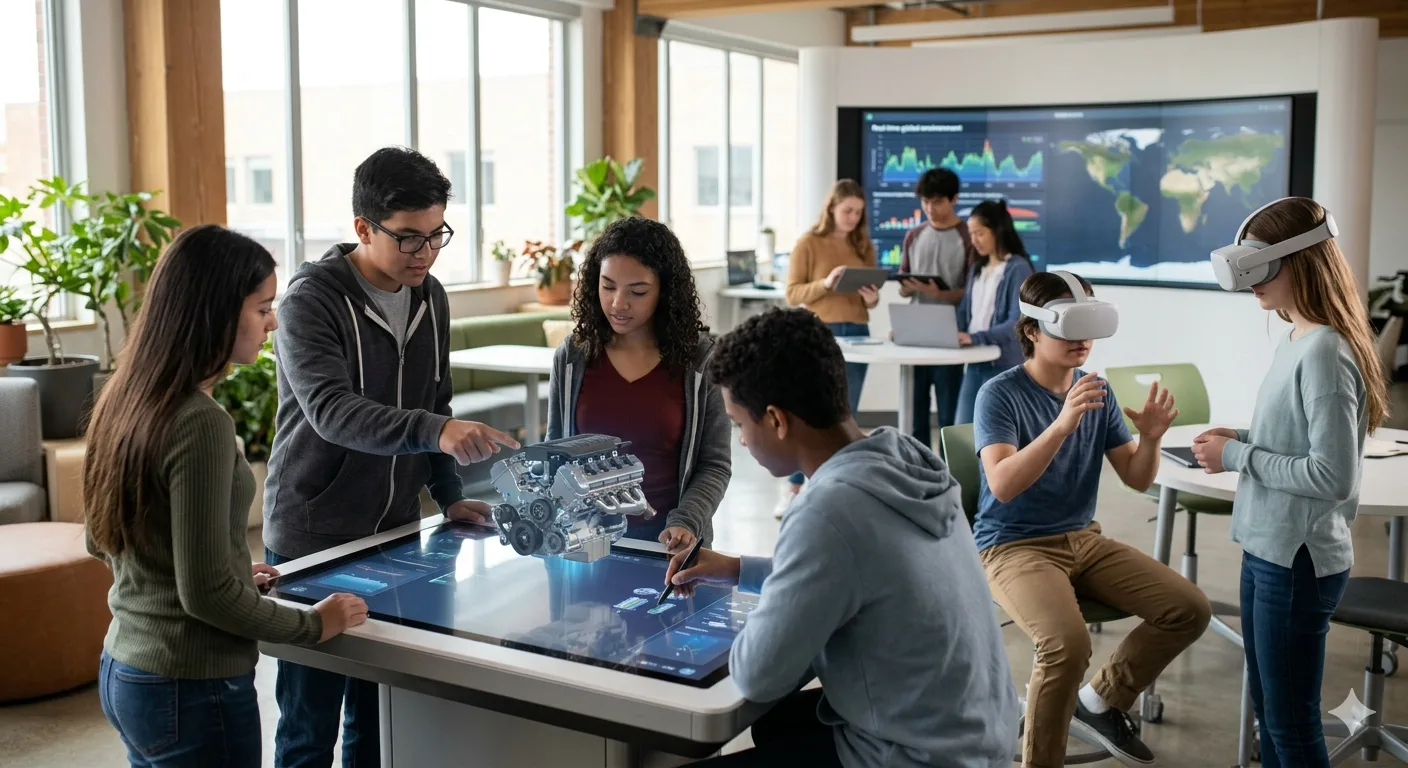
The future classroom may not revolve around textbooks and long lectures alone.
Students will increasingly:
- Explore interactive simulations
- Participate in virtual laboratories
- Learn through immersive experiences
- Access education from anywhere
- Engage with concepts in real time
The goal is simple:
Learning should become something students experience, not just something they watch.
Conclusion
The education industry is entering a new era.
Video learning will continue to play an important role, but it is no longer enough on its own.
Interactive learning powered by WebXR, VR, AR, and immersive technologies is creating more engaging, practical, and effective educational experiences.
As students demand deeper engagement and better understanding, experience-driven education is likely to become one of the biggest learning trends of 2026 and beyond.
For a closer look at this, see our guide to Why Students Forget.
For a closer look at this, see our guide to Why Online Classes Fail Students (And How 3D Learning Fixes It).
For a closer look at this, see our guide to The Rise of Micro-Learning in XR Education.