Blood: The Tissue That Flows
Science · Lab · 2 min 30 sec · English, Hindi, Gujarati, Marathi
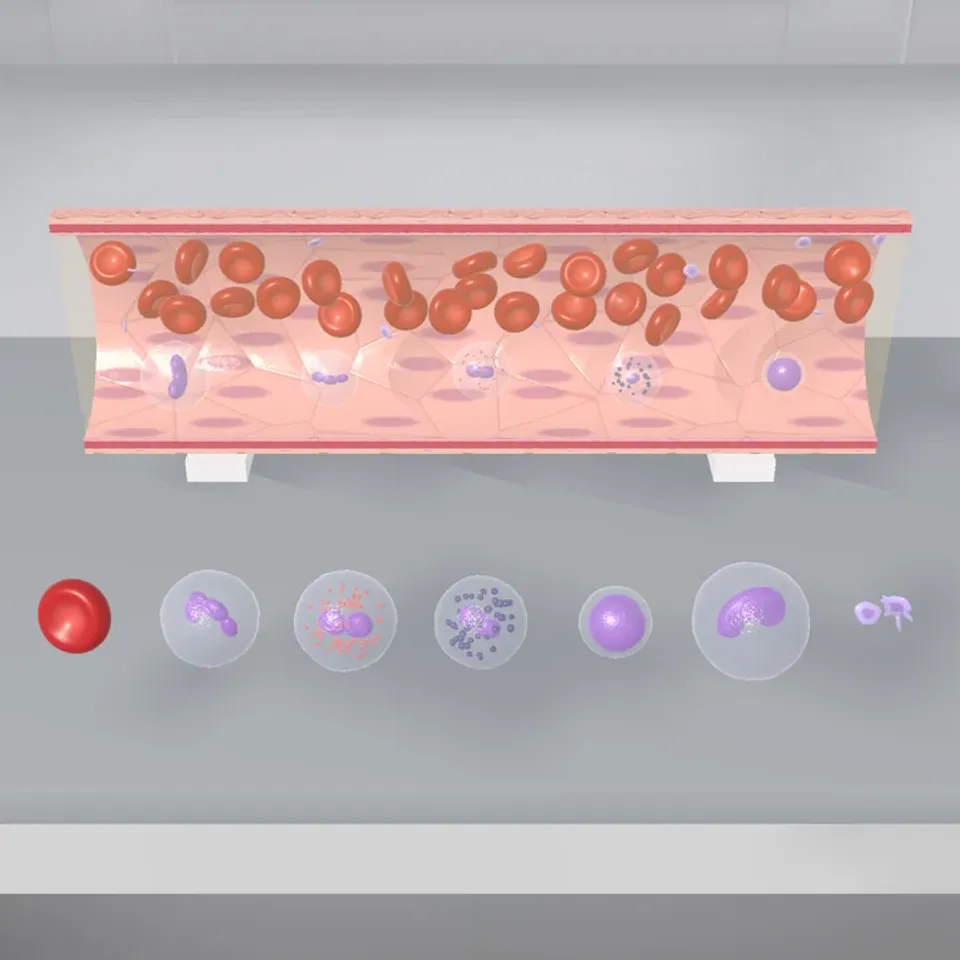
Make blood flow through a cut-open blood vessel and look at what it carries: the liquid plasma, red blood cells that carry oxygen, white blood cells that fight germs, and platelets that help blood to clot.
NCERT and CBSE · Class 9 Science · Chapter 3: Tissues in Action
What you will learn
- Explain why blood is a connective tissue
- Describe plasma, the liquid matrix of blood
- State what red blood cells do and what makes them red
- State the jobs of white blood cells and platelets
Key terms
- Connective tissue
- A tissue that connects and supports other tissues
- Plasma
- The liquid matrix of blood; more than half of blood is plasma
- Red blood cells
- Disc-shaped blood cells that carry oxygen and live about four months
- Haemoglobin
- The iron-rich protein that gives red blood cells their colour
- White blood cells
- Blood cells that fight germs and gather at an infection
- Platelets
- Tiny pieces in blood that help it to clot at a cut
Inside this lab
- 0:03 Plasma, the liquid part More than half of blood is plasma, a watery liquid that carries proteins, salts and hormones. Many cells float in it, and blood takes food, gases and hormones to every part of the body.
- 0:33 A connective tissue that flows Blood is a connective tissue whose matrix, the plasma, is a liquid. That liquid matrix is why blood can flow.
- 0:44 Red blood cells Most blood cells are red, disc-shaped and thinner in the middle, and they carry oxygen. Their colour comes from haemoglobin, an iron-rich protein, and each cell lives about four months before new ones replace it.
- 1:15 White blood cells and platelets Larger, pale white blood cells roll along the vessel wall and fight germs, gathering at an infected cut, which turns red and swollen. Tiny pieces called platelets help the blood clot when you get a cut.
Read more on the blog
More chapters
- Bone: The Body's Hard Framework: Look into a piece of bone, cut open, and one tiny unit of it, magnified. Open its rings of hard matrix to find the bone cells and the blood vessels in its canal, and see why bone is strong, rigid and supports the body.
- Epidermis and Stomata: The Leaf's Outer Layer: Open the tiny pores in the outer layer of a leaf and watch gases pass in and out and water vapour escape. Meet the flat, tightly packed cells of the epidermis and its waxy cuticle, then close the stomata again.
- Sclerenchyma: The Hard, Strong Tissue: Lift a long, narrow cell out of a block of plant tissue and see its thick wall of lignin, with hardly any space inside. Put a weight on the tissue: it does not bend. Find where this hard tissue is found, from leaf veins to coconut husk.
- Meristematic Tissue: How Plants Grow: Tap a growing plant to find where it grows: its shoot and root tips grow longer, its stem grows thicker, and a cut stem grows back. Then look at the dividing meristem cells up close.