Collenchyma: The Tissue That Bends
Science · Lab · 2 min 15 sec · English, Hindi, Gujarati, Marathi
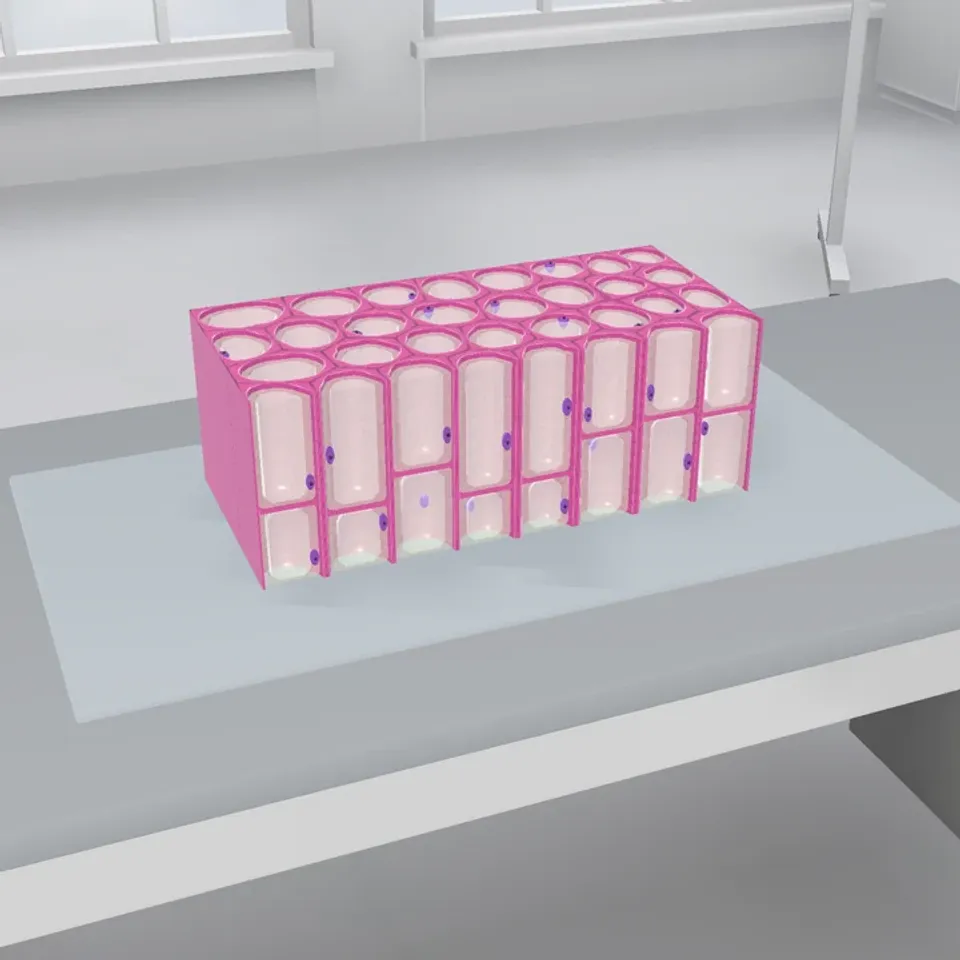
Lift a long, living cell out of a block of plant tissue and look inside it: cytoplasm, a vacuole and a nucleus. See the walls thickened at the corners by pectin, then bend the tissue and watch it spring back without breaking.
NCERT and CBSE · Class 9 Science · Chapter 3: Tissues in Action
What you will learn
- Describe the cells of collenchyma
- Identify the walls thickened at the corners
- Explain how pectin makes collenchyma flexible
- State the jobs of collenchyma: support and flexibility
Key terms
- Collenchyma
- A simple permanent tissue of living cells with walls unevenly thickened at the corners
- Pectin
- A chemical laid down at the corners of the walls that gives flexibility, like rubber
- Simple permanent tissue
- A permanent tissue made of only one kind of cell
- Flexibility
- The ability to bend without breaking
- Support
- Holding the plant and its parts up
Inside this lab
- 0:03 Living cells, thick corners Each cell is long and narrow, with cytoplasm, a vacuole and a nucleus, so it is alive. Where the cells are cut across, the walls are thick at the corners and thin in between.
- 0:33 Bends but does not break A tissue of living cells with walls thickened at the corners is called collenchyma, a simple permanent tissue. When it is bent, it springs back instead of breaking, which is why a fresh twig bends and does not snap.
- 1:09 Support with flexibility Collenchyma supports the plant and also keeps it flexible, so parts like stems and tendrils can bend without breaking. It is also why coriander leaf stalks are soft and bend easily.
- 1:26 Collenchyma in short Collenchyma is made of living cells with walls thickened at the corners. It gives plant parts both support and flexibility, so they bend without breaking.
Read more on the blog
More chapters
- Bone: The Body's Hard Framework: Look into a piece of bone, cut open, and one tiny unit of it, magnified. Open its rings of hard matrix to find the bone cells and the blood vessels in its canal, and see why bone is strong, rigid and supports the body.
- Epidermis and Stomata: The Leaf's Outer Layer: Open the tiny pores in the outer layer of a leaf and watch gases pass in and out and water vapour escape. Meet the flat, tightly packed cells of the epidermis and its waxy cuticle, then close the stomata again.
- Sclerenchyma: The Hard, Strong Tissue: Lift a long, narrow cell out of a block of plant tissue and see its thick wall of lignin, with hardly any space inside. Put a weight on the tissue: it does not bend. Find where this hard tissue is found, from leaf veins to coconut husk.
- Meristematic Tissue: How Plants Grow: Tap a growing plant to find where it grows: its shoot and root tips grow longer, its stem grows thicker, and a cut stem grows back. Then look at the dividing meristem cells up close.