Epithelial Tissue: The Body's Covering
Science · Lab · 2 min 45 sec · English, Hindi, Gujarati, Marathi
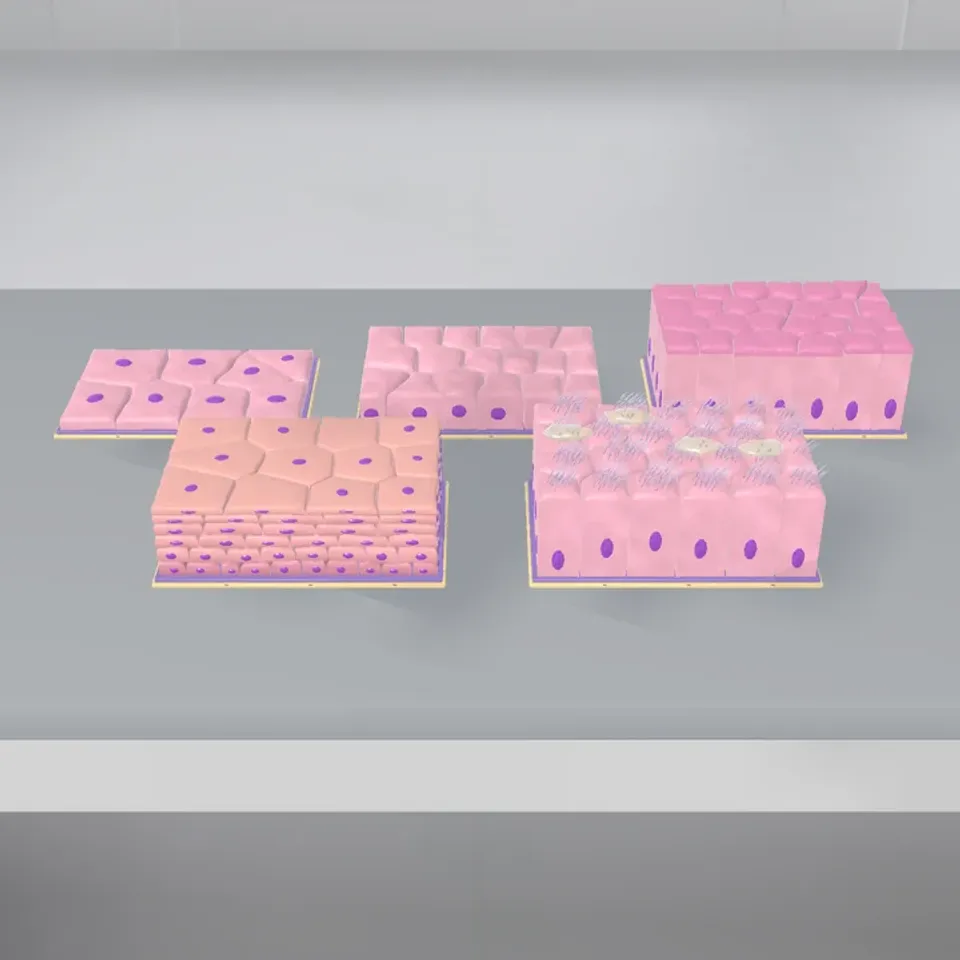
Watch worn-out cells flake off the many-layered skin and tiny cilia move. Explore five kinds of epithelial tissue and see how the shape of their closely packed cells suits each job: exchange, protection, making substances, sensing and absorbing.
NCERT and CBSE · Class 9 Science · Chapter 3: Tissues in Action
What you will learn
- State where epithelial tissue is found
- Describe how epithelial cells are packed, and why
- Match the shapes of epithelial cells to their jobs
- Name the places where cells with cilia are found
Key terms
- Epithelial tissue
- The tissue that covers the body and lines the internal organs
- Closely packed cells
- Cells with very little space between them, which keeps germs out and reduces water loss
- Exchange
- Liquids and gases passing quickly through a single layer of thin, flat cells
- Secretion
- Making and releasing substances such as mucus, sweat and saliva
- Cilia
- Hair-like structures on some epithelial cells, as in the nostrils, taste buds and inner ear
- Absorption
- Taking in nutrients and water, as tall, pillar-like cells do in the small intestine
Inside this lab
- 0:03 Layers that protect The skin has many layers of cells, and the outer ones are flat and tightly packed. These layers, also found in the mouth and oesophagus, protect the tissue below from injury, rubbing and germs.
- 0:34 Covering and lining Epithelial tissue forms the outer covering of the body and lines organs such as the mouth, lungs, blood vessels and intestine. Its cells are closely packed with very little space between them, which keeps germs out and reduces water loss.
- 0:57 Flat, cube and pillar cells A single layer of thin, flat cells lines the blood vessels and lungs, so liquids and gases pass through quickly. Cube-shaped cells line the sweat and salivary glands, which release sweat and saliva, and tall, pillar-like cells in the small intestine take in nutrients and water.
- 1:50 Shape suits the job Each kind of epithelial cell has a shape that suits its work. Layers protect, thin flat cells let materials pass, cube-shaped cells help make substances and tall cells absorb.
Read more on the blog
More chapters
- Bone: The Body's Hard Framework: Look into a piece of bone, cut open, and one tiny unit of it, magnified. Open its rings of hard matrix to find the bone cells and the blood vessels in its canal, and see why bone is strong, rigid and supports the body.
- Epidermis and Stomata: The Leaf's Outer Layer: Open the tiny pores in the outer layer of a leaf and watch gases pass in and out and water vapour escape. Meet the flat, tightly packed cells of the epidermis and its waxy cuticle, then close the stomata again.
- Sclerenchyma: The Hard, Strong Tissue: Lift a long, narrow cell out of a block of plant tissue and see its thick wall of lignin, with hardly any space inside. Put a weight on the tissue: it does not bend. Find where this hard tissue is found, from leaf veins to coconut husk.
- Meristematic Tissue: How Plants Grow: Tap a growing plant to find where it grows: its shoot and root tips grow longer, its stem grows thicker, and a cut stem grows back. Then look at the dividing meristem cells up close.