Human Skin
Science · Lab · At your own pace · English
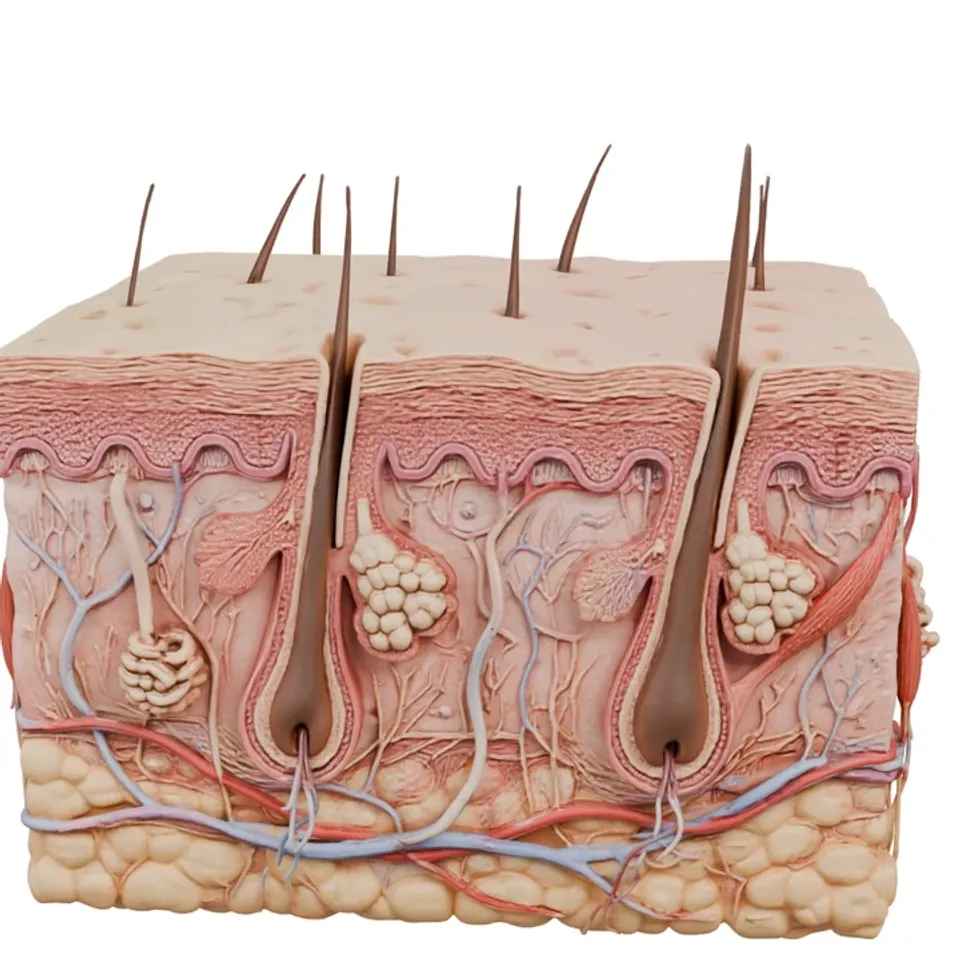
Explore 3D human skin: its three layers, the hair follicles, sweat glands and oil glands inside it, and how it protects the body and keeps it cool.
What you will learn
- Identify the three layers of the skin: epidermis, dermis and the fat layer below
- Find the hair follicles, sweat glands, oil glands and nerve endings in the skin
- Understand how melanin protects against sunlight and how sweating cools the body
Key terms
- Epidermis
- The tough outer layer of the skin, which keeps water in and germs out
- Dermis
- The inner layer, with blood vessels, nerve endings, hair follicles and glands
- Melanin
- The brown-black pigment in the skin that absorbs harmful ultraviolet rays
- Sebaceous gland
- An oil gland that keeps the skin and hair soft
More chapters
- Chemical Reactions and Equations: Learn to recognise a chemical reaction, write and balance chemical equations, and tell combination, decomposition and displacement reactions apart, with oxidation and reduction.
- Combination Reaction: Magnesium: Light a burner and hold a magnesium ribbon in the flame. Watch it burn with a dazzling white light and turn into white magnesium oxide in a combination reaction.
- Exothermic Reaction: Quicklime: Add quicklime to a beaker and pour water on it. Watch it hiss, steam and crumble into slaked lime as the temperature shoots up, then whitewash a wall with it.
- Human Heart: See how the heart pumps blood around the body: its four chambers, the valves that keep blood flowing one way, and the double circulation through the lungs and the body.