Our Environment
Science · Chapter · 3 min 25 sec · English, Hindi, Gujarati, Marathi
See how living things and their surroundings are linked through food chains and food webs, and how human activities, such as waste and ozone depletion, affect the planet.
NCERT and CBSE · Class 10 Science · Chapter 13: Our Environment
What you will learn
- Explain energy flow through food chains and food webs
- Describe producers, consumers and decomposers
- Understand human impact on ecosystems
- Discuss ozone depletion and waste management
Key terms
- Ecosystem
- A community of living things with their environment
- Food chain
- A sequence showing who eats whom
- Decomposer
- An organism that breaks down dead matter
- Trophic level
- A feeding step in a food chain
Inside this chapter
- 0:00 Parts of an ecosystem An ecosystem has biotic parts, the living plants, animals and microorganisms, and abiotic parts such as sunlight, water and soil. It can be natural, like a pond or forest, or human-made, like an aquarium.
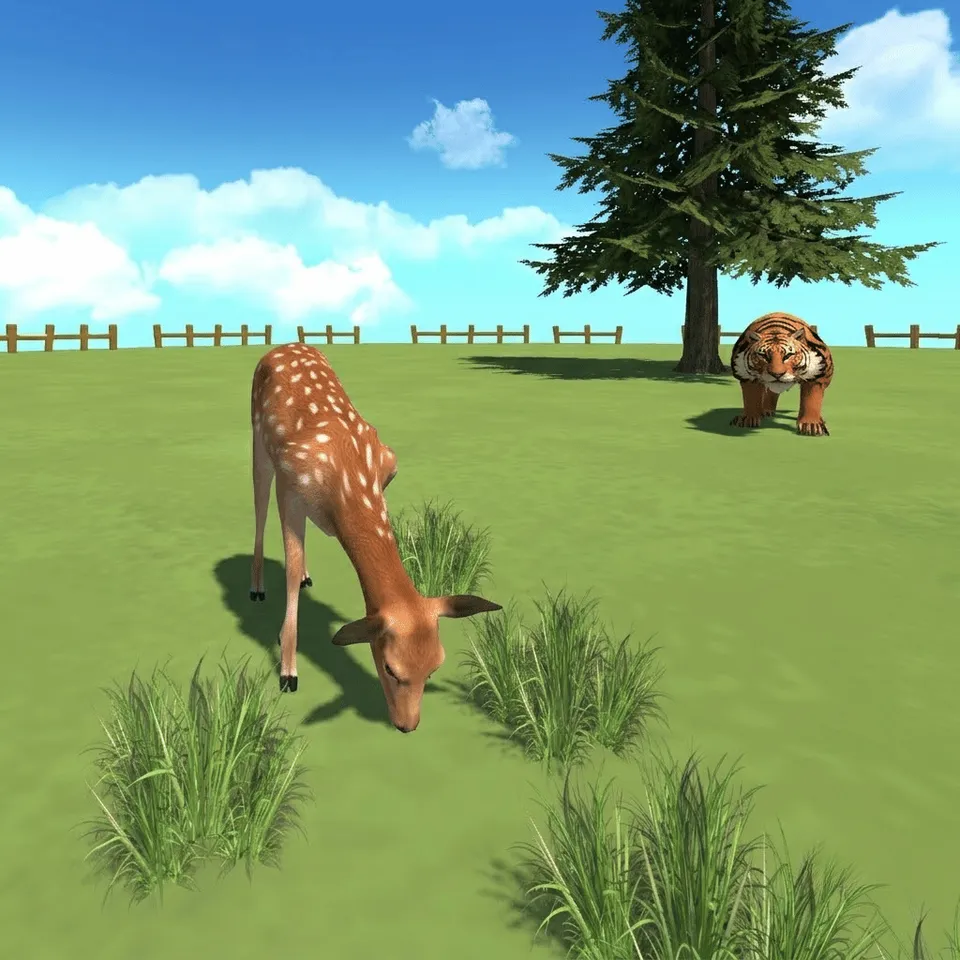
- 0:38 Producers and primary consumers A food chain starts with producers, plants that capture the Sun's energy and make food by photosynthesis. Herbivores, like a deer eating grass, are primary consumers.
- 1:09 Trophic levels and decomposers A tiger that eats the deer is a secondary consumer, and each step in a food chain is a trophic level. When organisms die, bacteria and fungi break them down and return nutrients to the soil.
- 1:42 Only 10 percent moves up Energy is lost at every level, mostly as heat, and only about 10 percent passes on to the next. That is why most food chains have just three or four steps, and many chains link up to form a food web.
- 2:13 Biological magnification Harmful chemicals from pesticides get into water bodies and food chains. They build up more and more at each higher trophic level, so humans are affected the most.
- 2:27 Ozone layer and waste CFCs thinned the ozone layer that shields us from the Sun's harmful ultraviolet rays, but bans on CFCs are helping it recover. Plastic and other non-biodegradable waste does not break down naturally, so we need to reduce, reuse and recycle.
More chapters
- Chemical Reactions and Equations: Learn to recognise a chemical reaction, write and balance chemical equations, and tell combination, decomposition and displacement reactions apart, with oxidation and reduction.
- Combination Reaction: Magnesium: Light a burner and hold a magnesium ribbon in the flame. Watch it burn with a dazzling white light and turn into white magnesium oxide in a combination reaction.
- Exothermic Reaction: Quicklime: Add quicklime to a beaker and pour water on it. Watch it hiss, steam and crumble into slaked lime as the temperature shoots up, then whitewash a wall with it.
- Human Heart: See how the heart pumps blood around the body: its four chambers, the valves that keep blood flowing one way, and the double circulation through the lungs and the body.