The French Revolution: Part 1
Social Science · Chapter · 2 min · English, Hindi, Gujarati, Marathi
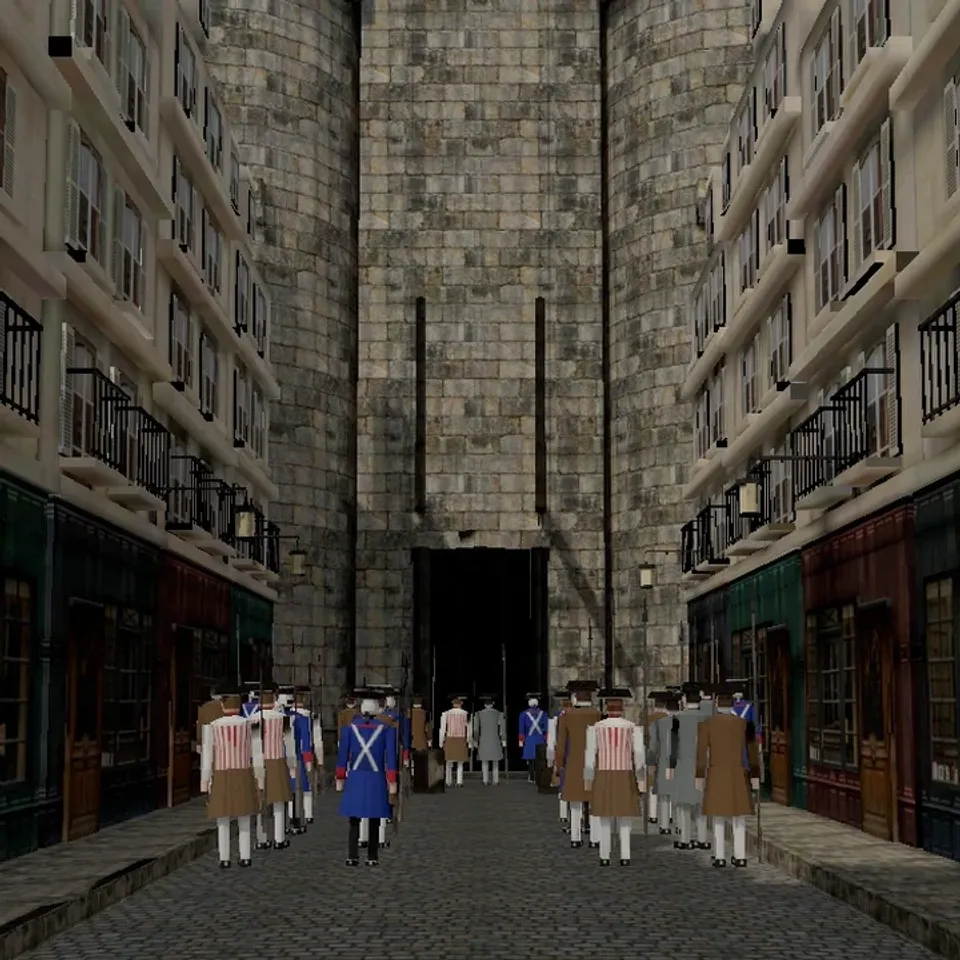
Walk through Paris on 14 July 1789 with the crowd that stormed the Bastille, the fortress-prison that stood for the despotic power of King Louis XVI.
What you will learn
- Describe Paris on 14 July 1789 and the people's militia
- Explain why ordinary people hated the Bastille
- Describe how the crowd stormed the Bastille
- Explain why its fall marked the people's victory over absolute monarchy
Key terms
- Bastille
- A fortress-prison in Paris that stood for the king's despotic power
- Louis XVI
- The king of France in 1789
- People's militia
- An armed force of ordinary citizens, formed at the town hall
- French Guards
- Soldiers who joined the people with their cannons
- Despotic power
- Power used by a ruler without any limits or checks
- Absolute monarchy
- Rule by a king whose power has no limits
Inside this chapter
- 0:01 Paris on 14 July 1789 The French Revolution was a turning point that shaped the modern democratic world. The story opens in Paris on the morning of 14 July 1789, with the whole city in a state of alarm.
- 0:23 A people's militia Rumours spread that King Louis XVI would order his army to fire on the citizens. Some 7,000 men and women formed a people's militia, and soldiers of the French Guards joined them.
- 0:50 The hated Bastille The crowd marched to the Bastille, a fortress-prison in the east of Paris. People hated it because it stood for the despotic power of the king.
- 1:13 Storming the Bastille When the drawbridge fell, the crowd stormed in looking for stored gunpowder and ammunition. The commander was killed and the prisoners were freed, though there were only seven.
- 1:35 Pulled down, stone by stone The fortress was later demolished, and its stones were sold in the markets to people who wanted a souvenir of its destruction.
More chapters
- The Fundamental Unit of Life: Look inside the cell, the basic unit of all living things, explore the organelles that keep it working, and compare prokaryotic and eukaryotic, plant and animal cells.
- Onion Peel Experiment: Prepare an onion peel slide step by step and look through a microscope at real plant cells, with their cell wall, cell membrane and nucleus.
- Bone: The Body's Hard Framework: Look into a piece of bone, cut open, and one tiny unit of it, magnified. Open its rings of hard matrix to find the bone cells and the blood vessels in its canal, and see why bone is strong, rigid and supports the body.
- Epidermis and Stomata: The Leaf's Outer Layer: Open the tiny pores in the outer layer of a leaf and watch gases pass in and out and water vapour escape. Meet the flat, tightly packed cells of the epidermis and its waxy cuticle, then close the stomata again.