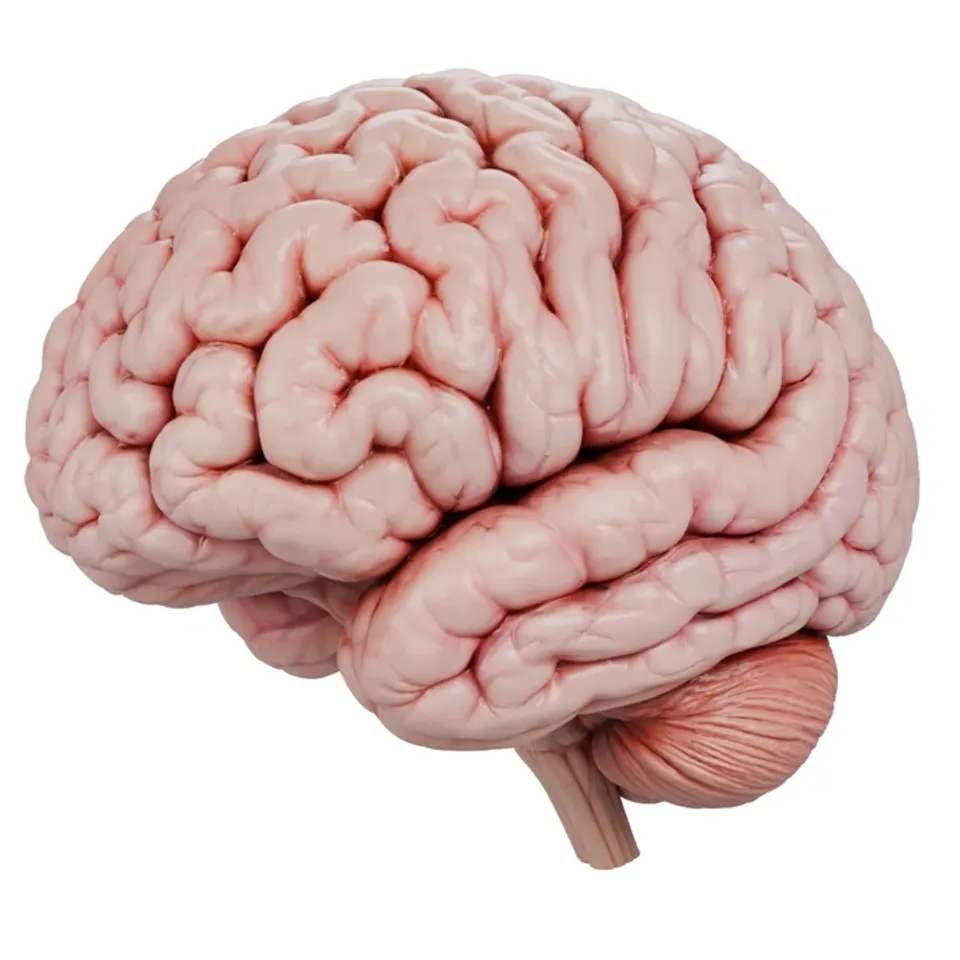
Human Brain
Science · Lab · At your own pace · English
Explore a 3D human brain: the fore-brain, mid-brain and hind-brain, the four lobes of the cerebrum, and the parts that control balance, breathing and heartbeat.
NCERT and CBSE · Class 10 Science · Chapter 6: Control and Coordination
What you will learn
- Tell apart the three main regions: fore-brain, mid-brain and hind-brain
- Find the frontal, parietal, temporal and occipital lobes of the cerebrum
- See how the cerebellum keeps balance and the medulla controls breathing and heartbeat
Key terms
- Cerebrum
- The largest part of the brain, for thinking, memory, the senses and voluntary actions
- Cerebellum
- The part of the hind-brain that keeps posture and balance and makes movements precise
- Medulla
- The part of the hind-brain that controls involuntary actions such as heartbeat, breathing and blood pressure
Read more on the blog
- Human Brain Diagram Class 10 in 3D: Parts, Functions and How to Draw It
- Reflex Arc 3D Model and Animation: Class 10 Control and Coordination Explained
More chapters
- Control and Coordination: Learn how the nervous system and hormones work together to control the body: neurons and nerve impulses, reflex actions and the reflex arc, and the role of hormones.
- Chemical Reactions and Equations: Learn to recognise a chemical reaction, write and balance chemical equations, and tell combination, decomposition and displacement reactions apart, with oxidation and reduction.
- Combination Reaction: Magnesium: Light a burner and hold a magnesium ribbon in the flame. Watch it burn with a dazzling white light and turn into white magnesium oxide in a combination reaction.
- Exothermic Reaction: Quicklime: Add quicklime to a beaker and pour water on it. Watch it hiss, steam and crumble into slaked lime as the temperature shoots up, then whitewash a wall with it.